
Best Battery Grid Tie Inverter Solutions for Reliable Solar Power
Answering the demand for dependable grid-tie inverters that work with battery storage, this guide highlights five top options designed for 48V–60V battery banks and 110–265V AC outputs. These inverters are best for homeowners or small businesses aiming to maximize solar energy, keep battery health, and ensure safe, limit-based power delivery to the grid. Each pick favors clear MPPT control, robust input ranges, and practical charge/discharge features. The buyer can compare suitability for standalone solar systems, hybrid setups, or backup power scenarios.
| Product | Best For | Key Benefit |
|---|---|---|
| Y&H 1200W Grid Tie Inverter Power Limiter LCD Display DC55-90V Solar Input AC110V Pure Sine Wave Output for 48V60V Battery | Mid-to-large hybrid setups | Limiter sensor and clear LCD for mode selection |
| Y&H 1000W Grid Tie Inverter Power Limiter DC25-60V Solar Input AC110V/240V Auto Switch | Battery-backed grid tie | Automatic mode switching with limiter sensor |
| 1000W Grid Tie Inverter, 20-50V DC to 90V-140V AC Output MPPT Pure Sine Wave (YINZINR) | Compact solar-battery systems | High MPPT efficiency and compact build |
| Y&H 2000W Grid Tie Inverter Power Limiter LCD Display DC50-90V Solar Input AC185-265V Output SUN-2000GTIL2-H | Higher power hybrids | Strong input range and battery discharge optimization |
| TINGEN 1200W Grid Tie Inverter, Pure Sine Wave | Shaded or variable solar sites | Advanced MPPT and LCD display |
Y&H 1200W Grid Tie Inverter Power Limiter

- Brand: Y&H
- Input: DC 55-90V; Output: AC 110V; 1200W rated
- Features: Grid Tie Inverter with Limiter Sensor; LCD displays working status; can set photovoltaic/battery mode
- Best for: Medium-scale solar setups with battery storage that require precise power limitation to the load
Who this is for: Homeowners or small facilities integrating a 48V–60V battery bank with solar panels to feed a 110V grid or local loads. Why chosen: The built-in limiter and LCD status readouts provide straightforward configuration and ongoing monitoring. Limiter help avoids overloading the grid or appliances when peak sun is reached. Caution: Ensure MPPT voltage matches the solar array’s Voc range to prevent efficiency loss.
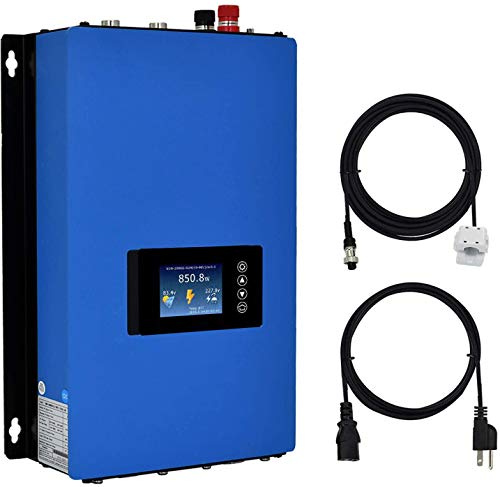
Y&H 1000W Grid Tie Inverter Power Limiter
- Brand: Y&H
- Input: DC 25-60V; Output: AC 110V/240V; 1000W
- Features: Battery mode with automatic discharge control; MPPT-assisted efficiency; limiter sensor to deliver only load-needed power
- Best for: Systems using 36V–48V battery banks with occasional grid export, needing safe auto-switching and discharge management
Who this is for: Users building a battery-backed grid-tie with a 36V/48V bank and desire automatic power limiting. Why chosen: The limiter and battery-discharge optimization help protect battery life and adapt to changing sun. Limitation: Check that the solar input remains within the specified Voc window to maintain performance.
1000W Grid Tie Inverter (YINZINR)

- Brand: YINZINR
- Input: 20-50V DC; Output: 90-140V AC; 1000W
- Features: Aluminum alloy build; MPPT technology; high efficiency (>99%); solid isolation and reliable locking
- Best for: Small-scale grids with 18V–36V panels paired with 36V battery banks, seeking robust MPPT performance
Who this is for: Buyers needing a compact 1 kW unit for 36V systems or similar, with a focus on MPPT efficiency. Why chosen: High efficiency and durable construction. Caution: Confirm your panel voltage aligns with the stated input range for optimal MPPT locking.
Y&H 2000W Grid Tie Inverter

- Brand: Y&H
- Input: DC 50-90V; Output: AC 185-265V; 2000W
- Features: Big input range; battery-discharge optimization; supports 240V grid exports; MPPT strategy
- Best for: Higher-power grid-tie systems with battery storage and 240V grid compatibility
Who this is for: Homes or small facilities aiming for sizable hybrid solar setups with 60V–72V battery banks. Why chosen: Strong power rating and battery-discharge support. Limitation: Not compatible with 110/120V systems without proper configuration; ensure the grid connection plan aligns with local codes.
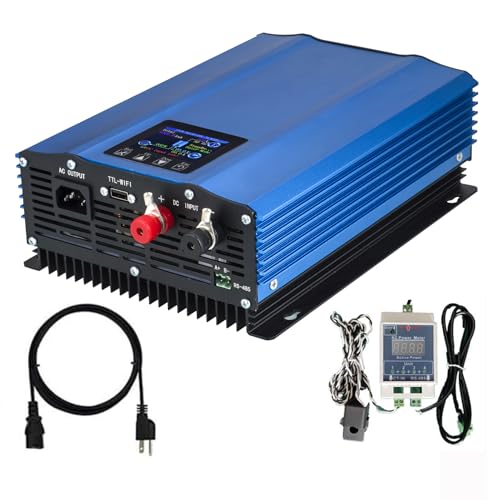
TINGEN 1200W Grid Tie Inverter
- Brand: TINGEN
- Input: DC 55-90V; Output: AC 90-140V; 1200W
- Features: MPPT with >99% efficiency; LCD display; four working modes; broad input range
- Best for: Grid-tie systems that need robust MPPT in varied sun and weather conditions
Who this is for: Buyers seeking a reliable 1.2 kW unit for mid-range solar installations with precise monitoring. Why chosen: Modern MPPT and multi-mode operation help adapt to changing panel output. Caution: Verify compatibility with your battery voltage and grid voltage for safe operation.
Buying Guide
What to consider when selecting a grid-tie inverter with battery storage
- Voltage compatibility: Confirm your battery bank voltage (12V, 24V, 36V, 48V, or 60V) matches the inverter’s MPPT range and startup voltage.
- Output voltage and grid compatibility: Ensure the inverter can deliver the correct AC output for your local grid (110V vs 220–240V) and frequency (60 Hz in the US).
- MPPT efficiency: Look for MPPT efficiencies near or above 99% for better energy harvest, especially in partial shading.
- Power limiter and safety: Inverters with a limiter sensor help prevent overloading loads and simplify protection features for batteries and panels.
- Battery integration: Some units are better suited for straight PV-to-grid or PV-to-battery charging with discharge optimization. Consider your desired battery chemistry and depth of discharge control.
- System expansion: If you plan to scale, choose inverters that allow multiple units to be stacked or connected in parallel with safe synchronization.
- Wiring length and safety: Follow suggested controller wiring distance to avoid losses; many units specify maximum lead lengths for accurate MPPT.
- Installation environment: Aluminum or rugged housings help with heat dissipation and corrosion resistance in outdoor setups.
FAQ
- What is a grid-tie inverter with battery storage best used for?
It’s ideal for systems that want to feed solar energy to the grid while also maintaining a battery reserve for local loads or backup power.
- Do all grid-tie inverters require batteries?
No. Some models are designed for pure grid-tie use with no battery connection, while others support battery storage for hybrid operation.
- What does a limiter sensor do?
A limiter sensor ensures the inverter only delivers the power the load requires, preventing unnecessary battery discharge and protecting the system.
- Why is MPPT important in these inverters?
MPPT maximizes the usable energy from solar panels by dynamically tracking the point of maximum power under changing conditions.
- What should I check before purchasing?
Verify voltage ranges for both input (PV/battery) and output (grid), confirm compatibility with your panel array, battery chemistry, and local electrical codes.