
Best Battery for Electric Outboard: Top Marine Power Picks
The right battery for an electric outboard combines high surge capacity, reliability in harsh marine conditions, and compatibility with your motor’s voltage. Below are five top-relevant options designed to withstand salt spray, vibration, and cold starts while delivering steady performance on the water. A brief buying guide follows to help you compare key factors and choose the best fit for your boat and budget.
| Product | Brand | Voltage / Capacity | Key Benefit |
|---|---|---|---|
| Redodo 12V 100Ah OBM | Redodo | 12V 100Ah | 60V system support, Bluetooth smart monitoring |
| Redodo 12V 20Ah LiFePO4 (U1) | Redodo | 12V 20Ah | 800CCA, high power starting |
| LiTime 12V 20Ah 800 CCA | LiTime | 12V 20Ah | Self-heating, low-temp protection |
| Banshee 12.8V 18Ah | Banshee | 12.8V 18Ah | Lightweight, 550 CCA, flush terminals |
| Interstate Batteries Marine 12V 100Ah | Interstate Batteries | 12V 100Ah | Extreme deep-cycle power, long life |
Redodo 12V 100Ah OBM: Marine-Grade 60V Ready

The Redodo 12V 100Ah LiFePO4 Outboard Motor Battery is designed for electric outboards with a marine-grade build and a robust BMS rated at 100A. It supports 60V system configurations via 5S and offers a peak 500A for brief boosts, making it suitable for demanding trolling and high-demand motors. Bluetooth 5.0 enables real-time status monitoring and smart discharge control, with a 10-meter range and capacity to monitor multiple batteries. Drop-in compatibility with traditional Group 31 forms allows straightforward installations on many boats.
Key features include: a 1280Wh energy capacity in a Group 31 format, surge handling for short peak demands, and the ability to integrate with solar or other power sources. The device also emphasizes water-resistance and rugged construction for marine use. This battery is especially suitable for boaters seeking a scalable 60V setup from a single 12V module.
Redodo 12V 20Ah LiFePO4 U1 Battery

This 12V 20Ah LiFePO4 battery from Redodo provides robust starting power with an 800CCA rating and 40C discharge capability, ideal for high-demand outboard starts and heavy-duty marine equipment. Built with luxury-car-grade prismatic cells, it offers strong shock and vibration resistance, ensuring reliable starts in rough water and extended lifespans compared with alternative chemistries. The IP67 waterproof, dustproof, and salt-spray-proof design adds resilience in marine environments.
Redodo 12V 20Ah LiFePO4 Battery (Second Option)

This 12V 20Ah Cranking Battery by Redodo also delivers 800CCA and 810A MCA, making it suitable for cranking a 200hp class outboard as well as heavy-duty lawn equipment or UTVs. The sheet metal design improves durability and resistance to swelling, contributing to longer service life in marine conditions. It provides a compact, high-output option for anglers and boaters needing reliable starts in tighter spaces or auxiliary power in compact vessels.
LiTime 12V 20Ah 800 CCA Marine Battery

LiTime’s specialty marine starter battery delivers about 800 CCA with self-heating and low-temperature protection. It includes a 20Ah capacity suitable for smaller to mid-sized outboards and trolling motors, ensuring reliable starting in cooler conditions. The self-heating feature activates below freezing to maintain charging efficiency, while protective measures guard against extreme cold and moisture exposure, a practical choice for winter boaters and high-latitude use.
Banshee 12.8V 18Ah Start Battery

The Banshee 12.8V 18Ah battery is a compact, lightweight option with 550 CCA and flush terminals for easy installation in smaller boats or auxiliary power setups. Its low self-discharge helps retain charge during off-season storage, and the flush terminal design simplifies mounting in tight spaces—an ideal choice for small outboard vessels or as a compact backup power source on a larger craft.
Interstate Batteries Marine 12V 100Ah AGM
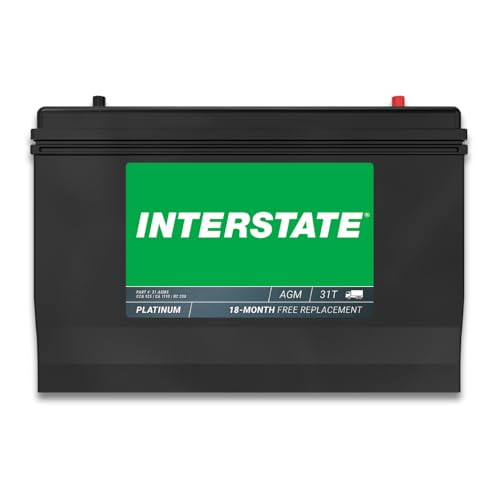
This Interstate Marine Deep-Cycle AGM battery blends high-cranking power with deep-cycle stamina, designed for continuous operation powering the boat motor and onboard accessories like fish finders, trolling motors, and radar. Its thick plate design supports repeated discharge cycles with solid longevity, making it a robust option for boats that depend on reliable power over longer trips and in demanding conditions. It’s not intended as a car or mobility battery, but excels as a marine workhorse.
Buying Guide: Key Considerations For Electric Outboard Batteries
- Voltage and configuration: Ensure compatibility with your outboard’s voltage (12V, 24V, 36V, or 60V systems). Some batteries support multi-volt configurations via series/parallel connections, offering scalable power for larger motors.
- Capacity and run-time: Higher Ah (amp-hour) ratings extend runtime but add weight. Balance capacity with the boat size, expected load, and trolling motor needs to optimize performance versus weight.
- Discharge current and surge: Outboard motors demand high cranking amps (CCA) at startup and may require brief surge currents during acceleration. Look for batteries with high CCA/MCA ratings and robust surge handling (several hundred amps for 1–3 seconds).
- Chemistry and lifecycle: LiFePO4 (lithium) offers higher energy density, lighter weight, and longer cycle life than traditional lead-acid. AGM variants provide reliability at a lower upfront cost but are heavier and typically offer fewer cycles.
- Temperature performance: Cold starts benefit from low-temperature protection and self-heating features. This is crucial for early-season boating or high-latitude regions.
- Durability and marine sealing: Salt spray, vibration, and humidity call for rugged housings and IP-rated protection. Marine-grade builds help prevent electrolyte leakage and corrosion.
- Monitoring and smart features: Bluetooth or app-based monitoring can simplify maintenance, discharge tracking, and health checks, enabling proactive maintenance and safer operation on longer trips.
- Installation and compatibility: Check group size (e.g., Group 31), mounting options, weight, and the availability of drop-in replacements to minimize retrofit work on existing setups.
- Maintenance and safety: Some batteries require minimal maintenance (AGM), while LiFePO4 generally needs no water top-ups. Follow manufacturer safety guidelines for handling, charging, and disposal.