
Best Automatic Door Lock System to Modernize Your Home Security
Exploring the best automatic door lock systems helps homeowners upgrade security, convenience, and access control. This guide reviews five top smart locks, each offering keyless entry, remote management, and robust authentication. From biometric fingerprints to app-based control and voice assistance, these models suit single-family homes and multi-tenant properties alike. Read on to compare features, installation considerations, and what to prioritize when selecting a lock that fits your lifestyle and budget.
A quick overview of chosen products:
| Product | Brand | Key Features | Entry Methods |
|---|---|---|---|
| Veise VE017 Fingerprint Smart Door Lock | Veise Store | AI fingerprint, 8-in-1 access, remote app control, avatar-like activity logs | Fingerprint, App, Card, Code, Voice, Mechanical Key |
| Fingerprint Keypad Deadbolt with Handle Set | Ulecoce Store | Ultra-fast fingerprint, self-learning, app control, temporary codes | Fingerprint, App, Code |
| Remote Control Electronic Intelligent Door Lock | — | Remote unlock, 0-10 m range, robust materials | Remote, Key |
| Philips WiFi Keypad Door Lock with Handle | Philips Store | No hub needed, real-time access, voice assistant ready | App, Fingerprint, Voice |
| Hidden Door Lock with Remote | JIAN BOLAND Store | Discreet design, four remotes, durable zinc alloy | Remote, Touch-to-Unlock |
Veise VE017 Fingerprint Smart Door Lock

The Veise VE017 combines biometric security with versatile access options to suit modern homes and rental properties. Its 8-in-1 unlocking framework includes fingerprint recognition, app control via KK Home, authorized access codes, and mechanical backup. For property managers, the system offers detailed activity logs, enabling real-time monitoring of who enters and when. Remote management allows you to grant, pause, or revoke access from anywhere, which is especially useful for tenants, caretakers, or guests. The on-device AI fingerprint engine claims sub-0.2-second verifications and 99.99% accuracy, improving with continued use as voices of family members are enrolled and refined. Auto-lock timing adds one more layer of convenience and safety, with a customizable 0–180 second window set from within the app.
Security considerations include ensuring the device is paired with the KK Home app for full event logging and that firmware updates are installed promptly to guard against new attack vectors. Because it supports voice integration via Alexa/Google Assistant, a compatible gateway is required, which adds a compatibility check for smart home ecosystems. The finish in satin nickel provides a sleek, contemporary aesthetic that blends with modern entryways while maintaining durability. Overall, Veise VE017 is well-suited for households seeking a biometrics-first experience with flexible entry modes and remote access control.
Fingerprint Keypad Deadbolt with Handle Set
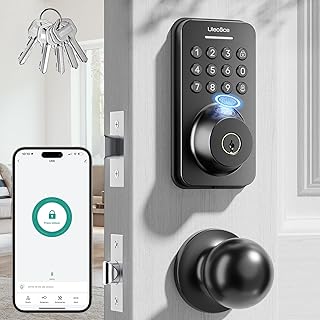
The Fingerprint Keypad Deadbolt with Handle Set focuses on ease of use and family-friendly access. With a fingerprint sensor delivering near-instant recognition, users can unlock in about a second, backed by a 99.99% accuracy rate. The lock includes a self-learning algorithm that improves recognition with every use, ensuring that new fingerprints are quickly integrated and existing profiles stay accurate. App control extends beyond local access by enabling temporary codes for guests, deliveries, or service personnel with adjustable validity windows. Real-time logs provide visibility into who unlocked the door when, supporting accountability for multi-member households or rental units. The handle-set design is not only aesthetically modern but ergonomic for daily routine use.
Install considerations include compatible door thickness, proper alignment of latch and strike plate, and ensuring the lock’s dimensions fit the existing bore and backset. The inclusion of remote management features reduces the need to share physical keys and enhances security for families with shared responsibilities. Potential drawbacks could include a learning curve for new users and the necessity to keep the app updated for continued functionality. This model strikes a balance between biometric convenience and cloud-based access management for homes and small properties.
Remote Control Electronic Intelligent Door Lock

This remote-controlled door lock emphasizes convenience for households where hands are often full or doors need rapid access. The system unlocks via remote control with a 0–10 meter operating range, adds a traditional key option for backup, and uses a robust construction featuring stainless steel components to resist wear and corrosion. The external mounting plate simplifies installation, making it suitable for retrofit projects on existing doors. The remote control protocol is designed to be difficult to duplicate, which enhances security over generic keypad-only solutions. The device also provides a user-friendly mechanism to lock after entry, with audible feedback to confirm action.
Considerations include ensuring the remote signal is uncompromised in your environment and confirming compatibility with your door’s strike and frame. While it offers a straightforward setup and physical robustness, it may lack the wider ecosystem integrations of some WiFi-enabled locks. This option is ideal for users who prioritize remote access without depending on WiFi networking, or who require a simple upgrade path for retrofit installations.
Philips WiFi Keypad Door Lock with Handle

The Philips WiFi Keypad Door Lock with Handle integrates home WiFi directly, eliminating the need for additional hubs or bridges. This model enables remote lock/unlock operations, user management, and real-time status checks from the Philips Home Access App. It supports programmable codes and fingerprint access, providing flexibility for households with varying comfort levels around keyless entry. Real-time access history helps homeowners monitor activity efficiently, while voice assistant compatibility with Alexa and Google Assistant adds hands-free control to busy routines. The lack of a hub requirement simplifies setup and reduces additional hardware costs, though it relies on stable WiFi to function optimally.
Key considerations include network reliability, firmware update cadence, and compatibility with existing smart home ecosystems. The built-in keypad is convenient for guests or temporary tenants who may not use biometrics regularly. For properties already using Philips devices or those seeking seamless cloud-based access with voice control, this lock offers a cohesive experience with strong remote management features.
Hidden Door Lock with Remote

The Hidden Door Lock provides a discreet security solution with an internal mounting approach and no external keyhole exposure. This design reduces lock-picking risks and contributes to a cleaner entry aesthetic. The package includes four high-security rolling-code remotes, expanding multi-user access while maintaining tight control over who can open the door remotely. Built from high-strength zinc alloy, the lock is engineered to resist corrosion, wear, and impact, making it suitable for challenging environments and high-traffic locations. The touch-to-unlock feature can be integrated with the remote control system to streamline daily use.
Installation considerations focus on ensuring a clean embedment within the door with appropriate clearance for the internal mechanism. The absence of a visible keyway can be a security plus, but customers should verify compatibility with their door thickness and strike plate. This model is a compelling option for offices, garages, or homes where an unobtrusive appearance and secure remote access are priorities.
Buying Guide: Key Purchase Considerations
- Access methods: Choose between fingerprint, keypad, remote, app-based control, or voice assistants. Consider a model that supports multiple methods for redundancy and convenience.
- Smart home compatibility: Verify compatibility with your current ecosystem (Alexa, Google Assistant, HomeKit) and whether a hub or gateway is required.
- Security and privacy: Look for on-device processing for biometrics, encrypted communications, and tamper resistance. Check for activity logs and notification options.
- Remotely manage users: For multi-tenant or family use, assess how easily you can grant, revoke, or modify access permissions, and whether temporary codes are supported.
- Installation and fit: Confirm door type, backset, bore hole size, and whether the lock supports single- or double-cylinder configurations. Retrofit options may require professional installation.
- Power and backups: Review power options (battery life, emergency power ports) and backup access methods in case of outages.
- Durability and finish: Consider environmental exposure, protection against corrosion, and finishes that match your door aesthetics.
- Maintenance and updates: Ensure the lock receives firmware updates and that the app remains supported to avoid obsolescence.
- Cost of ownership: Weigh upfront hardware costs against ongoing subscription or cloud-service fees, if any, and potential replacement parts.
Additional Considerations for Multiple Viewpoints
In dense households or shared living spaces, a lock with comprehensive access control and audit trails helps administrators monitor who enters. For renters, app-controlled temporary codes and easy reconfiguration minimize key handoffs and potential security gaps. Homeowners seeking maximum convenience may prioritize biometric speed and seamless voice assistant integration. Those prioritizing low maintenance might prefer locks with simple remotes and robust mechanical backups. Finally, property managers should consider models that support multi-user permissions and remote management at scale, with clear logs for accountability.