
Best 6 and 12 Volt Battery Charger for Cars, Boats, and More
Choosing a versatile 6V/12V battery charger can simplify vehicle maintenance, marine setups, and power sports equipment. The following selected models cover smart charging, maintenance, desulfation, and engine-start capabilities across lead-acid, AGM, LiFePO4, and other chemistries. Each option balances speed, safety, and ease of use to suit different users and scenarios.
| Product | Key Benefit | Battery Types |
|---|---|---|
| Schumacher SC1281 | 5-in-1 device with engine start, charge, test, recondition, and maintain modes | 6V/12V, automotive, marine |
| AUTOUTLET Smart Charger | Fully automatic with 6V/12V detection and 7-stage/3-stage charging | 6V/12V all common chemistries |
| TowerTop Pro+ | Smart auto-desulfation, fast 25A mode, multi-protection | 6V/12V (lead-acid, AGM, LiFePO4) |
| Haisito 16A | 10-stage charging with winter mode and desulfator | 6V/12V/24V; LiFePO4 and other leads |
| NOCO GENIUS1 | Compact 1A smart charger, maintainer, desulfator with temperature compensation | 6V/12V lead-acid and LiFePO4 |
Schumacher 5‑in‑1 6V/12V Charger and Engine Starter
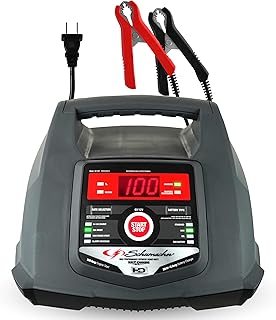
- Advanced 5-in-1 device: starts, charges, maintains, tests, and reconditions batteries
- Immediate charging power with up to 100A engine start and 30A boost
- Smart trickle maintenance for 6V/12V batteries without overcharging
AUTOUTLET Upgraded 6/8/12/14/16/24V Battery Charger

- 7-stage charging for 12V and 3-stage for 6V; includes desulfation and recondition features
- Fully automatic microprocessor control with multi-protection and spark-proof connection
- Automatic detection of battery voltage and safe float charging
TowerTop 25A Pro+ Battery Charger

- Four current settings (2A/15A/25A/AUTO) for flexible charging
- Auto desulfation and battery repair with high efficiency and ETL certification
- Comprehensive protection: reverse polarity, overcharge, overcurrent, overvoltage, and more
Haisito 16A Smart Battery Charger

- 16A max current with 6V/12V/24V compatibility; supports LiFePO4 and other lead-acid types
- 10-stage charging process with winter mode; set-and-forget trickle maintenance
- Pulse repair technology targets sulfation and acid stratification
NOCO GENIUS1 1A 6V/12V Charger

- All-in-one: charger, maintainer, trickle charger, and desulfator
- Thermal compensation for safe charging across temperatures
- Suitable for 6V/12V lead-acid and LiFePO4 batteries
Buying Guide: Key Purchase Considerations
When choosing a 6V/12V battery charger, consider charging speed, battery chemistry support, maintenance needs, and safety protections. For frequent engine starts or marine use, a model with higher amperage and boost capabilities (like 25–100A for starts) can reduce downtime. If you store batteries for long periods, a smart maintainer with desulfation and float charging helps extend life.
Battery chemistry compatibility is essential: LiFePO4, AGM, Gel, flooded lead-acid, and deep-cycle options each have unique charging needs. Look for multi-stage charging (bulk, absorption, float) and desulfation capabilities to recover or preserve older batteries. Temperature compensation and automatic detection reduce the risk of overcharging in hot or cold environments.
Safety features to prioritize include spark-proof connections, reverse-polarity protection, overcharge and overcurrent protection, short-circuit safeguards, and ETL or similar certifications. User-friendly interfaces, clear indicators, and automatic shutoff simplify operation for DIYers and professionals alike. Some chargers offer engine-start functionality, which can be a valuable feature in cold-weather or emergency scenarios but should be used as directed by the manufacturer.
Size, weight, and portability matter for road trips, boats, and garages with limited space. A compact, lightweight charger with a robust cooling design is preferable for frequent use. Finally, ensure the device supports both 6V and 12V configurations and can switch automatically or manually between the two, depending on your battery type and application.