
Best 4.3 Ignition Control Modules for Chevy GMC Trucks
Finding the right 4.3 ignition control module helps maintain reliable starts and smooth engine performance for common Chevy and GMC V6 applications. This guide highlights five of the top options, outlining who each product is best for, and why they stand out. It also flags common limitations to consider before buying. The top picks cover classic 4.3L engines and later V6/V8 configurations, with emphasis on compatibility and installation ease for DIYers and professional replacements alike.
| Product | Best For | Why It Stands Out |
|---|---|---|
| NewYall Ignition Control Module Unit | Older GM trucks and SUVs (1985–1995 era) | Extensive model coverage across GM platforms; robust fit for many 4.3L systems |
| ENA Ignition Coil And Module System | Multi-vehicle compatibility (1996–2002 GM trucks and vans) | Dual-vehicle fitment with two-module approach; broad V6/V8 coverage |
| X AUTOHAUX Ignition Control Module 10482803 | 1996–1999 GM pickups and 1996–2007 Express/Savana | Direct replacement references and multiple GM families |
| INFINAUTO Ignition Control Module | GMC Sonoma/Safari era and late 80s–early 90s GM vans | Metal heatsinks and durable ABS housing for longevity |
| TRQ Ignition Control Module | Cadillac/Chevy/GMC Isuzu and Olds/ Pontiac lines | Extensive cross-reference numbers; DIY-friendly with compatibility charts |
NewYall Ignition Control Module Unit

The NewYall unit targets a broad range of GM models from 1985 to 1995, including Chevrolet Astro, Blazer, S-10, Suburban, and many GMC variants. Best for owners restoring classic 4.3L engines or performing field replacements where PCM compatibility is known. The module lists wide vehicle coverage and a straightforward plug-and-play approach. A limitation is that detailed specification sheets are sparse; verify exact fitment against your VIN and engine serial before purchase. Suitable for DIYers rebuilding older engines without modern electronics.
ENA Ignition Coil And Module System
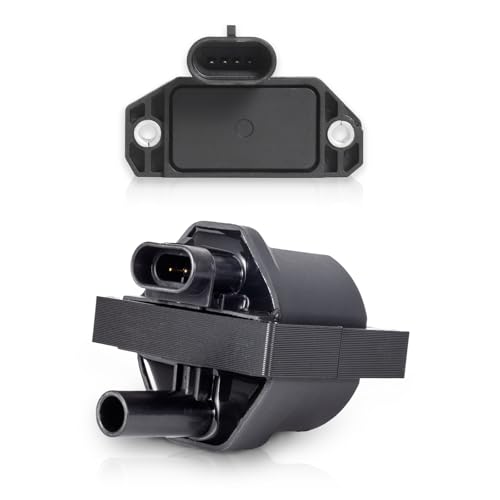
ENA provides a two-vehicle-friendly ignition coil and module system, covering 4.3L GM setups from 1996–2002 across Astro, Blazer, Express, S10, Tahoe, Sierra, and Savana families. Best for owners replacing multiple components in one job or upgrading across a fleet with common 10482803/LX381 references. Better for multi-vehicle households or shops. A potential limitation is the breadth of fitment claims; confirm exact part numbers for your year and model to avoid mismatches.
X AUTOHAUX Ignition Control Module 10482803

X AUTOHAUX presents a 10482803-listed module suitable for several GM vehicles from 1996–2007, including Express, Savana, S10, C1500, and Suburban lines. Best for DIYers who want an available direct-fit replacement with clear fit notes across multiple bodies. Choose this if you prioritize wide cross-compatibility and straightforward installation. Limitation: some models may require additional mounting hardware or wiring harness checks; verify your vehicle’s exact connector type before buying.
INFINAUTO Ignition Control Module

INFINAUTO targets a wide set of GMC and GMC/Sonoma/Safari configurations with V6 4.3L engines and V8 options across the late 80s to early 90s. Best for owners replacing or upgrading single-vehicle systems where detailed fitment notes match your model. Advantages include solid heat management with metal slug heat sinks and robust ABS housing. A caveat is the long list of compatible models; double-check your engine code and vehicle year to avoid mismatch with your exact subtype.
MOTOKU Ignition Control Module For Chevy

MOTOKU’s offering covers a broad slate of 4.3L vehicles including Astro, Blazer, Express, S10, Silverado, Suburban, Tahoe, and others from 1996–2007. Best for those seeking a single-source replacement across several 1996–2007 GM platforms. The product emphasizes compatibility with a wide variety of GM configurations and emphasizes ease of installation. Limitations include potential price sensitivity and the need to confirm exact connector compatibility for older or special-order trims.
TRQ Ignition Control Module

TRQ lists LX-381 and 10482803 references with broad compatibility across Cadillac, Chevy, GMC, Isuzu, Olds, and Pontiac lines. Best for buyers who want a reliable aftermarket option with a clearly documented compatibility chart and DIY video support. Pros include cross-reference numbers and a focus on accurate fitment. A limitation is that some listings emphasize compatibility charts more than exact year-by-year support; verify your specific VIN and engine code before purchase.
Delphi DS10059 Ignition Control Module

Delphi emphasizes original equipment design and protective features such as short circuit and over-voltage protection. Best for users seeking OE-style layout and robust electrical protection. The module supports durable heat transfer and precise voltage clamping. A potential limitation is that some OE-focused claims may require additional checks against your exact engine variant and year.
Premier Gear PG-DM579 Ignition Module

Premier Gear’s offering provides a New Premium Quality module designed to meet or exceed OEM specs. Best for users who want a straightforward replacement with testing assurances. It highlights reliability, durability, and performance. A limitation is the absence of detailed, model-by-model fit notes; confirm your exact year, make, and engine code to ensure compatibility.
Buying Guide
What should I check before buying a 4.3 ignition module?
Confirm exact engine code, year, and vehicle family. Look for the correct part number (such as LX381 or 10482803) and ensure the connector type matches your wiring harness.
Is multi-vehicle compatibility important?
Yes. If you own multiple GM vehicles with 4.3L engines, a module listed for several models can simplify replacements and stock management. Validate the specific fitment per VIN to avoid cross-application issues.
What installation considerations help prevent failures?
Ensure clean electrical connections, proper heat dissipation, and secure mounting. Some modules include metal slug heatsinks and tough ABS housings; use them where heat or vibration is a concern. Follow manufacturer instructions for ignition coil pairing when applicable.
Which options are best for DIY replacement?
Modules with clear fitment notes and straightforward plug-and-play wiring are ideal for DIYers. Look for modules with widely documented compatibility and visual wiring diagrams.
What about reliability and longevity?
Modules featuring robust heat management and protective circuitry (short-circuit, over-voltage, ESD protection) tend to endure longer under engine conditions. Consider brands with proven OE-style designs when possible.
Key buying considerations at a glance
- Exact vehicle compatibility: year, model, engine code
- Connector and wiring compatibility
- Heat management features
- Availability of installation guidance or video support
FAQ
- Q: Will any 4.3 module fit my engine? A: No. Check part numbers and the specific year/model to ensure compatibility with your VIN.
- Q: Do these modules require professional installation? A: Some installations are straightforward for DIYers; others may benefit from a mechanic if wiring or exhaust clearance is tight.
- Q: Are multi-vehicle modules reliable for a single-year vehicle? A: They can be, but verify exact fitment to avoid incorrect connector alignments.
- Q: Do all listed modules include heat dissipation features? A: Many do, but verify features like metal slug heatsinks or ABS housings in the product description.
- Q: Should I replace coils and modules together? A: If you experience ignition stalls or misfires, replacing coils alongside the module can improve reliability.
- Q: Where can I find installation videos?