
Best 30 Amp Converter Chargers for RVs and Boats: Top Picks for Reliable 12V Power
Answering the question, these 30 amp converter chargers are designed to reliably convert 110V AC to 12V DC and intelligently manage battery charging for RVs, boats, caravans, and travel trailers. They’re best for campers who need steady, safe power, owners upgrading aging converters, and DIY installers seeking flexible charging with auto-detect capabilities. The following selections emphasize three core strengths: multi-stage charging, compatibility with Lead-Acid and Lithium batteries, and quiet operation in tight spaces. A quick comparison table below highlights the five options covered in this article.
| Product | Best For | Key Feature | Limitation |
|---|---|---|---|
| IOTA Engineering DLS30 | Battery owners needing compact, reliable 30A charging | Compact package with standard 30A output | Limited feature set noted in available data |
| RecPro 4-Stage 35A | RVs needing four-stage charging and lithium support | 4-stage Smart Charging, multi-battery support | Listed features emphasize versatility; check compatibility with lithium types |
| WF-8735-AD RV Converter 30A | Campers seeking auto-detect and three-stage charging | Auto Detect Technology, three-stage charging | High output for large loads; verify installation space |
| 8955-AD 50Amp RV Charger | Systems requiring larger power center and tri-stage charging | Three-Stage Smart Charging with auto detect | Higher amperage unit; ensure your wiring supports it |
| WF-8735-AD 30A with 35A Output | Balanced 30A center with enhanced output | Auto Detect, 35A DC output | Smart design; confirm fit for your RV electrical panel |
IOTA Engineering DLS30 30 Amp Power Converter/Charger
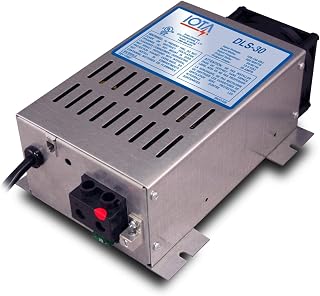
The IOTA DLS30 provides a straightforward 30-amp DC output with a compact footprint. It is best suited for buyers who want a dependable, simple converter with predictable performance in standard RV electrical setups. Its listed dimensions suggest an installation-friendly size, ideal for tight equipment bays. This unit is best for buyers who prioritize reliability and a straightforward charging path over advanced multi-stage features. A clear limitation from the data is minimal detail on charging stages beyond basic output, so check for any specific battery chemistry support before installation.
RecPro 35 Amp RV Power Converter & Battery Charger

The RecPro unit emphasizes a four-stage charging approach and robustness for multiple battery types, including Lead-Acid and Lithium. It’s best for RV owners who want optimal battery health, longer life, and the flexibility to wire in series or parallel for higher output. It’s a strong choice for those who value quiet operation and a drop-in replacement for older converters. A potential caveat is ensuring your battery type and system wiring align with the four-stage strategy described in the features.
WF-8735-AD RV Converter 30 Amp with Auto Detect

This WF-8735-AD model markets high efficiency with a 35-amp DC output that targets faster charging for RV electrical equipment. The auto-detect feature identifies battery type and automatically adjusts charging modes, which can help extend battery life. The unit also includes a built-in smart protection suite for overcharge, short circuit, and temperature control. It’s best for buyers who want intelligent charging with safety protections; consider space and installation requirements due to higher output and three-stage control.
8955-AD 50Amp RV Power Converter Charger

The 8955-AD model targets higher power needs with a three-stage smart charging design and auto-detect capabilities. It supports both Lithium and Lead-Acid batteries within a 120V system, making it a versatile option for larger or more complex RV setups. Best for buyers who require stronger charging performance and broader battery compatibility. A potential limitation is the higher amperage, which may demand more substantial wiring and space in the RV’s power center.
WF-8735-AD 30 Amp Power Center with Auto Detect

This WF-8735-AD variant combines auto-detect technology with a 35-amp DC output, offering strong charging capacity for RV systems while maintaining smart protection features. It frames itself as a flexible choice for campers who want reliable performance with automatic battery-type detection. A caution is ensuring that the 35A output aligns with your RV’s electrical panel capacity and wiring to avoid overloading circuits.
Buying Guide: Key Considerations For 30 Amp Converter Chargers
- Battery compatibility: Verify whether the charger supports Lead-Acid, AGM, and Lithium options, and whether it can auto-detect battery type for optimized charging.
- Charging stages: If battery longevity matters, prefer units with multi-stage charging (three- or four-stage) that manage bulk, absorption, and float phases appropriately.
- Output compatibility: Confirm that the unit’s DC output (30A vs 35A) matches your RV’s electrical needs and panel capacity to avoid overloading.
- Electrical system integration: Check for space in the power center, wiring gauge requirements, and whether the unit can replace older converters as a direct drop-in.
- Noise and cooling: Consider models with quiet operation or temperature-controlled cooling fans for installations in compact overhead or cabinet spaces.
- Safety features: Look for overcharge protection, short-circuit protection, and thermal management to protect both battery packs and electrical equipment.
- Installation flexibility: Some units allow series/parallel battery configurations for higher output or compatibility with different battery banks.
Frequently Asked Questions
- What is a 30 amp RV power converter used for?
It converts 110V AC to 12V DC to charge and run RV batteries and controlled accessories.
- Do auto-detect charging converters protect battery life?
Yes, auto-detect can adjust charging modes to match battery chemistry, helping prevent overcharging and extending life.
- Should I choose a 30A or 35A charger for my RV?
Choose based on your load requirements and wiring; higher amperage provides faster charging but may require upgraded cables and panel capacity.
- Are multi-stage chargers necessary?
Multi-stage charging helps optimize charging efficiency and battery health, especially for long-term RV use.
- Can these chargers handle Lithium batteries?
Many models advertise Lithium support; verify compatibility with your specific battery type and balance charging needs.