
Best 3 Prong Appliance Plugs for Safe, Reliable Power Connections
Answering the common question of “which 3 prong appliance plug should I choose?” this guide highlights reliable options for common home tools, appliances, and extension cords. The top picks cover everyday reliability, indoor-outdoor durability, and easy replacement. Ideal buyers include DIY homeowners, workshop enthusiasts, and professionals needing sturdy replacement ends. The following table summarizes the five products selected for their practical strength, compatibility, and straightforward installation.
| Product | Best For | Key Benefit |
|---|---|---|
| Leviton 2-Pole, 3 Wire Grounding Plug, 3W101-E | General home tools and appliances | Fast, easy assembly with hinged design |
| nVent Gardner Bender PS313163 3-Wire Cord | Major appliances and power tools | Heavy-duty replacement cord with 16 AWG conductors |
| Pinfox 6ft 14 Gauge 3 Prong Cord | General appliances and custom installations | One-end open wiring for custom connections |
| Vockjour 3 ft 16/3 Appliance Cord | Short, durable power cords | ETL Listed and heavy-duty |
| Certified Appliance Accessories Dryer Cord | Dryers and heavy loads | Right-angle plug head to save space |
Leviton 3W101-E 3-Wire Plug

Best for quick tool and small-appliance replacements. The Leviton 3W101-E features a hinged design for fast assembly and straightforward repairs on tools, appliances, and extension cords. It accepts AWG SJ 16/3 wiring, making it a practical choice for standard household cords. Best for DIYers who want a simple, reliable plug that installs without special tools. A potential limitation is the 16/3 conductor size, which may not suit higher-power appliances.
nVent Gardner Bender PS313163 3-Wire Cord

Better for major appliances and power tools requiring a robust replacement cord. This 3-wire cord is rated for 13A, 125V and uses 16 AWG conductors with a weather-resistant SJTW jacket, suitable for indoor or outdoor use. It is a strong option for workshop setups or hyper-demand appliances. Caution: outdoor use requires careful protection of connections to prevent moisture entry at the end terminations.
PINFOX 6ft 14 Gauge Replacement Cord

Best for long runs and custom installations. The PINFOX 6ft cord uses 14 AWG, 15A, 125V wiring with a pigtail end for easy field connections. Its SJT jacket and coarse conductor setup provide durability for general appliances and some industrial equipment. A limitation is that it has an open-ended end on one side, which requires careful wiring during installation to ensure secure connections.
Vockjour 3 ft 16/3 Cord
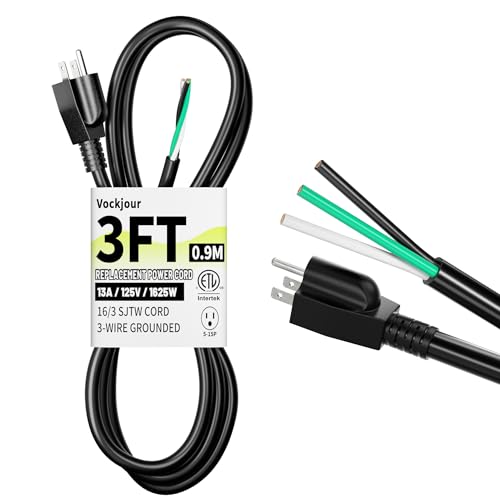
Best for compact, heavy-duty needs. The Vockjour cord is 3 feet long, 16 AWG, and ETL Listed. It uses a 16/3 configuration and is designed for 125V, 13A maximum loads with a NEMA 5-15P plug. It provides solid safety features and a compact form for tight spaces. Limitation: shorter length may not suit every setup; verify clearance before installation.
Certified Appliance Accessories Dryer Cord
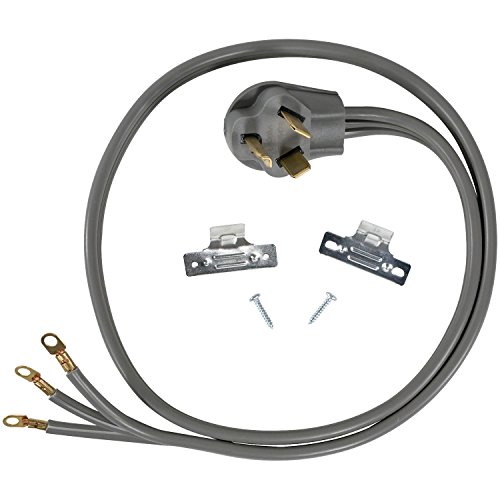
Designed for dryers and heavy-duty loads, this 30-Amp appliance cord uses a 3-prong dryer configuration with eyelet connectors for a snug fit. It supports 125/250-volt systems and is compatible with many dryers that require a three-wire, four-foot cord. Best for upgrading older dryer hookups; avoid this if your appliance requires a different voltage rating or a non-eyelet terminal arrangement.
Buying Guide — Key Purchase Considerations
What should you consider when choosing a 3-prong appliance plug or replacement cord?
- Current rating and voltage: Ensure compatibility with your appliance’s power requirements (commonly 125V and up to 15A for standard household cords; higher loads for dryers may require 30A or specific configurations).
- Wire gauge and conductor count: A 14 AWG or 16 AWG cord is typical for many appliances; 16/3 vs 14/3 indicates the conductor set and capacity. Heavier-duty tools may demand thicker wire.
- Jacket material and weather resistance: SJTW or SJTW-rated jackets are suitable for indoor/outdoor use, especially where the cord may encounter moisture.
- Plug design and space considerations: Right-angle plugs save space near walls, while longer cords provide flexibility for workshop layouts.
- End terminations: Open-ended cords require careful field connections, whereas pre-terminated ends simplify replacement but limit customization.
- Safety and certifications: ETL or UL listings indicate compliance with safety standards for consumer cords and plugs.
How to choose by use case
- DIY home repairs: Look for a simple, easy-to-install plug with a clear wiring block and color-coded clamps.
- Outdoor workshops: Prioritize weather-resistant jackets (SJTW) and robust connectors designed for outdoors.
- Appliance replacements: Check the appliance’s manual for voltage, amperage, and prong configuration to avoid mismatches.
Installation and safety tips
- Always disconnect power before replacing plugs or cords.
- Strip wiring cleanly and secure the jacket to prevent strain on the terminals.
- Use proper strain relief and ensure no copper strands are exposed beyond the terminal clamps.
- Test connections with a continuity check after installation.
FAQ
- Q: Can I use a 14 AWG cord for all appliances? A: Many small appliances can use 14 AWG, but verify the amperage rating and the appliance’s manual to avoid overloading.
- Q: Are all 3-prong plugs compatible with dryers? A: Not always. Dryers often require higher amperage or a specific NEMA configuration; refer to the dryer manual.
- Q: Is ETL listing necessary? A: It indicates compliance with recognized safety standards, which helps ensure reliable performance and safety.
- Q: What does “SJTW” mean? A: It indicates a jacket that is heat- and moisture-resistant, suitable for indoor and outdoor use.
- Q: When should I replace a plug vs. the cord? A: Replace the plug if the cord ends show wear or damage; replace the entire cord if insulation is compromised or the cord is frayed.
- Q: How long does a replacement plug typically take? A: Installation can take around five minutes with basic hand tools, depending on the wiring setup.