
Best 3.15A 250V Fuses for Electronics and DIY Projects
If you need reliable 3.15A, 250V fuses for overcurrent protection, these options cover fast-blow and slow-blow styles to fit various circuits. This guide highlights five well-suited choices, explains who each is best for, and flags any limits to consider. Ideal buyers include hobbyists wiring small power supplies, repair technicians handling consumer electronics, and DIY enthusiasts seeking quick, safe protection for 250V circuits.
Summary of selected products
| Product | Type | Size | Current | Best For |
|---|---|---|---|---|
| BOJACK 5x20mm 3.15A Fast-Blow | Fast-blow Glass Fuse | 5×20 mm | 3.15A | High-speed protection for transient surges |
| BOJACK T3.15AL250V 5x20mm Slow-Blow | Slow-blow Glass Fuse | 5×20 mm | 3.15A | Time-delay protection for inrush |
| Divine Lighting 5x20mm 3.15A Slow-Blow | Slow-Blow Ceramic Fuse | 5×20 mm | 3.15A | Durable, budget-friendly |
| HUAREW T3.15AL250V 20 Pcs | Slow-Blow Glass Fuse | 5×20 mm | 3.15A | Bulk supply for projects |
| uxcell DIP Mounted Micro Fuse 3.15A | Micro Slow-Blow | 8.5x8x4 mm | 3.15A | Compact protection for PCB boards |
BOJACK 5x20mm 3.15A Fast-Blow Glass Fuses

Product overview: This pack includes 20 fast-blow glass fuses, each 5×20 mm with a 3.15A rating and 250V maximum. The fast-blow design targets rapid protection for circuits that tolerate brief surges but require quick interruption when faults occur. Best for sensitive power supplies or quick-response protection in hobby electronics.
Who it’s best for and why: Ideal for hobbyists and repair techs who need many identical fast-acting fuses for low- to moderate-current PCB projects or small power adapters. The glass body is transparent for visible fuse status.
Limitations: Fast-blow fuses can trip on inrush or brief overcurrents; if your circuit experiences regular surges, a slow-blow alternative may be preferable to prevent nuisance blows.
BOJACK T3.15AL250V 5x20mm Slow-Blow Fuses

Product overview: Twenty slow-blow fuses, 5×20 mm, rated at 3.15A and 250V. Time-delay design helps withstand short inrush currents without immediate interruption, making them suitable for motor-driven or transformer-based circuits.
Who it’s best for and why: Choose this if your project includes motors, power supplies with inrush, or capacitor charging circuits where short surges are common. The slow-blow behavior reduces nuisance trips compared with fast-blow types.
Limitations: Slower response than fast-blow fuses; for ultra-fast protection needs, consider a fast-blow option as a complement in a multi-fuse setup.
Divine Lighting 5x20mm 3.15A Slow-Blow Ceramic Fuse

Product overview: This set contains five slow-blow 5×20 mm ceramic fuses rated at 3.15A and 250V. Ceramic fuses often provide robust performance in environments where ceramic bodies resist heat and mechanical stress.
Who it’s best for and why: Suitable for budget-conscious projects that still demand dependable slow-blow protection, especially in consumer electronics or small appliances with variable loads.
Limitations: Less bulk compared to some glass options, which may be perceived as bulkier in tight assemblies; ensure the ceramic format fits your design.
Ertzinla 25 Pack Slow-Blow Fuses, 3.15A

Product overview: This bundle includes 25 slow-blow glass fuses, 5×20 mm in size, rated at 3.15A and 250V. Time-delay design helps tolerate brief inrush currents while protecting the circuit from sustained overcurrent.
Who it’s best for and why: Great for project builders who want plenty of spares and consistent slow-blow protection across multiple builds or test rigs.
Limitations: The mixed packaging may vary by supplier; verify the exact count before ordering for a large build plan.
HUAREW T3.15AL250V 20 Pcs Slow-Blow Fuses

Product overview: Twenty slow-blow 5×20 mm fuses, 3.15A, 250V. The bulk pack is designed for ongoing projects or service work where a steady supply of fuses is needed.
Who it’s best for and why: Ideal for makers and service technicians who stock up for frequent 250V low-to-mid current circuits. Slower response helps inrush-heavy devices survive initial startup.
Limitations: Bulk packs may include fuses with slight tolerances; always test in a non-critical prototype before field deployment.
uxcell 30Pcs DIP Mounted Micro Slow-Blow Fuses

Product overview: A 30-piece set of micro slow-blow fuses designed for DIP mounting on PCBs. Each fuse is rated at 3.15A and 250V, with compact dimensions suited for tight electronics assemblies.
Who it’s best for and why: Best for PCB-centric projects, repair shops, or compact devices where space is limited and precise overcurrent protection is required. The DIP form factor simplifies installation on standard boards.
Limitations: Micro fuses may be less tolerant of mechanical stress; handle with care during assembly to avoid micro-cracks that could affect performance.
Delon Technology 10 Pack Glass Fast-Blow Fuses
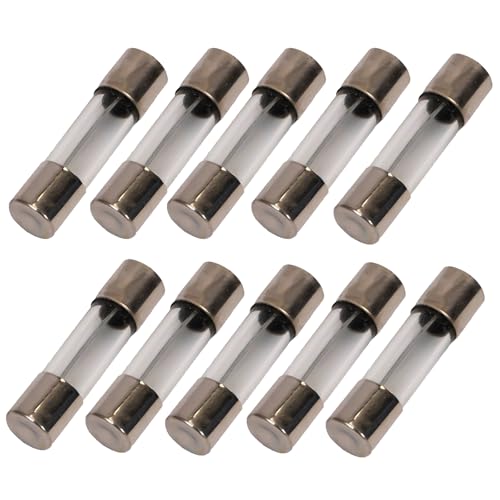
Product overview: Ten fast-blow glass fuses, 5×20 mm with a 3.15A rating and 250V. Glass construction provides clear visibility of fuse status and straightforward replacement.
Who it’s best for and why: Suitable for quick-protection roles in consumer electronics and small power devices where fast interruption is essential to prevent damage from faults.
Limitations: If your circuit uses significant startup surges, pairing with a slow-blow option may improve reliability and reduce nuisance trips.
Buying Guide: How To Choose The Right 3.15A 250V Fuse
What fuse type should you choose? Fast-blow fuses deliver immediate interruption on overcurrent, ideal for sensitive circuitry and fast protection. Slow-blow (time-delay) fuses tolerate short surges and inrush currents, better for motors, converters, or power supplies with startup spikes. For 250V circuits, ensure the voltage rating is sufficient for your application and that the physical size matches your enclosure.
Size and mounting matter: The common 5×20 mm size is widely used in consumer electronics and power supplies. For PCB-centric builds, consider micro fuses with DIP mounting for compact layouts. Ceramic bodies can offer higher heat resistance in demanding environments, while glass bodies provide easy visual inspection of fuse status.
Current rating accuracy: Your 3.15A rating should align with the circuit’s expected continuous current plus a safety margin. Having a mix of fast-blow and slow-blow options on hand helps respond to different protection needs in diverse projects.
Durability and environment: For harsh or vibration-prone settings, ceramic fuses may offer improved durability. In sensitive lab or bench setups, glass fuses enable quick status checks during testing and troubleshooting.
Packaging and quantity: Bulk packs are cost-efficient for ongoing work or inventory. For single-project use, smaller bundles reduce waste and simplify procurement.
Frequently Asked Questions
- What does 3.15A mean on a fuse? It is the current rating at which the fuse is designed to interrupt the circuit to protect components from overcurrent.
- When should I use fast-blow vs slow-blow fuses? Use fast-blow fuses for circuits sensitive to surges and where immediate protection is needed; use slow-blow fuses for circuits with startup inrush or brief overloads.
- Is a 250V fuse sufficient for a 120V circuit? Yes, as long as the fuse’s voltage rating is equal to or greater than the circuit voltage; higher ratings are acceptable for safety margins.
- Can I mix fuse brands in a device? It’s acceptable if the specs (current, voltage, size, and type) match, but consistency helps predictable protection.
- How do I identify the correct fuse size? Check the circuit’s required physical footprint and the load current; typical devices use 5×20 mm fuses in 3.15A range.
- Are these fuses interchangeable with automotive fuses? Not typically; automotive fuses use different standards and sizes, intended for different operating environments.