
Best 24000 Watt Solar System Kits for Home Power
The top picks here are 24kW-class solar system kits and components that align with a 24,000-watt scale, offering robust home backup or off-grid capability. These options are best for homeowners seeking high-output systems that can handle multiple high-demand appliances or grid-independent living. Each product is selected for clear utility, scalable expansion, and practical integration with common 120/240V home electrical needs. This guide highlights who each kit is best for, and why it stands out in the market today. A quick buying table follows to help you compare at a glance.
- Best for: Large households needing substantial daily energy and reliable backup power.
- Better for: Users who want built-in monitoring and easy parallel operation.
- Choose this if: You require a scalable, all-in-one off-grid solution with clear expansion paths.
| Product | Output | Battery/Storage | Best For | Note |
|---|---|---|---|---|
| ECO WORTHY 10000W Output Complete Off-Grid Solar Panel Kit | 10kW | 16.1 kWh LiFePO4 (314 Ah @ 48V) | Large homes needing split-phase 120/240V power | Upgraded 5x590W panels; scalable to six in parallel |
| AuraSolar 12000W Hybrid Inverter | 12kW continuous, 24kW surge | Compatible with 48V battery banks | Very large off-grid or backup systems; parallel up to 6 units | Built-in 2 MPPTs; strong monitoring |
| ECO-WORTHY 10KW Output 9.36KWH Off Grid System | 9.36kW daily approximate | 48V batteries (with CAN/RS485 monitoring) | Backup power for medium-size homes | UL1741/UL9540A certified; parallel up to 6 kits |
| ZLPOWER UL1741 8000W Inverter System | 8kW inverter, 24kW surge | With 2 MPPTs, 48V support | Residential backup with robust protections | Low-frequency design; supports various battery chemistries |
| ECO-WORTHY 48V Off Grid Complete Kit | 6.24kWh/day target | 48V LiFePO4 system | Smaller home or cabin with steady load | 8×195W panels; comprehensive 3500W inverter |
Below are five detailed product sections. Each entry includes a direct clickable Amazon link, a visual, and practical guidance on selection and setup considerations.
ECO-WORTHY 10kW All-In-One Off-Grid Kit

Best for: Homeowners seeking a single, all-in-one solution with a 48V battery bank and split-phase output. This kit delivers up to 10kW continuous power and 20kW peak with 120V/240V options, matching typical high-load appliances. The 16.1 kWh battery provides essential daytime-to-evening storage. Parallel expansion supports up to six units for bigger loads. A caution: system complexity increases with parallel units, requiring careful wiring and monitoring.
AuraSolar 12000W Hybrid Inverter
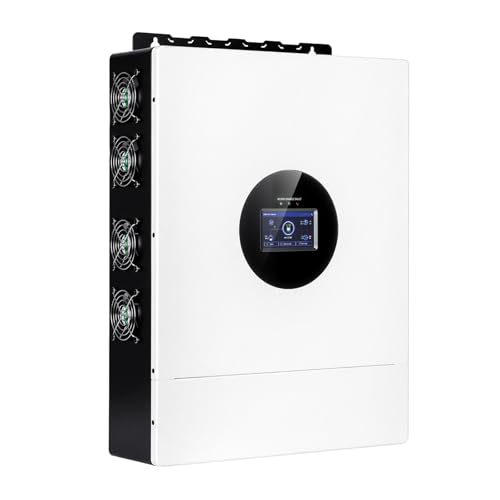
Best for: Large off-grid systems with heavy simultaneous loads. Dual MPPT inputs enable flexible PV array configurations, and the 24kW surge helps with startup spikes. Up to six in parallel means scalable power for multi-zone homes. Limitation: requires compatible 48V battery banks and robust monitoring to manage six-unit setups efficiently.
ECO-WORTHY 10KW Output 9.36KWH Off Grid Kit

Best for: Middle-to-large homes needing reliable daytime generation plus storage. The 9.36 kWh daily expectation pairs with a 48V battery system and a 10kW inverter to cover common home appliances. It includes WiFi monitoring and CAN/RS485 communications. A caution: performance depends on sun exposure and daily loads; ensure panel orientation maximizes sun hours.
ZLPOWER 8000W Hybrid Inverter System

Best for: Backup-focused homes needing robust AC output with good protection. The 8kW inverter with built-in dual MPPT controllers is paired with protective features and WiFi control for remote monitoring. Better for: users who want a reliable, lower-cost entry into hybrid inverters. Limitation: lower maximum continuous output than bigger 12kW-plus options, so avoid very high continuous loads without expansion.
ECO-WORTHY 48V Off Grid System Kit

Best for: Small-to-medium off-grid installations or cabins where space and budget are considerations. The 6.24kWh/day target with 48V LiFePO4 storage supports essential daily loads. The 3500W inverter provides steady performance, and the kit includes an LED display for monitoring. Caution: daily output depends on sun; plan for weather variability and higher loads with expansion.
Buying Guide
What size system do I need for home backup?
Start with your critical loads—refrigeration, essential lighting, and communication devices. Estimate total watts and peak watts required during outages. Then choose a kit with at least 1.5x to 2x that capacity to account for startup surges and future expansion.
Is parallel kit expansion worth it?
Parallel kits allow you to add more inverters or panels over time, increasing daily energy production and backup power. Compatibility with existing inverters and battery banks is essential; verify parallel operation limits and monitoring integration.
Which battery chemistry is best?
LiFePO4 batteries are common in these kits for their safety, longevity, and stable performance. Ensure the system supports the chosen chemistry and that BMS and communication interfaces (RS485, CAN) are compatible with the inverter.
What maintenance should I expect?
Regular inspection of wiring, connectors, and fuses is advised. Monitor the system’s performance via the built-in display or app. Check battery health and electrolyte levels if applicable and ensure cooling paths are clear for inverters.
How do I ensure safe installation?
Follow local electrical codes and use professional installation if required. Verify grounding, proper insulation, and correct cable sizing for 120/240V loads. Use dedicated PV disconnects and a clear load schedule.
What should I ask the seller about warranties?
Inquire about inverter, battery, and panel warranties, and whether the warranty covers on-site service or return-to-base. Confirm what conditions void coverages (misuse, improper installation, water exposure).
FAQ
- Can I run a whole house off a 12kW system?
- Is parallel operation safe for multiple inverters?
- What is split-phase 120/240V output used for?
- Do these kits support grid-tied operation?
- Which kit is best for an RV or cabin?
Yes, if daily loads are managed and the system is properly wired with adequate inverter capacity and battery storage.
Yes, when designed for parallel use and monitored, to avoid overloading circuits or misalignment between units.
It powers typical household appliances across two hot legs, balancing loads between phases for efficiency.
Some do, depending on the model and local regulations; verify grid-tie capabilities and safety protections before connection.
Smaller, portable systems with integrated inverters and easy monitoring are ideal for RVs; for cabins, mid-range or larger kits with reliable storage are preferable.