
Best 240 Volt to 110 Volt Adapters for Home and Work Use
When you need to power 110V devices from a 240V source, choosing a safe, well-rated adapter matters. This guide highlights five practical 240V to 110V or related voltage adapters, explaining who they’re best for, common limitations, and why each stands out. Whether you’re upgrading a workshop setup, running a dryer-compatible circuit, or traveling with 110V gear, these options cover common use cases and provide practical, safer alternatives. The buyer types below include homeowners, hobbyists, tradespeople, and travelers seeking reliable, compliant connections.
| Product | Best For | Key Benefit |
|---|---|---|
| [240V to 120V] Suplevel 30 Amp to 20 Amp Adapter | Home workshop and vintage dryer users | Dedicated 24A circuit breakers for safety |
| PLIS 6-15P to 5-15R US Plug Adapter | Equipment rated for 220/240V needing 110/120V outlet | Simple 110V/120V conversion for 220V equipment |
| Portvoi 50 Amp NEMA 5-15P to 6-50R | Welder/EV charger setups | Weather-resistant and ETL listed |
| 4 Pack European to US Plug Adapter | Travelers and multi-country devices | Wide voltage range compatibility for travel |
| Industrial welders and 240V equipment | Supports 20A/15A outlets at 240V | |
| SURIEEN 1.5FT NEMA 5-15P to 10-50R | Dryer/EV charger connections | ETL-listed, heavy-duty 1.5 ft cord |
Note: Always verify outlet compatibility before use. Some adapters are designed for 240V systems with specific receptacle configurations and may not work with all 110V appliances.
[240V to 120V] Suplevel 30 Amp to 20 Amp Adapter

This adapter converts an old NEMA 10-30R dryer outlet to four 5-20/5-15R receptacles with a built-in 24-amp circuit breaker on each side. It’s best for homeowners with older dryer outlets who need to run standard 110V appliances from a legacy 30A circuit. The device is ETL listed and STW 10 AWG wiring adds safety and durability. Choose this when you need multiple 110V outlets from a single 240V feed but avoid it if your appliance requires a single dedicated circuit or if your outlet configuration differs from the 10-30R layout.
Who it’s best for: Homeowners or small shops repurposing an old dryer outlet to power 110V devices. Limitations: Check outlet compatibility and room for the four 5-20/5-15R connections; not all 240V systems use a 10-30R configuration.
PLIS 6-15P to 5-15R US Plug Adapter

This adapter converts a 120V 5-15P plug to a 6-15P pattern, enabling some 240V-rated equipment to connect to 110/120V outlets. It should be used only with devices that are rated for 220/240V; it does not convert voltage. It’s best for temporary setups where a device must be plugged into a standard 120V outlet, and should be avoided for devices that require a 5-20P outlet or that draw more than 15A.
Who it’s best for: Workers or hobbyists needing a quick 240V-to-110V connection for compliant equipment. Limitations: This is not a universal voltage converter and is only suitable for properly rated equipment.
Portvoi 50 Amp NEMA 5-15P to 6-50R

This adapter converts a standard NEMA 5-15P plug to a NEMA 6-50R receptacle, useful for welders or plasma cutters and similar 240V equipment. It features 10 AWG copper conductors for better conductivity, an ETL listing for safety, and a weather-resistant jacket suitable for challenging environments. Best for long welding or heavy-duty 240V tool connections, but it’s not a general-purpose 110V solution.
Who it’s best for: Tradespeople and hobby welders needing a reliable 120/240V transition for 6-50R hardware. Limitations: Not suitable for 110V-only equipment or outlets not matching the 6-50R configuration.
4 Pack European to US Plug Adapter

This four-pack lets travelers and multi-country users connect European devices to U.S. outlets. It supports 125–250V within a 6A maximum, translating to a practical 750W capacity, not a voltage converter. It’s ideal for charging small electronics and travel gear. For high-powered appliances, opt for dedicated voltage conversion or different adapters.
Who it’s best for: Travelers, students, or households with mixed-country devices needing 110V outlets. Limitations: Not a voltage converter; won’t adapt high-wattage devices or appliances that require 220/240V.
Tellegloww NEMA 6-50P to 6-20/15R
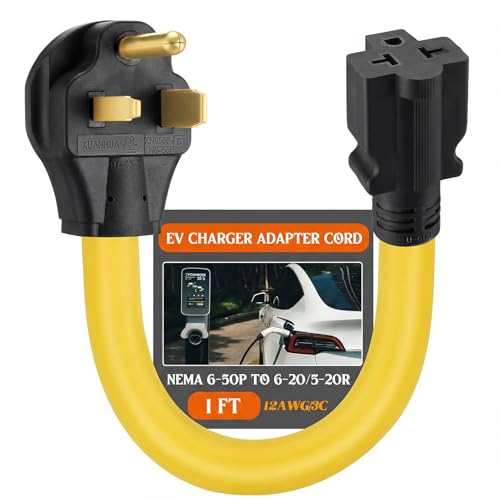
This 50A to 20/15A adapter converts a 6-50P 240V inlet to 6-20R or 5-20R outputs, accommodating 240V welding or other heavy equipment and providing a practical pathway to 240V–20/15A outlets. It supports 20A overload and is designed for industrial and heavy-duty use. Best for equipment requiring a 240V supply with flexible outlet choices.
Who it’s best for: Industrial welders, plasma cutters, and heavy 240V users needing 20A/15A receptacles. Limitations: Only suitable for 240V devices; cannot convert to full 110V for all loads.
SURIEEN 1.5FT NEMA 5-15P to 10-50R

This 1.5-foot adapter converts a standard NEMA 5-15P plug to a NEMA 10-50R receptacle used by some older 240V dryers and ovens. It’s ETL-listed and designed for 120V devices—no more than 15A. It’s best for light, temporary 120V appliance connections in mixed-voltage setups and not for continuous 240V operation.
Who it’s best for: Those needing a compact adapter for 120V appliances in spaces with 240V outlets. Limitations: Not for 240V devices or long-term high-wattage use.
Buying Guide: Key Purchase Considerations
Assess voltage compatibility first. Confirm whether you need a 240V-to-110/120V conversion, a simple plug adapter, or a corded adapter with built-in protection. Look for ETL or UL listings for safety and compliance. Consider the intended environment: indoor use, outdoor exposure, or workshop settings with heavy-duty cords.
Cord length and gauge matter. Longer cords increase resistance and heat risk; thicker gauges (like 10 AWG) handle higher currents more safely. Circuit breakers built into adapters add protection against overloads, but do not rely on them for all emergency shutoffs.
Outlet compatibility is critical. Some adapters assume a 10-30R, 6-50R, or 5-15R receptacle. Mismatches can cause improper connections or unsafe operation. When in doubt, consult a licensed electrician, especially for high-current loads or permanent installations.
FAQ
- Can I use 240V adapters for any 110V device?
Not necessarily. Some adapters are designed for specific voltages and outlets. Check device rating and adapter notes before use.
- Are these adapters safe for continuous use?
Safety depends on rating, environment, and load. ETL/UL listings and proper cord gauge improve safety, but never exceed listed wattage or amperage.
- Do these adapters convert voltage, or just connectors?
Most listed adapters are not voltage converters; they simply adapt plug patterns or outlets. Use only on devices rated for the target voltage.
- What should I verify before buying?
Verify outlet type, voltage rating, current rating, and environmental suitability. Ensure the adapter matches the receptacles you have and the device you intend to power.
- Is a built-in circuit breaker necessary?
Built-in breakers add protection against overloads. Use as an additional safety feature, but do not rely on them as the sole protection mechanism.