
Best 24 Volt Solar Panels for Off-Grid RVs and Vans
For campers, van life enthusiasts, and off-grid homeowners, 24-volt solar panels offer efficient charging for higher-voltage battery systems. This guide reviews five top options that balance compact sizing, high efficiency, and reliable performance. Each product is tailored for 24V setups commonly used in Class B vans, RV roofs, boats, and remote cabins. Explore features, installation notes, and what to consider when building a 24V solar array.
| Product | Brand | Power | Voltage | Key Feature |
|---|---|---|---|---|
| Renogy Solar Panel 200W N-Type | Renogy | 200W | 24V | Compact 25% efficient N-Type cells; space-saving for tight roofs |
| Renogy N-Type 400W Panel (2x200W) | Renogy | 400W | 24V | High efficiency 25%; flexible for small footprints |
| ECO-WORTHY 200W Kit | ECO-WORTHY | 200W | 12/24V | Durable, weather-ready frame; flexible 12V/24V use |
| SOLPERK 50W Kit | SOLPERK | 50W | 24V | Intelligent 10A PWM controller; weatherproof |
| STAR 870W Kit (2x435W) | STAR | 870W | 24V | Frameless full-screen design; high efficiency |
The products below are the five most relevant options for a 24V system, chosen for their balance of power, footprint, and versatility across RVs, boats, farms, and remote cabins. Each section provides a concise overview, installation notes, and the key features that influence performance in real-world conditions.
Renogy 200W N-Type Solar Panel — Compact 24V Power

The Renogy 200W N-Type panel is designed for tight roof spaces such as Class B vans. It’s 7.5% smaller and 11.7% lighter than earlier models, delivering the same power with a compact footprint. The cell technology achieves about 25% efficiency, leveraging 16BB N-Type cells to boost energy conversion while reducing microcrack risks, especially in warm conditions. Optimized for 24V systems, it minimizes current loss and improves overall array performance. Compatible with both 12V and 24V battery banks, installation options remain flexible for diverse RV or off-grid configurations.
Renogy 400W Dual 24V Panels — High-Efficiency Pair

This kit combines two 200W panels to form a robust 400W 24V array. Like the single-panel version, these units use 25% efficient 16BB cells to maximize energy conversion and reduce microcrack risk, delivering reliable output in varying conditions. The 24V operation supports higher-voltage battery banks with lower current for the same power, which can improve wiring efficiency and charge controller performance. The compact form factor is well-suited for vans and compact roof spaces, while offering scalable expansion for larger setups.
ECO-WORTHY 200W Solar Panel Kit — 12/24V Compatibility

The ECO-WORTHY kit targets versatile off-grid needs with a 200W monocrystalline panel and a 12V/24V compatibility frame. It is designed for RVs, cabins, and boats, delivering a strong daily output in sunny conditions. The panel employs a corrosion-resistant aluminum frame and a weather-tolerant build to withstand wind and snow loads. An IP65-rated junction box adds protective reliability for long-term outdoor use, making it a practical choice for permanent installations or seasonal setups.
SOLPERK 50W 24V Solar Panel Kit — Intelligent PWM

The SOLPERK kit provides a compact 50W panel with a smart 10A PWM controller. It emphasizes durability with a corrosion-resistant aluminum frame and toughened glass, plus IP67 weatherproofing. The controller offers a straightforward charging profile and indicators to monitor status, helping protect battery health in off-grid or mobile setups. Although smaller in wattage, it can serve as a practical solar maintainer or supplement for 24V systems, especially in limited roof space or seasonal use.
STAR 870W Kit — Frameless, High-Efficiency
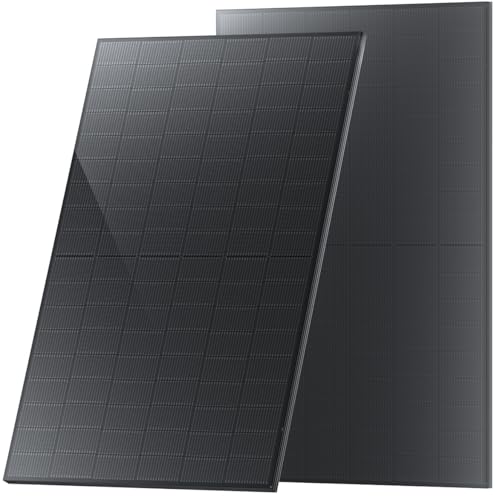
The STAR kit presents a frameless full-screen design, reducing dust buildup and facilitating clean maintenance in RV, marine, and off-grid installations. With two 435W panels totaling 870W, this option emphasizes high efficiency (25% cells) and a robust power profile suitable for larger roof spaces or high-demand applications. The frameless design minimizes ballast and can offer flexible mounting, which is advantageous for yachts, RVs with curved roofs, or sun-drenched cabins seeking maximum daily yield.
Buying Guide: Key Considerations For 24V Solar Panels
- System voltage and compatibility: A 24V configuration is common for RVs and off-grid installations. Confirm that the panel’s maximum power and wiring align with your inverter/charge controller and battery bank (12V vs 24V compatibility matters for overall efficiency).
- Cell technology and efficiency: Panels with 16BB or similar high-efficiency cells provide better energy conversion, particularly in hot or low-light conditions. Higher efficiency helps maximize limited roof space on vans and boats.
- Footprint and mounting: For Class B vans and compact roofs, compact panels or dual-panel kits may fit better. Frameless or semi-frameless designs can reduce weight and simplify installation on curved surfaces.
- Durability and weather resistance: Look for corrosion-resistant frames, tempered glass, and IP ratings (IP65–IP67) to withstand wind, rain, and snow. Outdoor durability affects long-term reliability in remote locations.
- Charge controller compatibility: PWM vs MPPT controllers affect charging efficiency. Larger arrays may benefit from MPPT, while smaller kits can remain cost-effective with PWM controllers.
- Expandability: If you plan to grow your system, choose panels and controllers that allow easy expansion, and ensure battery bank compatibility with future additions.
- Installation ease: Pre-drilled holes, adjustable brackets, and simple cabling reduce setup time and improve mounting reliability on vehicles or cabins.
- Maintenance needs: Consider ease of cleaning (dust and debris can reduce output) and whether the design requires periodic resealing for weatherproofing on exposed roofs.
- Cost of ownership: Higher-efficiency options may have a higher upfront cost but offer better daily yield, especially under partial sun or shade. Weigh upfront against long-term charging performance.