
Best 2″ Rigid Compression Connectors for Electrical Installations
Looking for reliable 2″ rigid compression connectors? This guide highlights five solid choices, each suited to professional electricians and DIYers depending on the setup. The selections cover insulated and uninsulated, box and coupling styles, and consider ease of installation and durability. Use this overview to compare what fits your conduit, enclosure, and installation depth needs.
| Product | Type | Best For |
|---|---|---|
| COREX 2″ Insulated Steel Compression Connector | Insulated, Threadless | Conduit-to-box installations with insulation needs |
| Morris Rigid Steel Compression Box Connector 2″ | Box Connector, Steel | Box or enclosure connections for rigid conduit |
| Morris Rigid Steel Compression Insulated Box Connector 2″ | Insulated Box Connector | Insulated pathways to boxes/enclosures |
| 2 in. Rigid/IMC Compression Connector, Uninsulated | Uninsulated, Threadless | Simple, non-insulated conduit connections |
| COREX 2″ Threadless Compression Coupling | Coupling, Iron/Malleable | Joining sections of rigid conduit |
COREX 2″ Insulated Steel Compression Connector

Features include threadless design, concrete-tight fit, and steel construction. Best for jobs requiring insulation between rigid conduit and connected components. The insulated material helps protect wiring in damp or exposed environments and reduces thermal transfer at the connection point.
Best for: Professional electricians and DIY installers handling insulated conduit runs into boxes or enclosures. It’s chosen for its robust steel build and straightforward threadless connection, which can speed up installation in demanding spaces.
Limitation: Insulation adds some bulk; ensure sufficient space in tight enclosures and knockout areas before installation.
Morris Rigid Steel Compression Box Connector 2″
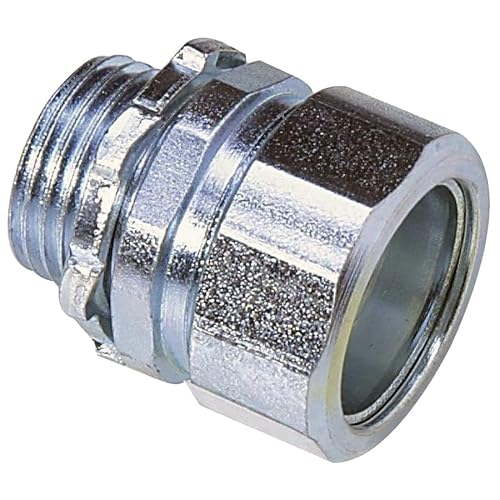
Features describe a concrete-tight, zinc-plated steel design to connect thread-less rigid conduit to boxes and enclosures. This connector is designed for dependable performance in professional electrical installations and DIY projects alike.
Best for: Installations that require a clean, tight fit between conduit and a box or enclosure, with emphasis on long-term durability and ease of alignment during mounting and finishing work.
Caution: Check the knockout pattern and device depth requirements for your box to ensure compatibility with the chosen connector.
Morris Rigid Steel Compression Insulated Box Connector 2″, 5-Pack
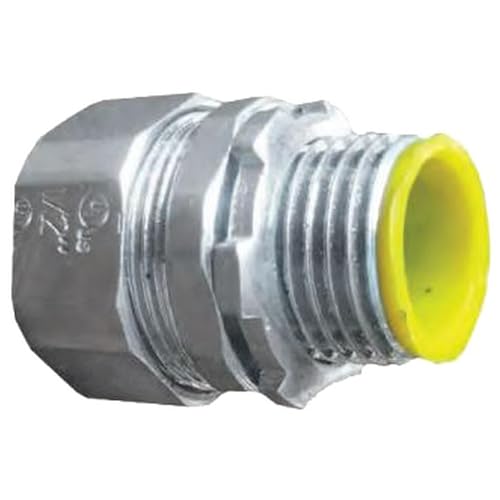
This insulated 2″ box connector provides a zinc-plated steel solution for connecting thread-less rigid conduit to boxes and enclosures, offering a durable and insulated pathway within a compact 5-pack. It is ideal for larger projects or ongoing maintenance where multiple connectors are needed.
Best for: Projects requiring multiple insulated connectors to maintain consistent performance and insulation at every box entry. Choose this when planning a long, organized install with multiple connections.
Limitation: Insulated variants can be bulkier than uninsulated options; ensure sufficient clearance in crowded panels or backboxes.
2 in. Rigid/IMC Compression Connector, Uninsulated

All-steel, malleable iron construction provides mechanical protection for raceways. This uninsulated option is a straightforward choice for non-insulated conduit connections to boxes or enclosures, with a design manufactured by RACO.
Best for: Projects where insulation is not a requirement and a robust metal-to-metal connection is preferred. It offers a simple, durable connection suitable for many commercial and industrial settings.
Caution: Ensure compatibility with your specific conduit type and knockout patterns; verify fit in older or uniquely configured boxes.
COREX 2 1/2″ Insulated Malleable Iron Connector

Threadless, concrete-tight, made from malleable iron with insulation. Although the size differs from the 2″ options, this connector is useful for slightly larger IMC conduit runs where insulation is a priority and space permits.
Best for: Projects needing a rugged, insulated coupling with higher strength material for heavier conduits and more demanding environments.
Limitation: Not a direct 2″ option; use when 2 1/2″ conduit requirements arise and space allows. Verify compatibility with your conduit and enclosure specifications.
STEEL THREADLESS RIGID CONNECTORS COMPRESSION TYPE (RT-200, 2″)
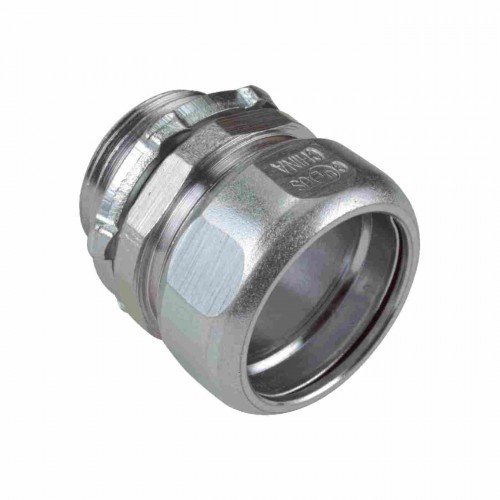
Zinc rigid compression connectors offer a compact, zinc-coated solution for threadless rigid conduit connections. The zinc finish provides corrosion resistance for longer life in metal environments.
Best for: Installations requiring a corrosion-resistant, simple-to-install rigid connector with a focus on longevity in industrial or outdoor settings.
Caution: As with any zinc-plated part, verify exposure conditions and potential galvanic interactions in mixed metal systems to avoid premature corrosion.
COREX 2″ Threadless Compression Coupling

Threadless coupling in a zinc-plated malleable iron construction provides a strong join between two rigid conduit sections. It is designed to create a seamless transition in IMC conduits with minimal protrusion and solid mechanical connection.
Best for: Projects requiring a reliable conduit-to-conduit join with a compact profile and durable material to withstand industrial environments.
Caution: Verify alignment and device depth when pairing with other fittings to avoid alignment issues with mounted devices or boxes.
Buying Guide
Key considerations for selecting 2″ rigid compression connectors include material, insulation, and installation environment. Decide between insulated versus uninsulated based on whether heat or moisture protection is needed at the connection. Material choices (steel, malleable iron) influence strength, corrosion resistance, and compatibility with IMC or rigid conduit.
Important questions to guide your choice:
- What enclosure or box will the conduit connect to, and is insulation required at that junction?
- Is the environment indoors, outdoors, or in a damp location where moisture could affect connections?
- Do you need a threadless design for quicker assembly or a traditional threaded approach?
- Is there a need for multiple connectors for a larger project, or a single, compact fitting?
Practical tips for installation
- Plan knockout patterns and device depth before choosing a connector to avoid fit issues.
- Match the connector material to the conduit material to ensure compatible expansion and contraction rates.
- Check clearance inside boxes and enclosures when using insulated connectors to avoid overtime adjustments.
FAQ
- What is a threadless compression connector? Answer: A connector that seals and grips conduit without external threads, simplifying installation.
- Do I need insulation on a 2″ connector? Answer: Use insulated connectors when moisture, heat transfer, or physical protection around the connection is a concern.
- Can these connectors be used with IMC and EMT? Answer: Many are designed for rigid/IMC conduit; verify compatibility on each product page.
- Which material is most durable for outdoor use? Answer: Zinc-plated or malleable iron variants offer corrosion resistance; choose based on exposure conditions.
- How do I determine the right size? Answer: The 2″ designation refers to the conduit size; ensure your conduit matches the connector’s size and type.
- Are these connectors suitable for professional electricians only? Answer: They are suitable for both professional electricians and capable DIY installers, depending on an understanding of enclosure requirements and local codes.