
Best 2-Inch Rigid Conduit Solutions for Electrical Installations
Below are five carefully chosen 2-inch conduit products that suit common electrical install needs. This guide helps buyers decide which option is best for rigid, non-metallic, or flexible applications. For contractor-grade runs, the Sigma ProConnex 2″ threaded nipple fits metal enclosures well. PVC LL Type conduit bodies ease 90-degree turns near walls. Flexible PVC conduit covers tight spaces and outdoor use. The 1-inch conduit kit offers flexible options when a single installer handles the job. Stainless steel clamps help secure rigid pipes in durable, corrosion-resistant installations.
| Product | Best For | Key Benefit |
|---|---|---|
| Sigma ProConnex 54300M 2″ Rigid Threaded Nipple Conduit Fitting | Metal enclosures and IMC/Rigid systems | Close, robust connections between boxes |
| 2 Inch Rigid PVC Conduit Body Type LL | Concrete or wall-adjacent runs with easy pulls | 90-degree pull-friendly access |
| PVC Liquid-Tight Conduit – 2 Inch 25 Foot | Outdoor, wet or direct burial environments | UV resistant, flexible in tight spaces |
| 1 inch 25ft Electrical Conduit Kit | Single-person installations with fittings included | All-in-one flexible conduit kit |
| 10Pcs 1-3/4 Inch Stainless Steel Conduit Clamps | Secure mounting in durable hydraulic or mechanical spaces | Corrosion-resistant stainless steel |
Sigma ProConnex 2″ Rigid Threaded Nipple Conduit Fitting

The Sigma ProConnex 54300M provides a tight connection between two steel outlet boxes or metal enclosures when used with locknuts. It is designed for use with 2-inch IMC or rigid conduit or 2-inch knockouts. This product is best for metal conduit runs where a close, secure fit is critical. Caution: confirm compatibility with existing locknuts and enclosure threading before installation. This fitting helps reduce wobble and movement in rigid metal conduit systems, improving overall junction integrity.
2 Inch Rigid PVC Conduit Body Type LL

This LL Type conduit body in rigid PVC is ideal for runs that require a clean 90-degree turn near walls. Its non-conductive construction offers UV, impact, and corrosion resistance for long service life, with a smooth surface that simplifies cutting and finishing. Best for installations where a metal path isn’t necessary, and easy access for pulling and splicing is prioritized. Limitation: ensure system design accommodates the flat-back profile for wall-mounted layouts.
PVC Liquid-Tight Conduit – 2 Inch 25 Foot

This 2-inch flexible, non-metallic conduit is designed to withstand outdoor, wet, and direct burial environments. It’s 50% lighter than metallic conduits and offers a UV-resistant jacket with a smooth interior for easier wire pulling. Best for tight spaces and long outdoor runs where corrosion resistance and ease of installation matter. Caution: flexible conduit may require additional fittings for long straight runs to maintain enclosure access.
1 Inch Electrical Conduit Kit

This 1-inch conduit kit includes 25 feet of flexible, liquid-tight conduit plus five straight and three angle fittings. It is best for quick, single-person installations where speed and portability are essential. The kit’s anti-oxidation virgin PVC composition provides smooth interior surfaces for easy wire pulling. Limitation: designed for 1-inch pathways; scaling up to 2 inches requires separate conduit or larger kit components.
10Pcs 1-3/4 Inch Stainless Steel Conduit Clamps
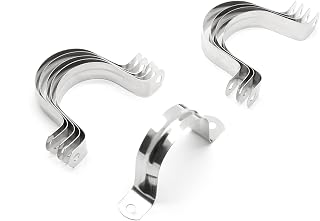
This pack includes ten 1-3/4 inch stainless steel conduit clamps with two-hole U-brackets. The stainless steel construction offers corrosion resistance and long-term durability, making them suitable for harsh environments. Best for securing rigid conduits in mechanical rooms or outdoor installations. Caution: verify hole spacing and screw sizes match your mounting surfaces to ensure a secure fit.
Buying Guide
What type of conduit do you need?
- Rigid metal conduit (RMC/IMC) vs. PVC/PPVC: Choose metal for high mechanical protection and outdoor durability; choose PVC for simpler pulls and non-conductive paths near walls.
What environment are you wiring?
- Outdoor or buried installations benefit from UV-resistant, moisture-proof sheathing and flexible options for tight spaces.
How important is ease of installation?
- Conduit kits with fittings reduce setup time. Flexible conduits are faster for one-person jobs, while rigid bodies suit long, straight runs.
Are there mounting or clearance constraints?
- LL-type conduit bodies help with wall clearance and easier access, while close-fitting nipples provide compact intersections.
What about future maintenance?
- Consider accessible pull points with LL-type bodies or junctions that allow for straightforward wire pulling and splices.
Frequently Asked Questions
- What is the difference between rigid conduit and flexible conduit?
Rigid conduit provides structural protection and is typically used for outdoor or infrastructure runs, while flexible conduit is easier to install in tight spaces or fixtures and allows for curved routes.) - When should I use a conduit body Type LL?
LL-type bodies are best when you need a straightforward pull point and easier access in tight spaces near walls. - Is PVC conduit suitable for outdoor use?
Yes, if the PVC conduit is UV resistant and rated for outdoor exposure; ensure it’s appropriate for direct burial when required. - Do I need clamps for securing conduits?
Yes, clamps help prevent movement and reduce stress on connections. Stainless steel clamps offer corrosion resistance for demanding environments.
Note: This guide uses objective criteria and stated features to help buyers select the best 2-inch conduit options for various applications. Always follow local electrical codes and installation best practices when selecting and using conduit systems.