
Best 17 Kw Portable Generator Options for Home Backup and RV Use
When shopping for a 17 kW portable generator, you want reliable power, fuel flexibility, and safety features for home backup, job sites, or RV use. The top picks below balance high wattage with practical benefits like dual-fuel capability, electric start, and real-time monitoring. This guide helps buyers choose the best fit based on run time, starting watts, and fuel options for different power needs.
Buyer notes:
– Best for large homes and emergency power backups: higher running watts and longer runtimes.
– Best for portability with strong power: inverter generators with smart data monitoring.
– Best for fuel flexibility: tri-fuel or dual-fuel designs that accept gasoline, propane, or natural gas.
– The following table highlights core specs to compare quickly.
| Product | Best Use Case | Key Strength | Fuel Options |
|---|---|---|---|
| Home backup with transfer switch | Remote start and multiple outlets | Gasoline/Propane | |
| Outdoor camping and RVs | Bluetooth data monitor, CO alarm | Gasoline | |
| Job sites and emergency power | Tri-fuel flexibility, AVR stability | Gas/Propane/Natural Gas | |
| Large home backup | High peak wattage for surge | Gasoline/Propane | |
| Heavy-duty backup power | High running watts, CO sensors | Gasoline |
Westinghouse 12500 Watt Dual Fuel Back-Up Generator

Features include 9500 running watts and 12500 peak watts on gasoline, 8500 running watts and 11200 peak watts on propane, remote start with a key fob, electric and recoil start, and up to 12 hours of runtime on a 6.6 gallon tank. It includes a transfer switch ready 120V L14-30R, a 120V standard receptacle, and a 50A 14-50R outlet for RV use. The heavy-duty 457cc Westinghouse engine supports automatic low oil shutdown and a digital hour meter with VFT display for real-time voltage, frequency, and runtime. Best for: homeowners needing robust dual-fuel power with remote start and transfer switch readiness. Limitation: higher fuel consumption on propane compared to gasoline under heavy loads.
maXpeedingrods 4000 Watt Inverter Generator

Features include 4000 watts of pure sine wave AC, Bluetooth app data monitoring, lightweight portability, and CO alarm for outdoor use. It is RV-ready and suitable for weekend camping or portable home backup. Best for: campers and small-space users who want smart monitoring and rooftop-safe operation. Limitation: lower overall wattage means it may not support large home appliances simultaneously.
Generac 12,500 Starting Watt Tri-Fuel Generator

Tri-fuel flexibility lets you run on gasoline, propane, or natural gas with a simple dial switch, delivering 9,500 running watts and 12,500 starting watts. Built-in AVR stabilizes output for consistent power, protecting equipment during surges. Best for: back-up power where fuel sources vary or when you need strong surge capacity for startup loads. Limitation: natural gas option typically provides lower peak power than liquid fuels.
Westinghouse 14500 Peak Watt Dual Fuel Generator
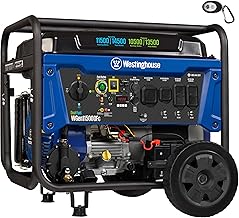
Offers 11,500 running watts (gasoline) and 14,500 peak watts, or 10,500 running watts (propane) and 13,500 peak watts. Runs up to 19 hours on a 9.5-gallon tank with gauge, or up to 7 hours on a 20-lb propane tank. Best for: larger homes or extended outages that require substantial continuous power. Limitation: heavier unit due to larger fuel tank and higher wattage.
Generac 19,300 Starting Watt Portable Generator

Powered by an 816cc electronic fuel-injected engine, this model delivers 15,000 running watts with 19,300 starting watts. It includes COsense technology for carbon monoxide safety and a large steel fuel tank with gauge for longer runtimes. Best for: heavy-duty emergency power and workshops needing high surge and reliable operation. Limitation: higher price and heavier footprint compared to mid-range units.
Buying Guide
Key considerations when choosing a 17 kW-class generator:
- Fuel type and availability: Dual-fuel or tri-fuel models offer flexibility during fuel shortages or outages. Consider whether propane, natural gas, or gasoline best suits your setup.
- Starting watts vs. running watts: Determine which appliances require the most surge power and ensure the unit provides sufficient starting wattage for critical loads.
- Runtime and fuel capacity: Larger tanks extend runtime, but add weight. Match tank size to your planned outage duration.
- Startup and control features: Remote or electric start, transfer switch compatibility, and AVR/CO sensors improve ease of use and safety.
- Portability and form factor: Heavier units may require wheels or a dedicated storage area. Inverter models are quieter and more efficient for portable use, but may have lower total wattage.
- Safety: Built-in CO sensors, automatic low-oil shutdown, and sturdy frames reduce risk during operation.
Frequently Asked Questions
- What is the difference between peak watts and running watts?
– Running Watts indicate continuous power the generator can supply, while Peak Watts (surge) indicate extra power available briefly for starting motors or appliances. - Is a dual-fuel generator worth it for home backup?
– Yes, dual-fuel units offer flexibility if one fuel source becomes scarce, helping ensure you have power during outages. - Do these generators require extensive maintenance?
– Regular oil changes, air filter checks, and spark plug or carburetor maintenance are typical, following manufacturer guidelines. - Can I use these for RV power on the road?
– Some models are RV-ready and include appropriate outlets; confirm receptacle types and transfer switch compatibility for safe use with an RV. - What is AVR and why does it matter?
– Automatic Voltage Regulation stabilizes output to protect sensitive equipment from voltage fluctuations. - How loud are these generators?
– Noise levels vary by model; inverter gensets tend to be quieter, which matters for campgrounds or residential areas.