
Best 16 Channel Stage Snake: Clear, Reliable Multicore Cables for Live Sound
Answering the need for clear, organized stage wiring, this guide highlights 16-channel stage snakes that suit live sound, studio setups, and stage boxes. The top picks are best for large performances, theater rigs, and multiple-in, multiple-out audio chains. Each product is explained with who it’s best for, plus practical trade-offs to help you choose wisely. A quick summary table follows to compare core specs at a glance.
| Product | Channels | Length | |
|---|---|---|---|
| Seismic Audio SACB-16x4x25 | 16 send / 4 return | 25 ft | Low profile circuit board |
| PRORECK 16-Channel 50 Ft | 16 sends / 4 returns | 50 ft | Low profile circuit board |
| Seismic Audio 16-Channel 100 Ft | 16 send / 4 returns | 100 ft | Low profile with circuit board |
| Seismic Audio SARMSS-16×310 | 16 channels | 3 ft trunk + 10 ft trunk | XLR/TRS combo on box |
| Seismic Audio 16-Channel XLR Low Profile with 4 TRS | 16 sends / 4 returns (TRS) | 50 ft | Low profile with TRS returns |
Seismic Audio SACB-16x4x25 16-Channel XLR Low Profile Circuit Board Snake Cable

Best for compact stages or smaller venues needing a 16-channel setup without taking up space. This snake uses a circuit board to provide solid connections and reduce external noise. The unit sends 16 XLR male channels to the stage box while returning 4 XLR female connectors to the main mixer, supporting standard pro-audio workflows. Best for small to mid-size gigs where footprint and reliability matter. A potential limitation is that 25 feet may be short for larger rooms or longer stage runs.
PRORECK 16-Channel Low Profile XLR Send Circuit Board Snake Cable, 50 Feet
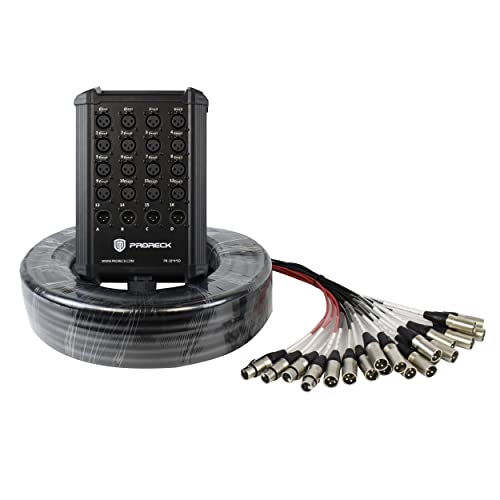
This 50-foot configuration is well suited for mid-sized venues with stage boxes placed further back from the console. It features a 16-channel snake with a labeled fantail for easy channel identification, and a circuit board to minimize noise. Best for venues where longer runs are required and quick, organized setup is essential. Choose this if you need longer reach and clear channel mapping; avoid if you need a compact, shorter setup.
Seismic Audio 16 Channel Low Profile XLR Send Circuit Board Snake Cable, 100 Feet

Best for large stages or venues with long stage runs, this 100-foot snake balances channel count with a long reach. The low-profile box design reduces footprint on crowded stages, while circuit-board construction helps maintain signal integrity. Works well for touring setups or larger installations. Limitation: longer cable paths can introduce more potential for physical wear; ensure proper cable management and transport cases.
Seismic Audio SARMSS-16×310: 3′ And 10′ XLR/TRS Combo Splitter Snake

Best for rack-friendly setups where you need two trunk lengths and a mixer-friendly combo end. The SARMSS-16×310 provides both XLR and TRS connections on the box end, plus clearly labeled components for quick setup. It’s ideal for studio or small-stage configurations that require flexible trunk lengths. Limitation: its dual trunk design may require more careful labeling to prevent misconnection during fast performances.
Seismic Audio 16-Channel XLR Low Profile Snake Cable With 4 TRS Returns

Best for users who need robust TRS returns with a 16-channel XLR send, this model combines a low-profile stage box with 50 feet of cable. The 4 TRS returns help connect a compact lineup of devices or on-stage effects. It’s well suited for PA setups and portable rigs. Caution: check the stage footprint since TRS returns occupy space on the console side as well.
Buying Guide: Key Considerations For Selecting A 16-Channel Stage Snake
- Channel count and configuration: Ensure the unit offers 16 send channels and the necessary number of returns (4 TRS or XLR) to match your mixer or stage box.
- Length and reach: Choose length based on your venue size. Short snakes save space; longer cables suit backline arrangements but require careful management.
- Footprint and stage box design: Low-profile stage boxes save space on crowded stages. Consider whether the box includes clear labeling for quick setup.
- Signal integrity: Circuit-board technology and shielded conductor pairs help reduce noise and interference, important for clear, loud stage environments.
- Connector configuration: XLR sends and TRS returns are common; verify compatibility with your gear and the labeling system you prefer.
- Durability and transport: Road-ready builds with sturdy jackets and strain relief are preferable for touring or frequent gigs.
- Labeling and identification: Numerically labeled boxes and ends ease channel mapping during setup and changes.
Frequently Asked Questions
- What is a stage snake? A stage snake combines multiple connectors into a single cable to carry multiple audio channels from stage to mixer or I/O system.
- Why choose a low-profile stage box? It saves stage space and reduces tripping hazards, which is useful in tight performance environments.
- What is the benefit of circuit board technology inside a snake? It helps maintain signal integrity and reduces external noise across channels.
- When is a longer snake better? For larger venues or stages with distant consoles, longer snakes minimize the need for signal splitters and adapters.
- Are TRS returns common? Yes, TRS returns are common for connecting additional devices like monitors or effects with balanced signals.
- How should I label connectors? Labeling should match the console’s channel assignment to avoid misrouting during setup.