
Best 12V Dehumidifier for Boats: Smart Ways to Control Humidity Onboard
When choosing a 12V dehumidifier for a boat, the goal is to balance compact size, quiet operation, and steady moisture control in salty, humid environments. These picks are suited for coastal cruisers, weekend sailors, and RV-boat hybrids seeking reliable moisture management in cabins, bunks, or small storage areas. Below are five top options, each with a practical use case and clear trade-offs.
Quick Product Comparison
| Product | Best For | Why It Stands Out | Caveat |
|---|---|---|---|
| Davis Air-Dryr 500 Marine Air Dryer | Small boats needing robust airflow | Durable polycarbonate housing; slim, stable; handles high air volume | May be bulkier than ultra-compact models |
| Ivation IVADM35 Thermo-Electric Dehumidifier | Quiet operation in tight spaces | Thermo-electric with no moving parts; up to 20 oz/day | Not ideal for very damp areas over time |
| Better Boat Moisture Absorber 6 Pack | Odor control and constant moisture pull | Activated charcoal adds odor control; spill-resistant | Single-use, needs replacement |
| Better Boat Moisture Absorber 4 Pack | Multiple small spaces | Charcoal-based; clear visibility of replacement need | Not a refrigerant-style dehumidifier; needs replacement |
| Mocar7 Air Dryer | Low-power, compact 120V option | Low wattage; simple 24-hour safety features | Smaller capacity; best for light humidity |
Davis Air-Dryr 500 Marine Air Dryer Dehumidifier

The Davis Air-Dryr 500 is designed for compact marine spaces needing reliable air movement and moisture removal. It features a neutral polycarbonate housing for strength and a slim profile to fit in tight cabins, bunks, or storage lockers. Best for small sailboats or cabins where space is at a premium and stable airflow matters. A potential limitation is that it prioritizes continuous operation in small areas rather than large, damp spaces.
Who it’s best for
- Small boats with limited cabinet space where airflow matters more than maximal extraction.
- Owners who value a sturdy housing and a slim footprint.
Why selected
- Durability and space efficiency fit the typical boat layout.
- High air volume supports quick moisture management in confined areas.
One caution
- Ensure proper clearance around the unit; airflow needs space to circulate effectively.
Ivation IVADM35 Powerful Mid-Size Dehumidifier

The Ivation IVADM35 uses thermo-electric (Peltier) technology, offering a mid-size unit that works quietly with no moving parts. It removes up to about 20 ounces of water per day and is suited for boats, RVs, basements, or small spaces up to roughly 2,200 cubic feet. Its quiet operation makes it a good choice for sleeping cabins, galleys, or storage areas where noise matters. A limitation is that its capacity is best suited for moderate humidity rather than highly damp environments over extended periods.
Who it’s best for
- Boat owners needing a low-noise dehumidifier for cabins or sleeping areas.
- RVers with compact living spaces that double as storage on the water.
Why selected
- No moving parts reduces wear and keeps operation quiet.
- Balanced capacity for mid-sized boats or confined areas.
One caution
- Keep within its recommended space to ensure efficient humidity control in very damp rooms.
Better Boat Moisture Absorber Six Pack

This pack focuses on chemical moisture control using activated charcoal mixed into the drying crystals, offering both moisture removal and odor reduction. It’s ideal for boats needing a simple, non-electrical solution in closets, cabins, or small storage spaces. The semi-transparent container lets you see when replacement is due. A limitation is that these are single-use and must be replaced as they lose efficacy over time.
Who it’s best for
- Boat owners who prefer a maintenance-free, odor-targeted approach in small spaces.
- Users wanting a visible, simple replacement cycle for humidity control.
Why selected
- Activated charcoal helps tackle musty odors alongside moisture removal.
- Compact design suited for lockers, cabins, and tight corners.
One caution
- Best used as a supplemental tool; heavy humidity may require additional dehumidification methods.
Better Boat Moisture Absorber Four Pack
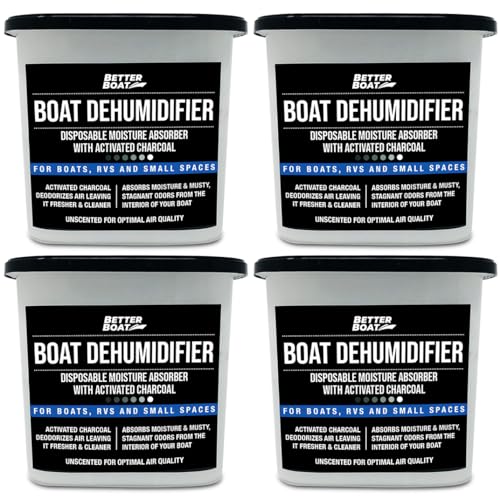
This four-pack provides compact moisture absorbers with activated charcoal to neutralize odors while removing humidity. It’s well-suited for boats with several small compartments or cabins that lack built-in ventilation. A practical note is that these are disposable, so ongoing replacement is part of the cost of ownership.
Mocar7 Air Dryer
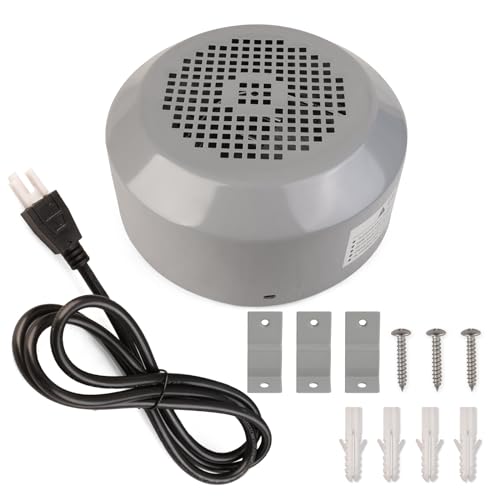
The Mocar7 Air Dryer focuses on low power consumption with a 70-watt design and 120V operation. It’s compact and has a built-in safety feature to cut power if needed. This makes it suitable for small boats or RVs that require a lightweight device with straightforward operation. Its smaller capacity means it’s better for light humidity or as a supplementary unit rather than a stand-alone solution in very damp conditions.
Ivation IVADM10 Small-Size Dehumidifier

The Ivation IVADM10 is designed for smaller rooms, cupboards, and attics in boats or RVs. It uses a thermo-electric module with no moving parts and includes a removable 17-ounce water tank along with a washable air filter. It’s ideal for near-term moisture control in tight spaces where bulkier units won’t fit. A consideration is that the tank capacity may require more frequent emptying in humid environments.
UIDYGGD Dehumidifier, for Boat

UIDYGGD’s model is a straightforward dehumidifier option marketed specifically for boats. It aims to provide practical humidity control in a marine setting without extraneous features. This option may appeal to buyers seeking a simple, dedicated boat dehumidifier. A potential limitation is that product listings often lack detailed specs; verify fit for your space before purchase.
Buying Guide
- What space will you dehumidify? For tight cabins, prioritize slim, compact units with solid airflow. For larger bilges or storage, consider higher-capacity or multiple devices.
- Power source and portability: 12V options suit boats with accessible power networks, while 120V models may require shore power. Consider energy use and battery tolerance if you’re off-grid.
- Maintenance needs: Electrical dehumidifiers need drainage or tanks emptied, while desiccant or charcoal bags are low-maintenance but require periodic replacement.
- Noise level: If the unit runs near sleeping areas, opt for models with no moving parts or low decibel operation.
- Durability in marine environments: Look for polycarbonate housings, corrosion-resistant components, and units designed to handle humidity and salt air.
- Odor control: Activated charcoal or odor-adsorbing crystals help, especially in small, closed cabins where damp smells linger.
- Replacement cadence: For chemical absorbers, plan for regular replenishment. For electric dehumidifiers, monitor water collection and filter cleanliness.
- Cost of ownership: Combine initial cost, energy use, and replacement parts to estimate long-term expense.
FAQ
- How do you know which dehumidifier is right for a boat cabin?
Answer: Match unit size to cabin volume, check noise level, and choose power compatibility with your boat’s electrical system. Consider whether you prefer a continuous electrical solution or a disposable absorber for small spaces. - Can a 12V dehumidifier suffice for a damp boat?
Answer: Yes for small cabins or lightly damp spaces, especially with good ventilation. For larger or very damp areas, using multiple smaller units or a higher-capacity option may be necessary. - Are charcoal absorber packs better than electronic units?
Answer: Charcoal packs control odors and remove some moisture but are not as effective for high humidity; use them as a supplement to an active dehumidifier. - How often should I replace moisture absorbers?
Answer: Replacement depends on humidity levels and usage; check the container’s transparency or manufacturer guidance to determine when to replace. - Is installation difficult for marine dehumidifiers?
Answer: Most options are plug-and-play or simple placement in a flat area. Always ensure proper ventilation and that cords are safely routed away from moisture and movement hazards. - What maintenance helps extend a dehumidifier’s life on a boat?
Answer: Keep filters clean, drain tanks regularly, and store or secure devices to prevent movement during rough seas or heavy waves.