
Best 12V Deep Cycle Marine Battery Options for Boats and RVs
Choosing a reliable 12V deep cycle AGM battery is essential for boats, trolling motors, RVs, and off‑grid setups. The following five models represent well‑rounded choices across price, capacity, and performance, with a focus on durability, low maintenance, and safe charging. Each entry draws on established AGM chemistry to balance power, cycle life, and storage stability for marine environments and mobile applications.
| Product | Brand | Capacity | Type | Highlights |
|---|---|---|---|---|
| Renogy Deep Cycle AGM 12V 100Ah | Renogy | 100Ah | AGM Deep Cycle | 3% self-discharge, maintenance-free |
| Weize Deep Cycle AGM 12V 100Ah | WEIZE | 100Ah | AGM Deep Cycle | 1–3% self-discharge, long storage |
| Weize BCI Group 31M 12V 110Ah | WEIZE | 110Ah | Dual Purpose AGM | 2x cycle life, quick charge |
| Interstate Marine/RV 12V 70Ah | Interstate Batteries | 70Ah | Pure Lead AGM | 2x–3x life, rugged marine performance |
| Newport Vessels 12V 50Ah | Newport Vessels | 50Ah | Sealed AGM | Lightweight, trolling motor ready |
Renogy Deep Cycle AGM 12V 100Ah Battery
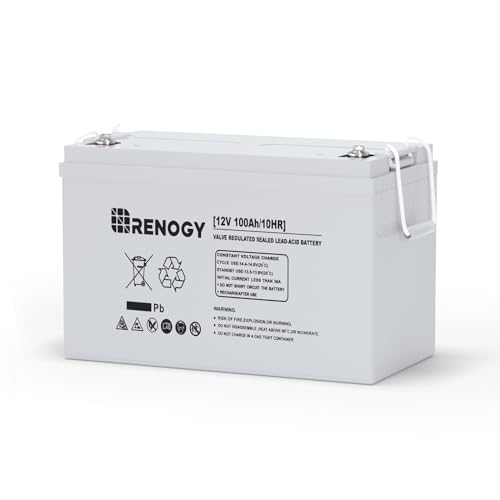
Renogy’s 100Ah AGM deep cycle cell is built for steady, reliable power in marine and off-grid applications. The sealed design minimizes maintenance while providing a high level of safety through stable chemistry. It supports series connections without a lower limit and allows parallel stacking up to four units, enabling scalable capacity for larger systems. This model is positioned for RVs, boats, cabins, or small off-grid installations that require dependable 12V power with minimal fuss. The internal architecture reduces acid leakage and simplifies troubleshooting compared with some other chemistries, making it a practical choice for mobile environments.
Key features include a low self-discharge rate, solid safety profile, and compatibility with common charging setups. As with most AGM batteries, it’s maintenance-free and designed to be left in place for extended periods between uses. It is suitable for trolling motors, lighting, and auxiliary appliances, provided the system is designed to accommodate 100Ah of capacity and the associated current draw. Users should ensure proper ventilation and secure mounting in marine compartments to maximize lifespan and performance.
Weize Deep Cycle AGM 12V 100Ah Battery
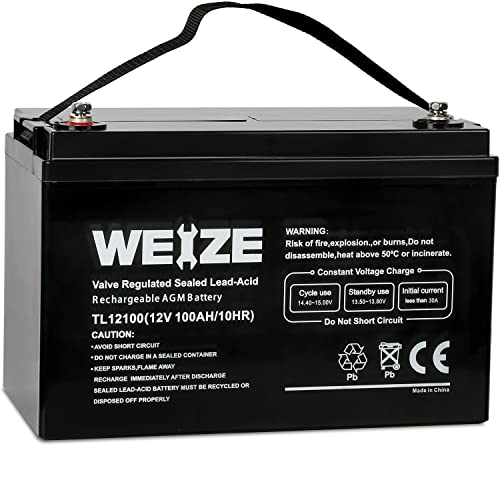
WEIZE’s 100Ah AGM battery emphasizes maintenance-free operation with a compact footprint. The unit is built to minimize acid leakage and can be stored for extended periods with a low self-discharge rate. Its sheath design supports typical 12V marine and RV applications, including trolling motors and solar storage. The battery uses a standard left/right terminal arrangement for straightforward setup and compatibility with common battery boxes and mounting brackets. Its temperature and rating specs align with practical marine and outdoor use, ensuring stable performance across a wide operating range.
With a storage-friendly self-discharge rate of about 1–3% per month under ideal conditions, this model is suitable for boats and camp setups where periodic use is expected. Proper charging—avoiding overcharging and ensuring compatibility with an appropriate charger—will extend the life of the AGM chemistry. The WEIZE 100Ah model is a solid mid-range option for users needing reliable power without added maintenance tasks.
Weize BCI Group 31M Dual Purpose AGM Battery

The Weize Group 31M is designed as a dual-purpose marine/RV battery with strong starting power and deep-cycle capability. Its AGM design reduces maintenance needs while delivering robust runtime for trolling motors, lights, and onboard electronics. The battery emphasizes quick charging performance, projecting faster recharge—up to five times quicker than some alternatives—provided charging conditions stay within recommended voltage and current ranges. The dual-purpose format makes it suitable for both starting and deep-cycle applications, simplifying battery management on boats and RVs where space and weight are considerations.
Users should observe proper charging protocols: maintain a constant voltage near 14.4V with a controlled current, and limit charging duration to avoid overheating. The 110Ah capacity aligns well with mid-size marine setups and can power multiple accessories for moderate durations between charges. Secure mounting, venting consideration, and compatible chargers are recommended to ensure longevity and performance.
Interstate Batteries Marine/RV 12V 70Ah AGM

Interstate’s 70Ah AGM battery is built to deliver solid deep-cycle performance in marine and RV environments. With a focus on rugged reliability, it delivers enhanced cycle life and dependable cranking power for a range of accessories. The pure lead AGM construction aims to reduce self-discharge and manage heat more effectively, contributing to longer life under repeated discharge and recharge cycles. This model suits boats with moderate power needs and RV setups where weight and space constraints favor a lighter, compact option while still delivering robust performance for navigation, lighting, and entertainment systems.
Charging practices should follow manufacturer recommendations to maximize lifespan. Maintain proper electrolyte containment, ensure secure mounting, and use a charger compatible with AGM batteries to achieve optimal charging efficiency. The 70Ah capacity is best suited for smaller craft or as a dedicated auxiliary battery system in larger configurations.
Newport Vessels 12V 50Ah Deep Cycle AGM

This Newport Vessels 50Ah model is a lightweight, sealed AGM option designed for trolling motors and compact marine systems. The 32-pound weight makes it easy to handle during installation, and the sealed construction helps protect against leaks in rough water conditions or during transport. While lower in capacity than 100Ah units, this battery is well-suited for modest power needs where weight savings and simple setup are priorities.
Performance in this class hinges on balanced charging and periodic use. For longer trips or higher loads, pairing this battery with a second unit or larger capacity option may be necessary. It’s compatible with common trolling motor setups and small cabin systems, providing a practical, portable power source for lighter vessels or auxiliary power.
Buying Guide: Key Factors And Comparisons
Battery choice depends on your vessel size, power budget, and usage pattern. Consider these perspectives to select the best option for your needs:
- Capacity and runtime: 100Ah units offer longer runtimes for mid-to-large boats or RVs, while 50–70Ah models suit smaller craft or lighter auxiliary roles. Determine the daily energy demand (in amp-hours) and choose a solution with a comfortable margin.
- Depth of discharge and cycle life: AGM batteries with higher cycle life and the ability to handle frequent discharges provide more reliable service on long trips. Look for brands with demonstrated endurance in marine use.
- Maintenance and safety: AGM chemistry is maintenance-free and leak-resistant, making it a practical choice for harsh environments. Ensure sealed design and proper venting for installations in tight compartments.
- Charging compatibility: Verify that your charger supports 14.4V charging with appropriate current limits. Some dual-purpose batteries can handle starting and deep-cycle duties, but ensure the charging profile matches your setup.
- Weight and footprint: Lighter 50–70Ah options simplify mounting and trim on smaller boats, while 100Ah units require more space but deliver longer operation between charges.
- Durability and warranty: Marine batteries benefit from rugged construction and solid warranties. Consider brands with proven performance in saltwater and vibration-prone environments.
Practical setup tips:
- Install in a ventilated compartment to manage heat and avoid gas buildup, even with sealed AGM designs.
- Use proper battery cables, secure mounting, and weatherproof enclosures when mounting on deck or exposed areas.
- Group size considerations matter: Group 31 is common for dual-purpose use, while Group 24 or 27M can suit smaller footprints with ample space for installation.
- Plan for charging sources such as solar, alternator output, or shore power. A high-quality charge controller helps maximize life and performance.
Across these options, the suitable choice depends on your total energy needs, whether you prioritize longer runtimes, lighter weight, or dual‑purpose capabilities for starting as well as deep cycling. For reliability on water and in remote settings, select a model with proven marine performance, strong cycle life, and compatible charging specifications to ensure dependable power when you need it most.