
Best 120V Variable Speed Motors for DIY Projects
Direct answer: For 120V variable speed needs, the 5 highlighted products offer adjustable speed, reversible or single-direction operation, and built-in controllers to simplify setup. This guide helps buyers choose the right motor and speed controller combination for projects like conveyors, fans, drills, routers, and small machinery. Best for hobbyists and light industrial tasks that require adjustable torque and reversible operation, each option balances control, compatibility, and practicality.
| Product | Best For | Key Feature | Limitations |
|---|---|---|---|
| GMSLuu 110V 15W Gear Motor | Compact projects needing adjustable speed | 0-270 RPM with governor | Low horsepower potential |
| VQP High Torque AC Motor + Controller | Heavy-duty tasks | 16 nm torque, 0-135 RPM | Requires compatible wiring |
| CDMALL AC Motor Speed Controller | Brushed AC motor setups | Real-time LED voltage display, overload protection | Not for brushless or DC motors |
| LIAUHO Electric Gear Motor with Speed Controller | Precise speed control with high torque | Up to 45 RPM, 20 NM torque | Complex setup for some users |
| ReeMoo AC Motor Speed Controller | General speed control with display | 0-120V readout, 15A peak | Brushed motors only |
GMSLuu 110V Gear Motor With Adjustable Speed

Best for compact projects requiring adjustable speed control and governor assistance. This single-phase geared motor delivers up to 270 RPM and includes a governor for smoother operation. The reducer gearbox supports a wide range of speeds, making it suitable for small conveyor setups, hobby machines, and automated feeders. The included governor helps maintain consistent output, which is ideal for precise timing.
Who it’s best for: hobbyists and light-duty makers who want a ready-to-use, adjustable-speed solution in a compact form. Why selected: the combination of a reduction gearbox and a governor provides straightforward speed tuning and reliable performance in small-scale applications.
Caution: Ensure the torque and power match your load; high torque demand at low speeds may require a larger power source or different gearing.
VQP High Torque AC Motor With Gearbox and Controller

Best for applications requiring substantial torque and reversible gear motion. This 110V geared motor combines a high-torque induction motor (16 nm) with a variable speed range of 0-135 RPM and a control box. It’s well suited for conveyors, winches, or heavy-duty hobbyist builds where direction reversal is necessary. The built-in gearbox allows smoother torque transmission and stable operation.
Who it’s best for: users needing strong torque and bidirectional rotation in a compact package. Why selected: the combination of reversal capability and a broad speed range supports diverse automation tasks.
Caution: Motor direction and speed must be tuned to avoid overload on start-up; verify load compatibility before full-time operation.
CDMALL AC Motor Speed Controller for Brushed Motors
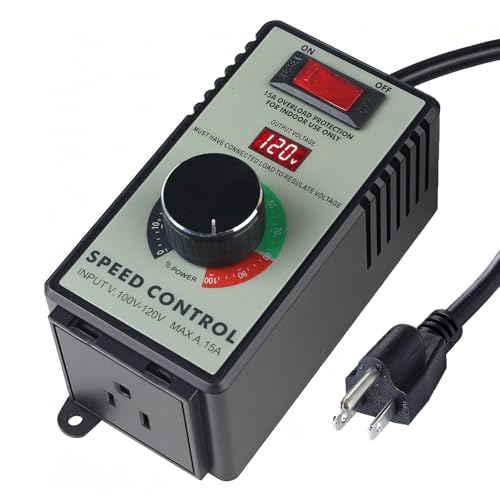
Best for projects that require precise voltage-based speed control with overload protection. This 120V controller is designed for brushed AC motors and includes a real-time LED voltage display and a resettable 15A circuit breaker. It is well suited for inline duct fans, routers, drills, or small shop tools where you want to dial in a specific speed safely.
Who it’s best for: users with brushed motors seeking a reliable, adjustable speed solution with visible output. Why selected: real-time voltage readout plus overcurrent protection provides clear, safe operation.
Caution: Not compatible with brushless or DC motors or devices with complex electronics.
LIAUHO Gear Motor With Speed Controller
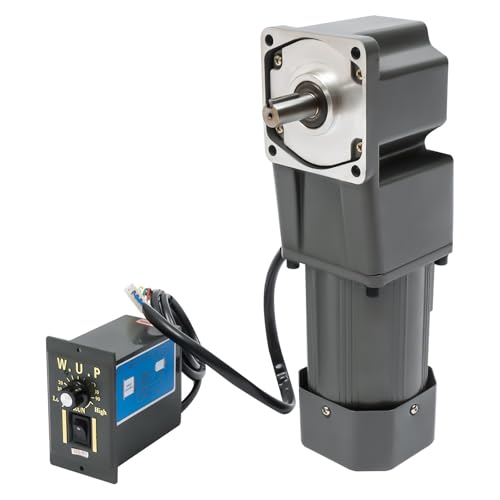
Best for projects needing a balance of speed control and torque. This 110V, 120W motor can run up to 45 RPM with a robust gearbox and a governor. Advanced gear materials and ball-bearing axles reduce wear and noise, supporting longer operation in machines like small conveyors or milling setups. The 90-degree output is helpful for tight spaces and modular builds.
Who it’s best for: engineers and makers needing smooth, controllable slow-speed performance with durable gearing. Why selected: high-quality materials and precise speed regulation contribute to reliable operation in demanding apps.
Caution: Assembly and alignment require careful mounting to achieve the intended precision and longevity.
ReeMoo AC Motor Speed Controller

Best for general-purpose speed control with clear feedback. This 120V controller features a real-time LED voltage display, overload protection, and a 15A peak rating suitable for many brushed motors like routers, drills, and fans. It provides straightforward dial-based speed adjustments and includes a resettable breaker for safer operation.
Who it’s best for: hobbyists and workshops needing an affordable, easy-to-use speed controller for common brushed motors. Why selected: accessibility and practical features support quick setup without specialized tools.
Caution: Ensure your motor type matches the controller’s brushed AC limitations; not suitable for brushless or DC motors.
Buying Guide: Key Considerations for 120V Variable Speed Motors
- Motor type and compatibility: Confirm whether your motor is brushed AC, brushless, or DC, and match it with a compatible speed controller to avoid issues.
- Speed range and duty cycle: Decide on required RPMs and how often the motor will run. Slower speeds with higher torque suits conveyors and winches; higher RPMs work for drills and fans.
- Torque and gearing: Gear reduction increases torque but reduces speed. Select gear ratios that align with load requirements and startup needs.
- Control method and display: LED voltage displays help dial in precise speeds. Electronic overload protection protects equipment and simplifies maintenance.
- Reversibility: If your application requires changing rotation direction, choose a reversible gear motor with a reliable control system.
- Mounting and footprint: Check shaft orientation (straight vs. right-angle) and overall dimensions to fit available space.
- Power draw and safety: Ensure your power source can handle peak currents. Use controllers with resettable breakers and clear labeling to prevent overload.
FAQ
- What is the typical use for a 120V variable speed motor? – Applications include conveyors, fans, routers, drills, and small automation tasks where speed control improves performance or process outcomes.
- Can I mix a speed controller with any AC motor? – Not always. Controllers are typically designed for brushed motors; brushless or DC motors require different controllers.
- Is a higher torque motor always better? – Higher torque helps start and move heavy loads but may reduce speed; select torque to meet load with safe margins.
- Do speed controllers protect equipment? – Many controllers include overload protection and LED displays to prevent overload and allow precise speed tuning.
- What should I consider for mounting orientation? – Consider shaft orientation, gear ratio, mounting points, and space constraints to ensure alignment and stability.
- Is reversibility important for all projects? – Reversibility is beneficial for conveyors and winches, but not all applications require bidirectional motion.