As an Amazon Associate I earn from qualifying purchases. These links may earn this site a commission when you buy, at no extra cost to you.
Choosing the right 12-inch circular saw blade is essential for achieving clean, precise cuts across wood and other materials. The blades below are popular options offering fine finishes, durability, and consistent performance for woodworking, framer projects, and miter/table saw setups. This guide highlights five highly regarded blades with differing tooth counts and carbide compositions to suit various finishing needs. Each blade is designed to minimize tear-out and maximize accuracy, so you can select the right balance of cut quality, durability, and price for your workbench.
| Product | Tooth Count | Arbor | Material | Use Case |
|---|---|---|---|---|
| DEWALT 12 Inch 80T Carbide Circular Saw Blade (DWA11280) | 80 | 1 inch | Carbide | Fine finish, general purpose |
| Diablo 12″ x 80 Teeth Fine Finish (D1280X) | 80 | 1 inch | Hi-Density Carbide | Wood, fine crosscuts |
| DEWALT 12″ 100 Tooth Fine Finish (DWA112100) | 100 | 1 inch | Carbide | Ultra finish, crosscuts |
| WEN BL1280 80-Tooth Fine-Finish (BL1280) | 80 | 1 inch | Carbide | Fine finish, versatile |
| Luckyway 12″ 32T/80T Miter Saw Blades (Two-Pack) | 32T & 80T | 1 inch | Tungsten Carbide | General purpose & finish cuts |
DEWALT 12 Inch 80T Carbide Circular Saw Blade

The DEWALT DWA11280 blade is designed for improved finish quality with an optimized tooth geometry and a patented body slot design that reduces vibration. It features 80 carbide-tipped teeth that balance speed and cut quality for hardwoods and softwoods. The blade’s design aims to deliver cleaner crosscuts and longer life, making it a solid choice for tasks requiring a high-quality finish. The build emphasizes stability and precision to minimize tear-out in typical workshop scenarios.
Luckyway 12 Inch 32T/80T Miter Saw Blades

This Luckyway blade set pairs a 32-tooth general-purpose blade with an 80-tooth fine-finishing blade, both designed for 12-inch miter or table saw use. The 32T blade handles rougher cuts quickly, while the 80T blade delivers smoother, cleaner finishes with reduced tear-out. Both blades use tungsten carbide teeth and a 1-inch arbor, making them compatible with most 12-inch saws. The two-pack provides flexibility when switching between tasks, offering a practical balance between speed and finish quality for woodworking projects.
Diablo 12″ x 80 Teeth Fine Finish Blade
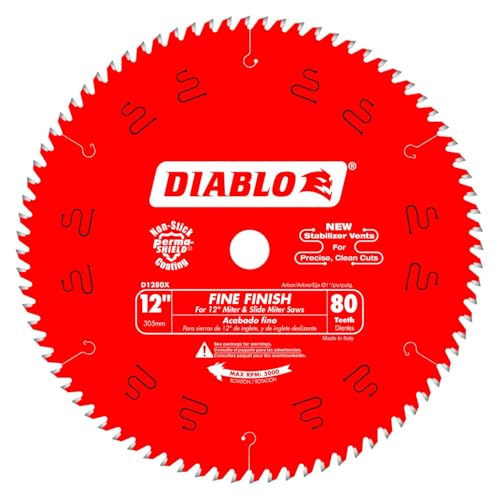
Diablo’s D1280X delivers a Hi-Density carbide solution optimized for crosscuts in both hardwoods and softwoods. With a high tooth count and alternate top bevel geometry, this blade minimizes tear-out and delivers smooth, fine finishes. The 12-inch blade with a 1-inch arbor supports accurate cutting at higher speeds, making it a strong option when a premium finish is essential for furniture components or cabinet work. The blade emphasizes durability and precision across repeated cuts in challenging wood species.
OA-BRES 12-Inch 100-Tooth ATB Blade

The OA-BRES 100T ATB TCT blade emphasizes ultra-fine finish with an alternating top bevel design, thin kerf, and a 1-inch arbor. Constructed from durable alloy steel with hardened tungsten carbide teeth, it aims to deliver smooth, accurate crosscuts and extended blade life. It’s positioned for meticulous finish work on both hardwood and softwood, making it suitable for cabinetmaking and detailed joinery tasks where precision matters most.
DEWALT Miter Saw Blade 100 Tooth Fine Finish

This DEWALT blade features 100 teeth for fine finishing cuts and a design optimized for accuracy. The increased tooth count reduces tear-out and provides a smoother cut in both softwoods and hardwoods. The blade’s carbide tips and low-vibration body slot design contribute to steadier cuts, especially on miter and table saw setups where precise crosscuts are critical for project quality. It is well-suited for cabinetry, trim work, and furniture components that demand clean edges.
DEWALT 12 in. 40T General Purpose Saw Blade

The DEWALT 40T blade is designed for general-purpose cutting with a focus on durability and efficiency. Its ultrasharp carbide tips enable clean cuts through a variety of woods, while the optimized tooth geometry supports improved accuracy. This blade is a practical choice for tasks requiring quick, reliable crosscuts and ripping on broader stock, where finishing perfection is less critical than overall cut quality and blade life.
TOMAX 12-Inch 100 Tooth Blade
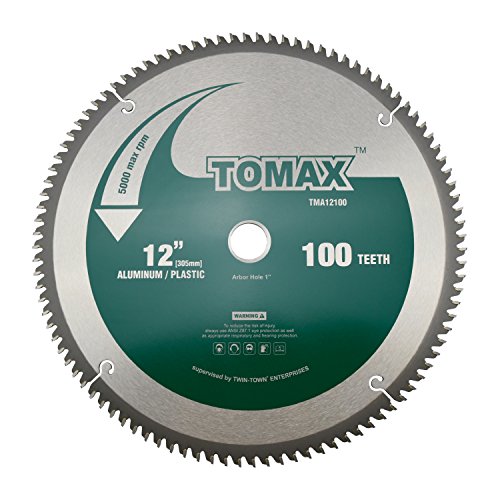
The TOMAX 100-tooth blade is designed for aluminum and non-ferrous metals as well as plastics. Carbide teeth provide durability for long life, and electrophoretic coating reduces rust and corrosion. While not a wood-specific finish blade, its high tooth count and material versatility can be beneficial for mixed-material projects where fine, controlled cuts are required on non-wood substrates.
WEN BL1280 80-Tooth Fine-Finish Blade
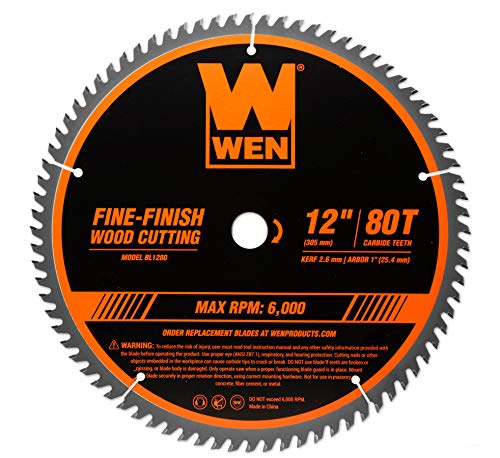
The WEN BL1280 is a fine-finish blade with 80 teeth and a 1-inch arbor. It is designed to handle hard and soft woods with an ultra-thin kerf for clean, efficient cuts. The blade supports high RPMs and is suitable for miter and table saw applications where precise, minimal-tear-out cuts are required. It provides a reliable option for cabinet work, trim, and fine carpentry tasks.
Buying Guide: Key Considerations For 12-Inch Fine-Finish Blades
To choose the best 12-inch blade for your needs, consider tooth count, tooth geometry, and blade body design. Higher tooth counts (e.g., 80–100T) yield smoother finishes but cut more slowly, making them ideal for crosscuts and finishing work in hardwoods or plywood. LOWER tooth count blades (e.g., 32T–40T) cut faster but may leave rougher edges; they’re better for rough ripping and stock removal. Alternate top bevel (ATB) geometry helps minimize tear-out on fine crosscuts. A robust carbide build extends blade life, especially when cutting dense woods. A 1-inch arbor is standard for most 12-inch saws, but always verify compatibility with your tool. Low-vibration body slots reduce chatter, improving accuracy on precise cuts. When selecting blades, match the intended material (hardwood vs. softwood vs. non-wood) and the required finish quality to the blade’s tooth count and coating. For cabinetmaking, furniture, and finishing trim, prioritize blades with finer teeth and quality carbide. For rough carpentry or framing, a versatile general-purpose blade may be more cost-effective. Budget, blade life, and availability of replacement packs are also practical considerations to balance with cut quality. Always follow safety guidelines and consult your saw’s manufacturer recommendations when mounting new blades.