
Best 10,000 Watt Solar Power Generator Solutions for Home Use
Answering buyers looking for a high-capacity, 10kW solar power system for home backup and off-grid living, this guide highlights five top options. These selections are suitable for powering common household appliances, essential loads during outages, or scalable home energy storage. Each product targets different needs—from complete home-in-a-box kits to robust inverters that enable parallel setups. For quick comparison, the table below lists key options by power, battery capacity, and best-use scenario.
| Product | Best For | Key Capacity | Notes |
|---|---|---|---|
| ECO-WORTHY 10kW Complete System | Full home backup with integrated storage | 10kW continuous; 16.1kWh storage | Integrated 5 × 590W panels; parallel-ready |
| SUNGOLDPOWER SPH10048P 10kW Inverter | Split-phase home use; expandability | 10kW output; 20kW peak | 2 MPPTs; WiFi |
| Dawnice 10kW Inverter | Flexible input options; parallel up to 6 units | 10kW output; PV up to 11kW | Supports grid/generator/battery |
| ECO-WORTHY 10kW Home Power Backup Station | Expandable backup with remote monitoring | 10kW inverter; large modular storage | Paralleling up to 6 inverters; 32 batteries |
| Jackery HomePower 3600 Plus | Compact, expandable home backup | 3600W output; 3584Wh | Expandable to 21kWh with multiple units |
ECO-WORTHY 10kW Complete Off-Grid System

This all-in-one solution delivers up to 10kW continuous power with 120V/240V split-phase support for common household loads. It includes 5 × 590W solar panels (2950W PV), generating up to 11.8 kWh daily under optimal sun, plus a 48V 314Ah LiFePO4 battery offering 16.1 kWh storage. A built-in 7-inch display and connectivity enable real-time monitoring. Best for: homeowners seeking a turnkey, scalable system with platform-wide integration. Caution: performance depends on sun exposure and parallel capacity limits.
UDPOWER S1000 Pro Portable Power Station

Designed for backup and portable use, this unit emphasizes long-life, high-cycle LFP batteries with over 3000 cycles and 80%+ capacity retention. It provides 2200W continuous output with a 3000W surge, suitable for refrigerators, microwaves, and CPAP machines during outages. Best for: users needing reliable, high-cycle storage in a portable form factor. Caution: not a fixed home inverter; portability comes with smaller cumulative storage compared to stationary systems.
SUNGOLDPOWER 10kW Inverter (SPH10048P)

All-in-one solar charge inverter with 10000W output and 20,000W peak, featuring 2 MPPT controllers and 200A battery charging. It supports split-phase 120V/240V operation, plus built-in WiFi for status monitoring. Best for: users wanting strong AC output with flexible charging modes and parallel expansion up to six units. Limitation: actual performance depends on PV array and battery availability; data should be verified with your installation design.
SGPWOSAY 10kW DC 48V Inverter
This SPH10048P variant provides 10000W pure sine-wave output with 2 MPPT controllers and 200A charging. It supports parallel operation, offering robust protection features and multiple charging modes. Best for: homeowners planning a scalable, high-output system with room to grow. Caution: ensure compatibility with existing batteries and cable sizing for parallel configurations.
ECO-WORTHY Home Power Backup Station
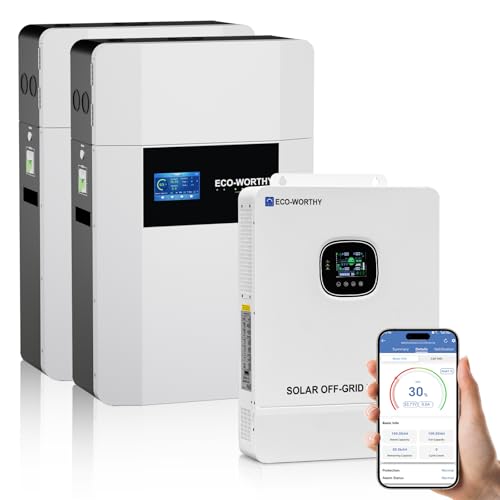
This wall-mount LiFePO4 energy storage setup pairs with a 10kW inverter to provide reliable home backup. It scales by paralleling up to six inverters and 32 batteries to reach up to 163.84 kWh of storage. Best for: households prioritizing modular storage and remote monitoring. Caution: parallel setups require careful electrical design to ensure balanced loading across units.
Jackery HomePower 3600 Plus
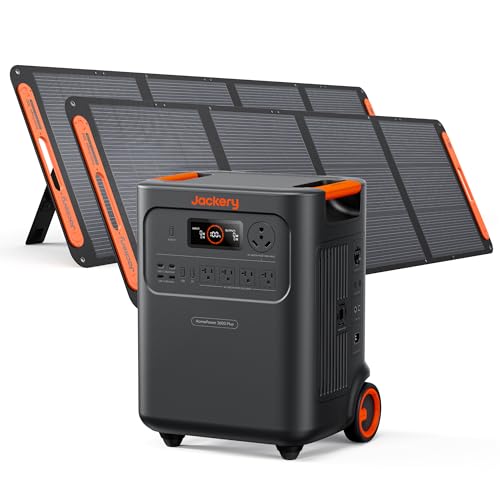
With 3600W continuous output and 3584Wh capacity, this unit supports essential loads with 240V parallel capability and expandability to larger capacities. Best for: small households or emergency kits needing solid backup with simple setup. Limitation: lower single-unit capacity than 10kW systems; best used in combination with other storage to cover larger loads.
Buying Guide: Key Purchase Considerations
- Power needs: Assess total continuous load (wattage) you expect to run simultaneously. Choose a system with at least 1.2–1.5x headroom for startup surges.
- Battery chemistry and lifecycle: LiFePO4 offers longer lifespans and stability; verify cycles and operating temperature ranges for your climate.
- System topology: Decide between a turnkey home backup kit vs. an inverter that scales with modular batteries and multiple inverters.
- Expansion plans: If you anticipate expanding storage, select systems that support parallel inverters and additional batteries without major redesigns.
- Monitoring and connectivity: Look for WiFi/Bluetooth monitoring, RS485/CAN communication, and remote control capabilities to simplify management.
- Weather and location considerations: In sunny climates, high PV capacity yields greater energy generation; in shaded or cloudy regions, robust storage becomes more important.
- Installation: Consider whether a wall-mount battery or a portable setup better fits your space and mobility needs.
Frequently Asked Questions
- What defines a 10kW solar power generator? A 10kW system provides up to 10,000 watts of continuous AC output, typically with parallel-ready inverters and large-capacity LiFePO4 batteries for storage.
- Can a 10kW system run my whole house? It can power many essential loads and some higher-draw appliances, especially with parallel units and energy storage. Always calculate your critical load profile first.
- Is LiFePO4 the best battery type for home backup? LiFePO4 balances safety, longevity, and performance, making it a common choice for home energy storage compared to other chemistries.
- Do I need professional installation? For high-capacity, grid-tied, or paralleled systems, professional electrical design and installation are recommended to meet codes and ensure safety.
- What maintenance does a 10kW system require? Routine checks on battery health, inverter firmware, and connection integrity help maintain reliability. Some systems offer remote monitoring for proactive alerts.
- Can these systems operate without sunlight? Yes, with stored energy from the battery bank, though production drops in poor sun conditions.