As an Amazon Associate I earn from qualifying purchases. These links may earn this site a commission when you buy, at no extra cost to you.
Choosing the right table saw blade can dramatically improve finish quality, cut accuracy, and overall workflow in woodworking projects. This guide features five highly compatible blades designed for fine finishing, clean cuts, and reliable performance across hard and soft woods. Each blade is evaluated by kerf, tooth count, material, and arbor compatibility to help you pick the best option for your saw setup and project needs.
| Product | Brand | Tooth Count | Arbor | Notable Feature |
|---|---|---|---|---|
| WEN BL1060 | WEN | 60 | 5/8″ | Ultra-thin kerf for clean, efficient cuts |
| WEN BL1080 | WEN | 80 | 5/8″ | Carbide-tipped for ultra finish |
| FOXBC 80-Tooth | FOXBC | 80 | 5/8″ | High-density tungsten carbide for smooth cuts |
| DEWALT DWA11080 | DEWALT | 80 | 5/8″ | Fine finish with optimized geometry |
| Diablo D1090X | Diablo | 90 | 5/8″ | Polished-like finishes with long life |
WEN BL1060 10-Inch Fine-Finish Blade
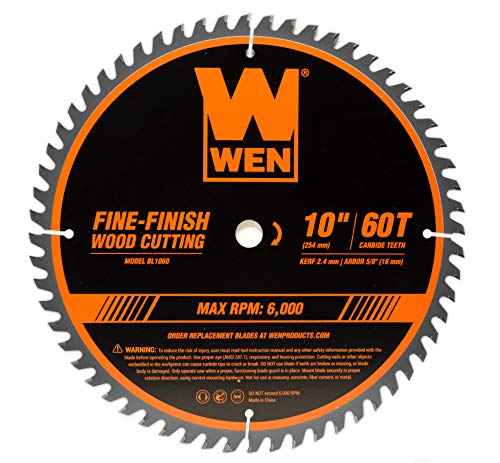
The WEN BL1060 10-Inch blade is designed for miter and table saw use with a 60-tooth count for fine finishes. Its 10″ diameter and 5/8″ arbor ensure broad compatibility with standard saws, while the ultra-thin 1/10-inch kerf minimizes material waste and reduces power draw during cuts. Rated up to 6000 RPM, this blade excels at clean crosscuts through both soft and hard woods, producing reduced tear-out on delicate veneers and plywood faces. This blade is a practical pick for finishing tasks and precise joinery where smooth surfaces matter most.
WEN BL1080 10-Inch 80-Tooth Ultra-Finish Blade
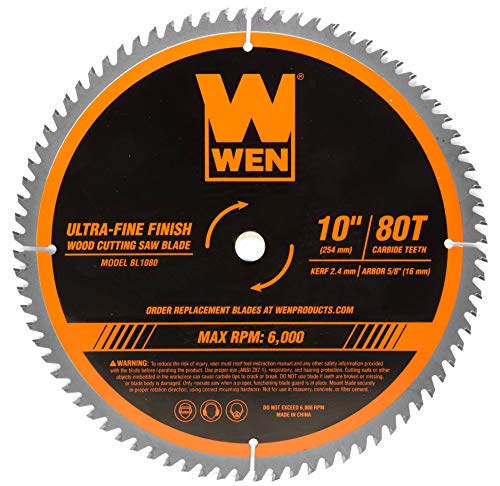
The WEN BL1080 features 80 carbide-tipped teeth for an ultra-fine finish. With a 10-inch diameter and a 5/8-inch arbor, it delivers precise crosscuts and rip cuts with minimal chatter. The ultra-thin kerf helps conserve material and enhances cut quality, making it suitable for veneer work, plywood finishing, and cabinet-grade panels. Its high RPM tolerance supports consistent results across varied hardwoods and softwoods, making it a strong choice for shop efficiency and repeatable finishes.
FOXBC 80-Tooth Ultra Finish Blade

The FOXBC 80-tooth blade is built for ultra-finish results with a 0.098″ kerf and a 5/8″ arbor. The high-density tungsten carbide teeth offer wear resistance and durability, translating to long blade life and consistent cuts through a variety of woods. Its ATB geometry reduces tear-out on frequently used boards, contributing to smoother surfaces suitable for façades, cabinetry, and paneling. The blade’s design minimizes vibration and noise for a calmer workshop experience while delivering crisp edges on finish panels.
DEWALT DWA11080 80-Tooth Fine Finish

DEWALT’s 80-tooth blade combines a refined tooth geometry with a patented body slot design to reduce vibration and improve finish quality. The ultra-sharp carbide teeth maximize cutting efficiency, producing smoother cuts with less effort. This blade is well-suited for fine finish tasks in cabinetry, furniture making, and panel installations where precise, clean edges are essential. It pairs well with both miter and table saws that accept a standard 5/8″ arbor.
Diablo D1090X Ultimate Polished Finish Blade

The Diablo D1090X is designed for polished finishes with its TiCo high-density carbide and a double-side grind tooth geometry. The blade’s 90-tooth configuration enables extremely smooth cuts that resemble the results of sanding, making it ideal for veneered panels, cabinet doors, and interior trim. A 5/8″ arbor and .087″ kerf balance material removal with surface quality, while the tooth geometry reduces work-hardening on delicate woods. This blade emphasizes finish quality and blade life for demanding finishing work.
Buying Guide: Key Purchase Considerations
- Tooth count and finish quality: Higher tooth counts (60–90) yield smoother surfaces, with 80–90 teeth ideal for fine finishing and plywood veneers. Lower tooth counts cut faster but may sacrifice edge smoothness.
- Kerf width: Ultra-thin kerf blades minimize material loss and reduce power demands, beneficial for portable saws and smaller shops, especially when cutting expensive woods.
- Arbor compatibility: Most 10″ blades use a 5/8″ arbor. Verify your saw’s arbor size and compatibility with different blade bodies and anti-kickback designs.
- Tooth material and geometry: Carbide tips increase blade life and edge quality. ATB (Alternate Top Bevel) teeth are common for fine finishes, while specialized grind designs (double-side grind, shear-face) improve surface quality on varied woods.
- Vibration and noise: Blades with engineered body slots and precision ground teeth reduce vibration, resulting in better finishes and more comfortable operation over long sessions.
- Material application: For finishing plywood, veneers, and cabinet-grade boards, blades with higher tooth counts and refined geometry deliver the most consistent results. For rough-cutting or fast stock removal, consider blades with fewer teeth.
- Durability and life: Tungsten carbide teeth offer longer wear life under typical woodworking tasks, though premium brands may be more expensive upfront. Consider your workload to balance cost and longevity.
- Compatibility with saw type: Ensure the blade suits both miter and table saw use if you frequently switch between setups. Some blades are optimized for crosscuts, while others perform evenly across ripping and crosscut tasks.
In evaluating these five options, it’s important to align blade choice with your typical projects, wood species, and the finish you expect. With blades from WEN, FOXBC, DEWALT, and Diablo, woodworkers can choose between ultra-fine finishes, balanced performance, and long blade life to suit cabinetmaking, furniture finishing, and decorative woodworking tasks.