As an Amazon Associate I earn from qualifying purchases. These links may earn this site a commission when you buy, at no extra cost to you.
When working with aluminum and other non-ferrous metals, choosing the right 10-inch miter saw blade can make a big difference in accuracy, finish quality, and tool life. The blades below are designed for clean, burr-free cuts, reduced vibration, and extended wear resistance. Each option is crafted with carbide teeth and specialized grind patterns to optimize aluminum and non-ferrous metal cutting in home workshops and professional shops alike.
Summary of selected products
| Product | Brand | Tooth Count | Arbor | |
|---|---|---|---|---|
| TOMAX 10-Inch 80 Tooth | TOMAX | 80 | 5/8-Inch | Aluminum & non-ferrous metal cuts, carbide teeth, electrophoretic coating |
| FOXBC 10-Inch 80-Tooth | FOXBC | 80 | 5/8-Inch | TCG grind, laser-cut stabilizer vents, noise reduction, durable carbide |
| FOXBC 10-Inch 100-Tooth | FOXBC | 100 | 5/8-Inch | Thin kerf, suitable for thin to medium aluminum, high-density carbide |
| OA-BRES 10 Inch 80T | OA-BRES | 80 | 5/8-Inch | Upgraded TCG grind, electrophoretic coating, laser cut stabilizer vents |
| X-YEAH 10 Inch 80T | X-YEAH | 80 | 5/8-Inch | TCG grind, rugged carbide teeth, long service life |
Before selecting a blade, consider the material thickness, the type of cut (rip vs. cross), noise and vibration, and the tolerance your saw can handle. The options below cover a range of budgets and cutting scenarios, helping ensure you get a clean finish without warping or excessive burrs.
TOMAX 10-Inch 80 Tooth TCG Aluminum Blade

The TOMAX blade is designed for aluminum, plastic, and non-ferrous metals, offering a robust 80-tooth configuration for smooth cuts. Its carbide teeth provide long life and consistent performance across multiple passes, while an electrophoretic coating reduces rust and corrosion in common workshop environments. Ideal for precision cuts in model-making, HVAC components, and general aluminum fabrication, this blade balances speed and accuracy with reasonable durability.
FOXBC 10-Inch 80-Tooth Aluminum Blade

The FOXBC 80-tooth blade features a 5/8-inch arbor and a 0.094-inch kerf, optimized for clean, precise cuts in aluminum and non-ferrous materials. Laser-cut stabilizer vents help trap noise and reduce vibration, which translates to steadier cuts and less blade warp under load. Constructed with high-density tungsten carbide, this blade promises durability for repeated aluminum fabrication tasks in both hobbyist and professional settings.
FOXBC 10-Inch 100-Tooth Aluminum Blade
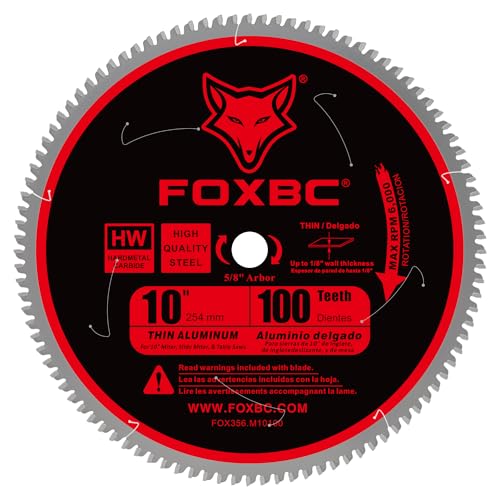
With 100 teeth, this blade is optimized for thin aluminum sections and non-ferrous metals. The thinner kerf supports fast removal rates with minimal waste, while the TCG grind maintains rigidity for smooth, burr-free finishes. Designed for use on miter and table saws, it excels in detailed aluminum work such as electronics housings or protective casings where tight tolerances matter.
OA-BRES 10 Inch 80T Aluminum Blade

The OA-BRES blade uses heavy-duty C-4 tungsten carbide teeth with an upgraded 80-tooth configuration and electrophoretic coating to fight rust. The laser-cut stabilizer vents help control noise and vibration, keeping the blade cool and reducing warp during longer runs. Its balanced design supports smooth finishes on aluminum, plexiglass, and other non-ferrous materials, making it a solid choice for shop projects that demand repeatable results.
X-YEAH 10 Inch 80T Aluminum Blade

The X-YEAH blade features an 80-tooth TCG design for general-purpose aluminum cutting with a 5/8-inch arbor. Its premium alloy steel body and electrophoretic coating resist rust, ensuring long service life in busy shops. The tungsten carbide teeth provide excellent wear and heat resistance, producing smooth, burr-free cuts across a range of aluminum thicknesses and non-ferrous metals. This blade is well-suited for precise miter cuts in fabrication and signage projects.
Buying Guide: Key considerations for choosing a 10″ aluminum blade
- Tooth count and grind: A higher tooth count (80–100) with a fine grind (TCG) generally yields smoother finishes on aluminum and non-ferrous metals, especially for thinner sections. For rougher cuts or faster material removal, an 80-tooth blade can offer a balance between speed and edge quality.
- Kerf width: A thinner kerf (0.094″–0.095″) reduces material waste and requires less power to cut, which can improve feed rate and reduce heat buildup in delicate cuts.
- Arbor compatibility: Most 10″ blades use a 5/8″ arbor. Confirm your saw’s arbor size and any add-on washers or stabilizers required for a stable cut.
- Coating and rust resistance: Electrophoretic coatings help prevent corrosion in humid environments or when blades sit idle between jobs. This is valuable for blades stored in garages or unconditioned spaces.
- Stability features: Laser-cut stabilizer vents and other vibration-reduction features contribute to truer cuts with less chatter, especially on longer runs or with thicker aluminum sections.
- Material-specific use: Some blades are designed specifically for aluminum and non-ferrous plastics, while others can handle a broader mix of metals. Match the blade to your typical workpieces to maximize efficiency and edge quality.
- Safety and compatibility: Always verify manufacturer recommendations for your saw model and follow safety guidelines, particularly when cutting metals that can produce hot chips or reflective surfaces.
In choosing a blade for aluminum and non-ferrous metals, prioritize blades with carbide teeth, a durable coating, and a grind pattern that minimizes burrs while preserving edge integrity. The blades listed here represent a range of options from high-speed, low-waste cuts to highly durable metals-ready configurations, suitable for hobbyists and professional shops alike.