
Best Golf Cart Charge Meters for Clear Battery Insight and Easy Monitoring
Answering the need for reliable battery visibility, this guide highlights top golf cart charge meters that fit 12V–72V systems. Each option is suited for different buyers: DIY club car owners, fleet operators, and hobbyists who want simple, install-friendly monitors. Read on to compare display types, voltage ranges, and installation ease to choose the right meter for your cart. The table below summarizes the five recommended picks with their key strengths.
| Product | Voltage Range | Display Type | Best For |
|---|---|---|---|
| SUPNOVA IPX7 Waterproof Battery Monitor | 7–100V | Digital with percentage and temp | Outdoor use; wide compatibility |
| OBDMONSTER LED Battery Level Indicator | 12–72V | LED Bar Graph (10 segments) | Clear visual cue for daily driving |
| DFCROMI Battery Capacity Indicator | 12–84V | LCD with multiple modes | Versatile mode switching |
| proSPORTsunglasses Golf Cart Meter | 36V | Round gauge with 2″ hole installation | Classic dash-style readout |
| JDIAG Battery Monitor | 12–72V | LED Bar Graph | Easy-to-read charge status |
SUPNOVA IPX7 Waterproof Battery Monitor

The SUPNOVA unit covers 7–100V systems, including 12V, 24V, 36V, 48V, 60V, 72V, and up to 84V configurations. It displays remaining capacity as a percentage and includes a buzzer alarm plus temperature readout. Best for: buyers who need broad compatibility and outdoor-ready protection. Limitations: ensure correct wiring to avoid reverse input issues; IPX7 protection is ideal for exposed installations but avoid submersion beyond ratings.
OBDMONSTER LED Battery Level Indicator

This meter uses a 10-segment LED Bar Graph with a 12–72V universal range, including lithium and lead-acid types. It offers clear left-side power visuals (10% per segment) and backlighting for easy reading in various lighting. Best for: golf cart owners who want a simple, visual cue and straightforward installation. Limitation: readouts are visually intuitive but less precise than percent-based digital meters.
DFCROMI Battery Capacity Indicator
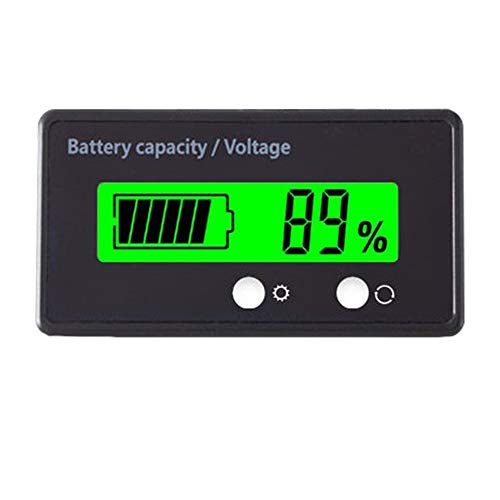
The DFCROMI monitor accepts 12–84V with a backlit LCD and two display modes. It supports 3S–26S lithium and lead-acid batteries and includes switchable battery type settings. Best for: users who value mode options and a larger display for varied battery chemistries. Caution: verify battery type selection matches your pack to ensure accurate readings.
proSPORTsunglasses Golf Cart Meter

Designed for 36-volt systems with a round dial and dash-mounting hardware, this meter provides a straightforward readout of remaining charge. Best for: those who prefer a traditional dash gauge with simple two-wire hookup. Limitation: fixed 36V focus may require alternative meters for other voltages or mixed systems.
JDIAG Battery Monitor

The JDIAG monitor supports 12–72V and features a 10-segment LED display with a clear readout of remaining capacity. It suits golf carts, EVs, and various battery-powered devices. Best for: buyers who want a simple, energy-efficient indication of battery status with broad voltage support. Limitation: LED segments provide a coarse percentage view compared with digital meters.
ELMCONFIG LED Battery Monitor

The ELMCONFIG unit provides a 12–72V range with a three-color display (1 red, 2 yellow, 7 green) and IP65 waterproof rating. It supports various battery types and includes mode switches for backlight and battery type. Best for: users needing waterproof performance and clear color-coded status. Caution: do not submerge; follow mounting recommendations for durability.
DROK 48v Golf Cart Battery Meter

The DROK monitor suits 10–100V packs and includes a temperature gauge (Farenheit) in addition to voltage display. It works across lithium, lead-acid, and LiFePO4 chemistries. Best for: buyers who want an integrated temp readout and wide voltage support. Limitation: temperature reading reflects internal meter temperature, not ambient air temperature.
Buggies Unlimited 48V Battery Charge Meter

This analog meter mounts flush with the dash and includes optional mounting hardware for a neat install. Best for: golf cart owners who prefer an easy, hardware-light setup with a color-coded needle indicator. Caution: not a digital readout—may be less precise for detailed state-of-charge tracking.
Buying Guide: Key Purchase Considerations
Voltage compatibility matters: choose meters rated for your cart’s pack voltage (commonly 12V, 24V, 36V, 48V, 60V, or 72V). Display type affects readability: digital percent readouts offer precision; LED bars give quick visual cues. For outdoor use, IP ratings or water resistance protect against spray and rain. Installation style is important: two-wire hookups are easiest, while dash-mounted or bracketed units provide a cleaner look. Battery chemistry support (lead-acid vs. LiFePO4 vs. lithium) ensures accurate readings. Think about whether you need temperature data, alarms, or backlighting for nighttime visibility.
Frequently Asked Questions
- What voltage range should I choose for a typical golf cart?
Most carts use 36V–48V systems, but some ride on 12V or 72V packs. Pick a monitor that covers your specific pack voltage. - Do I need a waterproof meter for outdoor use?
Yes. An IP-rated meter reduces reading issues from rain, splashes, or humidity. - Is a digital percent readout better than an LED bar for battery tracking?
Digital percentages are more precise; LED bars provide quick at-a-glance status but less exact numbers. - Can these meters monitor different battery chemistries?
Many support lead-acid and Li-ion/LiFePO4; verify your battery type in the product specs before purchasing. - Will installation affect cart electronics?
Most meters use simple two-wire hookups or dash mounting. Follow provided wiring diagrams to avoid polarity or grounding issues. - Do all meters show temperature readings?
Not all models include temperature data; check the features list if you need this capability.