
Best RV MPPT Solar Charge Controllers for Efficient Power on the Road
Answering your search for reliable RV MPPT solar charge controllers, this guide highlights five top options suitable for varied RV power needs. These controllers optimize solar harvest, extend battery life, and support multiple battery chemistries. Ideal buyers include full-time RVers seeking maximum efficiency, weekend travelers needing reliable solar management, and off-grid campers demanding robust protection.
Summary table of chosen products:
| Product | Brand | Voltage Range | Best For |
|---|---|---|---|
| SmartSolar MPPT 100V/50A | Victron Energy | 12/24V, up to 100V PV input | High-capacity RV setups with shading and long cable runs |
| SmartSolar MPPT 75V/15A | Victron Energy | 12/24V, up to 75V PV input | Compact RV systems, balanced price and performance |
| Rover 30A MPPT | Renogy | 12/24V | Medium RV systems, lithium and traditional batteries |
| Rover 40A MPPT | Renogy | 12/24V | Higher capacity RV setups, robust storm protection |
| SmartSolar MPPT 100V/30A | Victron Energy | 12/24V, up to 100V PV input | Versatile RV systems with Bluetooth monitoring |
Victron Energy SmartSolar MPPT 100V, 50A

The Victron SmartSolar MPPT 100V, 50A model uses advanced MPPT technology to maximize solar harvest while protecting battery life. It supports 12/24-volt systems and high PV input voltage. Best for large RV arrays with multiple panels and longer cable runs where efficiency matters.
Who this is best for: RV owners with sizable solar setups and shading challenges who need synchronized charging across multiple controllers. This unit’s Bluetooth capability allows remote monitoring. A useful choice for system-wide energy optimization when multiple sites are used.
Selected because: It combines high input voltage handling with robust synchronization features, enabling scalable RV solar banks. Limitation: initial setup may be more complex for beginners.
Victron SmartSolar MPPT 75V, 15A

This 75V/15A Victron unit delivers reliable MPPT performance with fast tracking and smart charging. It keeps battery longevity in focus and is well-suited for compact RV systems that still need efficient energy recovery from shaded panels.
Who this is best for: RVers who want smart, scalable solar control without oversizing the charge controller. Why chosen: steady optimization and easy Bluetooth oversight. Caution: lower amperage may limit performance with larger panel arrays.
Renogy Rover 30A MPPT

The Renogy Rover 30A MPPT is a versatile controller suitable for 12V/24V systems and a range of battery chemistries, including lithium. It uses multi-peak tracking to handle partial shading and offers a robust temperature compensation feature for reliability in RV environments.
Who this is best for: RV users with medium solar arrays looking for strong performance under shade and in variable climates. Why chosen: solid efficiency and broad battery compatibility. Caution: advanced lithium features may require careful configuration for optimal results.
Renogy Rover 40A MPPT

The Renogy Rover 40A MPPT expands capacity for larger RV solar setups while maintaining 12V/24V auto-detection and broad battery compatibility. It includes storm-ready protections and a four-stage charging profile to optimize lead-acid and lithium systems.
Who this is best for: RV owners growing their solar array or upgrading from a smaller controller. Why chosen: higher amperage with lithium recovery features. Caution: higher price relative to smaller models may be a consideration for budget-conscious buyers.
EcoSolLi 120A MPPT Solar Charge Controller
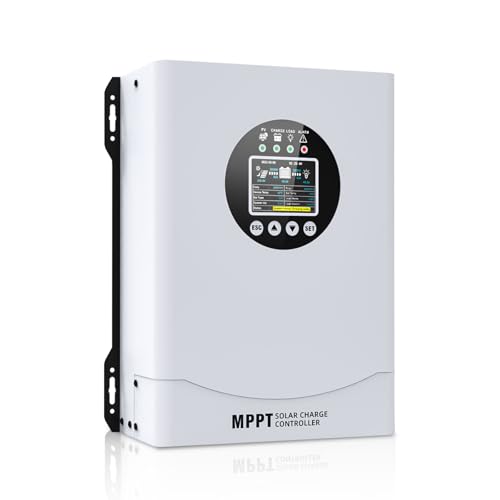
The EcoSolLi controller provides very high capacity for large RV solar installations. It supports multiple configurations and protects the system with several safeguards. Best for very large battery banks and high-panel arrays in RV setups.
Who this is best for: extreme RV solar systems needing substantial current handling. Why chosen: high amperage for demanding energy storage. Caution: complexity and wiring requirements are greater; ensure compatibility with existing batteries and panels.
Buying Guide
What to consider when choosing an RV MPPT solar charge controller
System size: Match the controller amperage to your solar array and battery bank. Oversized controllers don’t hurt, but undersized units can throttle energy harvest.
Voltage range: Ensure the unit supports your PV array voltage (12/24V systems are common in RVs). Higher input voltage (like 100V) can reduce current in long cable runs.
Battery chemistry compatibility: Verify support for gel, flooded, sealed lead-acid, and lithium batteries if you plan to mix chemistries.
Protection features: Look for overcharge, short-circuit, and temperature compensation protections. Storm-ready features help in exposed RV locations.
Monitoring and control: Bluetooth or app-based monitoring aids setup and maintenance. Bluetooth is convenient for on-the-road adjustments.
In-depth considerations
Shade management: MPPT controllers excel with partial shading; multi-peak tracking helps maximize harvest when panels are not fully illuminated.
Synchronization: If your system uses multiple controllers, synchronized charging can optimize overall energy and protect batteries across the array.
Installation environment: RV installations require compact, weather-resistant enclosures and clear labeling for safe operation while traveling.
Frequently asked questions
- What is an MPPT solar charge controller used for in RVs? It maximizes solar energy transfer to the battery by tracking the optimal voltage and current.
- Do I need Bluetooth on my RV MPPT controller? Bluetooth helps monitoring and configuration; it’s convenient but not strictly required.
- Can an MPPT controller handle lithium batteries? Yes, many models support lithium or offer lithium recovery features, but verify compatibility before use.
- Should I choose a higher amperage controller than my system currently needs? If you plan to expand the solar array, opting for a higher amperage can reduce future upgrades and improve efficiency under shade.
- Is synchronization important for RV solar setups? Synchronization helps keep multiple controllers in harmony, improving overall battery longevity and energy management.
- What maintenance is needed for these controllers? Regular inspection of wiring, fuses, and enclosure seals is recommended; monitor for overheating and check Bluetooth/app data periodically.