
Best Power Outlet Network Adapters for Fast, Reliable Internet
Answering the search for reliable power outlet network adapters, this guide highlights top options that convert your existing electrical wiring into a fast, stable wired or mixed wired/wireless network. Ideal buyers include homeowners with signal dead zones, renters seeking non-intrusive setups, and small offices needing quick, plug-and-play expansion. The focus is on AV/HomePlug devices that deliver strong performance across multiple rooms and floors without extra cabling. Below is a quick, at-a-glance summary of five solid choices.
| Product | Best For | Key Feature |
|---|---|---|
| TP-Link AV1000 TL-PA7017 KIT | Multi-story homes, garages | AV1000 speeds with plug-and-play setup |
| TP-Link TL-PA4010 KIT (AV600) | Budget-friendly wired expansion | Simple, compact kit with no configuration |
| TP-Link AV1000 TL-PA7017P KIT | Powerline with passthrough and noise filtering | Passthrough outlet plus AV1000 speeds |
| TP-Link TL-PA9020P KIT (AV2000) | High-demand networks, multiple devices | 2×2 MIMO with passthrough and high performance |
| NETGEAR PLP2000-100PAS | Gigabit-ready, single-room boosts | Passthrough with two Gigabit Ethernet ports |
TP-Link AV1000 Powerline Ethernet Adapter Kit TL-PA7017 KIT
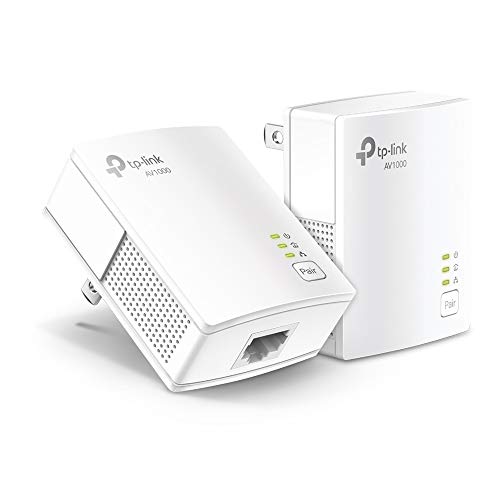
Best for: Homes with easy-to-access outlets across multiple rooms and floors. Why selected: AV1000 speed over existing electrical wiring, ideal for streaming, gaming, and general wired connectivity without new cables. Caution: Performance depends on the electrical circuit quality and distance between adapters. This kit is compatible with other TP-Link powerline adapters to extend coverage further.
TP-Link AV600 Powerline Ethernet Adapter Kit TL-PA4010 KIT

Best for: Users seeking a budget-friendly wired network expansion across a modest home. Why selected: Up to AV600 speeds with plug-and-play setup, minimal power draw, and no new wires required. Caution: AV600 is lower than AV1000/AV2000 options, so 4K streaming or fast online gaming may benefit from higher-speed kits if available.
TP-Link AV1000 TL-PA7017P KIT with Passthrough

Best for: Users who need a powered outlet pass-through to keep a busy outlet available for other devices. Why selected: AV1000 speed over existing wiring with a passthrough feature to avoid losing outlet access. Caution: Passthrough outlets can be slightly less convenient in tight power strip setups or near surge protectors, which may affect connectivity.
TP-Link AV2000 TL-PA9020P KIT
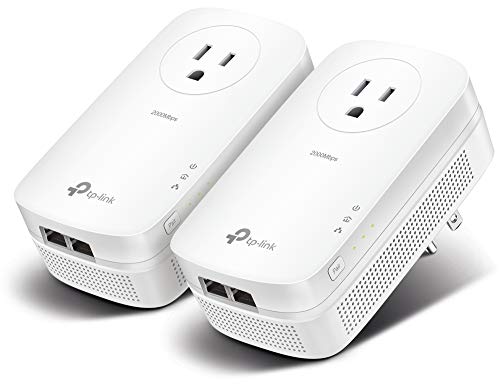
Best for: Households with high bandwidth needs across several rooms and devices. Why selected: AV2000 speeds with 2×2 MIMO and passthrough, offering robust performance for gaming, 4K streaming, and smart devices. Caution: Performance varies by circuit quality; ensure direct outlet connections and avoid surge protectors for optimal results.
NETGEAR PLP2000-100PAS Powerline Adapter Kit
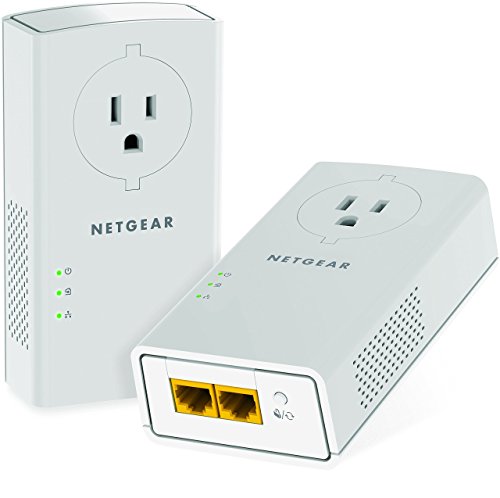
Best for: Users who prefer a two-port solution and a built-in extra outlet to keep power accessible. Why selected: Powerline with passthrough and two Gigabit Ethernet ports delivers flexible wired connectivity. Caution: Requires compatible electrical wiring and may not achieve full speed on older circuits.
Buying Guide
What to consider when choosing a power outlet network adapter
Assess your home layout. For multi-story homes or spaces with thick walls, higher AV speeds and MIMO features help maintain performance. If you only need occasional wired access, AV600 options may suffice.
Is passthrough important?
Passthrough outlets keep a wall outlet free for other devices, which is convenient in tight spaces or with power strips. Note that placement and surge protectors can impact performance.
Wired vs. mixed (powerline plus Wi‑Fi)
Powerline adapters can be strictly wired or paired with a wireless extender. If you need Wi‑Fi in addition to wired stability, look for kits marketed as powerline plus Wi‑Fi extenders with appropriate standards (AC/AX) and coverage notes.
Circuit considerations
Adapters generally perform best when both units are on the same electrical circuit. Some limitations may occur if there are multiple circuits or significant electrical noise from appliances.
Speed expectations and plan limits
Availability of AV1000, AV2000, or higher speeds can improve streaming and gaming experiences, but real-world speeds cap at your internet plan and wiring quality. Choose a model that exceeds your current needs to minimize future upgrades.
Compatibility and setup
Most TP-Link and NETGEAR powerline adapters are plug-and-play, but check whether your system requires firmware updates or specific pairing steps. A simple setup reduces downtime and improves reliability.
Summary of key differences
- AV600 (TL-PA4010) is cost-effective for basic wired expansion.
- AV1000 and AV2000 options (TL-PA7017, TL-PA7017P, TL-PA9020P) provide faster, more reliable performance for streaming and gaming.
- Passthrough models (TL-PA7017P, TL-PA9020P, and NETGEAR PLP2000) preserve outlet usage while boosting connectivity.
- Wi‑Fi extension options (e.g., TP-Link models with Wi‑Fi) add wireless coverage where needed.
Frequently Asked Questions
- What is a power outlet network adapter?
It uses existing electrical wiring to carry network signals between adapters, turning outlets into network access points. - Do powerline adapters require a specific circuit?
They work best when both adapters share the same electrical circuit, but performance can vary with circuit design and distance. - Can I use powerline adapters with surge protectors?
Some adapters recommend direct outlet use; surge protectors can reduce performance or block connectivity in certain setups. - Are there security features for these adapters?
Many units include encryption and pairing to prevent unauthorized access to the network. - Which is better for gaming, AV1000 or AV2000?
AV2000 typically offers higher potential speeds and stability, which can benefit online gaming on busy networks. - Do I need two adapters for every room?
Yes, at least two adapters are required to create a powerline network; additional adapters extend coverage as needed.