
Best 2-Space Breaker Boxes for Safe, Accessible Home Electrical Distribution
Your search for a reliable 2-space breaker box ends with options designed for indoor use, flexible wiring, and straightforward installation. This guide highlights five top-shelf indoor 2-space, 4-circuit load centers, showing who each is best for and why. Ideal buyers include DIY homeowners upgrading a small panel, renters seeking a compliant yet compact solution, and installers needing a compact distribution point with solid mounting options. The following table compares the highlighted products at a glance.
| Product | Type | Space / Circuits | Mounting | |
|---|---|---|---|---|
| Square D QO24L70SCP | Main Lugs Load Center | 2-space / 4-circuit | Surface mount | Compact indoor installation with surface-mount cover |
| Square D HOM24L70FCP | Main Lugs Load Center | 2-space / 4-circuit | Flush mount | Indoor flush-mount option for tight spaces |
| Siemens W0204ML1060U | Outdoor Enclosure (partial) | 2-space / 4-circuit | Outdoor-ready enclosure | Outdoor or partially sheltered indoor use |
| ABB TL270SCUP | Main Lug Load Center | 2-space / 4-circuit | Indoor surface/mount | Durable indoor distribution with full-access lugs |
| KERWINN HT-2-WAY | 2-way, 2-space-ish | Wall-mounted | Transparent view, IP66-rated protection |
Square D QO24L70SCP QO 70-Amp 2-Space 4-Circuit Indoor Main Lugs

The QO24L70SCP is designed for indoor use with a surface-mount cover. It accommodates a plug-on secondary surge arrestor (sold separately), and main feeders terminate from the top. Feeders can enter from any direction, but the device cannot be rotated. Best for: homeowners needing a compact, surface-mounted 70-amp panel with simple wiring and a clean indoor look. Better for: spaces where a surface-mount cover is preferred over flush installation. Limitation: limited rotation of the device may constrain certain wiring routes.
Square D HOM24L70FCP Homeline 70 Amp 2-Space 4-Circuit

The HOM24L70FCP is an indoor, flush-mount main lug load center, rated for 70 amps with 2 spaces and 4 circuits. Features listed emphasize packaging dimensions that matter for tight installations. Best for: indoor mini-panels where a flush mount is preferred for a neat wall appearance. Better for: rooms or closets with constrained depth. Limitation: product details focus on dimensions rather than integrated features, so verify fit for your enclosure and wiring plan.
Siemens W0204ML1060U 60 Amp Outdoor Enclosure

This 60 amp outdoor enclosure is listed as a 2-space, 4-circuit option suitable for outdoor or weather-exposed environments. It’s a gray enclosure with dimensions suitable for exterior installation. Best for: outdoor or semi-protected areas where weather resistance is a priority. Better for: retrofit projects requiring an outdoor-ready footprint. Limitation: labeled capacity is 60 amps, which is slightly lower than some 70-amp counterparts; ensure your electrical load requirements align.
ABB TL270SCUP 70A Indoor Load Center
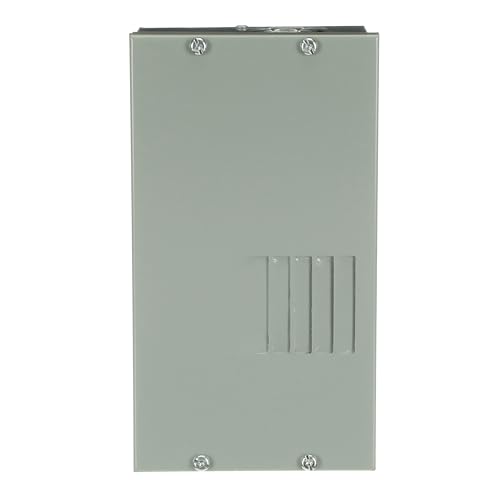
The TL270SCUP is a reliable 70 Amp indoor load center with 2 spaces and 4 circuits. It features rust-resistant galvanized construction, tin-plated copper bus, and full-length neutral bars with a self-adjusting dead-front cover. Best for: interiors requiring durable construction and robust electrical distribution. Better for: installations needing strong durability in a residential or commercial indoor setting. Limitation: some buyers may need to verify fit with existing bus configurations and main lugs.
KERWINN HT-2-WAY Distribution Protection Box

The Kerwinn HT-2-WAY is a distribution protection box with an IP66 waterproof and dustproof rating, made from PC/ABS alloy plastic. It includes a transparent viewing window and internal guide rails for easy use and quick inspection. Best for: small, weather-resilient indoor or sheltered outdoor distribution points. Better for: installations where visibility of the interior and quick checks matter. Limitation: described as a 2-way distribution box; ensure circuit requirements align with two-way capacity and housing size.
Buying Guide: Key Purchase Considerations
- Indoor vs outdoor suitability: Choose indoor-rated panels for garage or utility rooms; outdoor-rated enclosures are weatherproof and may require different mounting hardware.
- Amperage and circuit capacity: Match 60A, 70A, or higher ratings to your planned electrical load and future expansion.
- Mounting style: Surface-mount vs flush-mount affects wall space and accessibility; consider available depth and panel location.
- Number of spaces and circuits: Ensure the panel supports the required number of circuits while leaving room for growth.
- Bus material and durability: Tin-plated copper buss bars and galvanized enclosures improve longevity in challenging environments.
- Warranty and compatibility: Verify compatibility with breakers you plan to use, and check for any local electrical code requirements.
Frequently Asked Questions
- What does “2-space” mean in a breaker box?
It refers to two physical slots (spaces) where breakers can be installed, typically supporting up to four circuits in a 4-pole arrangement. - Is a surface-mount panel easier to install than a flush-mount panel?
Surface-mount panels are generally simpler to mount on a wall, while flush-mount panels require a cut into the wall and a recessed installation. - Can these panels handle outdoor use?
Some are designed for outdoor or weather-protected environments; check enclosure rating and local codes before installing outdoors. - Should I choose 60A or 70A for a small home system?
A 60A or 70A panel suits small living spaces and basic loads; ensure your main breaker size and sub-panel needs align with planned circuits. - What maintenance is required for these load centers?
Regular inspections for corrosion, loose connections, and signs of wear help maintain reliability; follow manufacturer guidelines for servicing. - Do these panels require professional installation?
Electrical work should comply with local codes; many residential installations are performed by licensed electricians, especially when expanding service capacity.