
Best Water Pumps to Remove Water From Ponds
If you need a reliable pump to drain a pond, this guide highlights five affordable, powerful options and explains who each is best for. These pumps excel at moving water quickly, handling debris, and adapting to various hose sizes. Ideal buyers include pond owners needing quick drainage, homeowners addressing flooded basements, and outdoor enthusiasts clearing hot tub or pool drainage. The table below compares the top picks at a glance.
| Product | Best For |
|---|---|
| AQUASTRONG 1 HP Sump Pump | Large ponds and high-flow drainage with solid-load tolerance |
| SEESII 1HP Submersible | Heavy-duty pumping with long discharge reach and anti-clogging features |
| Water Transfer Pump by FIDISP | Smaller jobs and safe, portable transfer with built-in switch |
| 1HP 5000GPH Sump Pump | Versatile, quick drain for pools, basements, ponds |
| FOTING 1HP Sump Pump | Durable, debris-tolerant pumping for varied water sources |
AQUASTRONG 1 HP Sump Pump 4500 GPH

Best for high-flow water removal in larger ponds, basements, or hot tubs. This 1HP submersible pump delivers up to 4500 GPH and can lift water up to 30 feet. It features bottom suction to pull water from near the surface and below, filtering debris down to 1/5 inch. The 1-1/4″ NPT discharge with optional adapters supports multiple hose sizes, making installation versatile. The 10-foot power cord adds convenience and safety in outdoor setups.
Best for: Pond owners needing rapid drainage and robust solid handling. Choose this if you regularly drain sizable volumes and require reliable vertical lift. Limitation: heavier unit, may require a sturdy transfer path or help to place in deep ponds.
SEESII 1HP Submersible Water Pump

Better for long-distance drainage and elevated discharge, this 1HP pump pushes up to 4755 GPH with a lift height of 36 feet. It includes an anti-clogging filter to reduce debris-related downtime, making it suitable for pools, hot tubs, ponds, and flooded basements. Its design emphasizes ease of maintenance and consistent performance with moderate noise levels.
Best for: Users needing a balance of high flow and longer reach with improved debris management. Caution: filter and intake should be cleared periodically to prevent buildup in very dirty water.
Water Transfer Pump, 115V 1/10HP

Best for small to medium transfer jobs where portability and safety are priorities. This 1/10 HP pump handles up to 330 GPH with a head of over 42 feet, making it suitable for rain barrels, garden pools, and light drainage tasks. It comes with a two-hose setup and a waterproof switch for simple operation, plus longer cords for safer placement away from the water.
Best for: Lightweight, quick transfers in tight spaces. Limitation: lower flow rate means slower drainage on larger ponds or pools.
1HP 5000GPH Sump Pump

Best for fast water removal from ponds, pools, or basements where quick drain is essential. With up to 5000 GPH and a lift of 30 feet, it can handle large volumes efficiently. It includes a standard 3/4″ NPT garden hose adapter and multiple adapter sizes for flexible hose connections. Bottom suction helps retrieve water containing some sediment, while a mesh bag can support filtration for cleaner water transfer.
Best for: General-purpose, heavy-duty water removal tasks. Limitation: may require screening for larger solids if debris is present in the pond.
FOTING 1HP Sump Pump 4600GPH
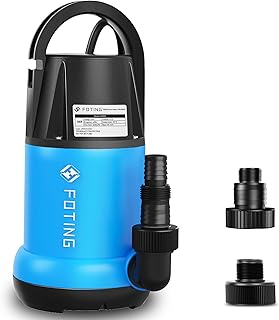
Best for versatility in debris-prone environments thanks to a robust 1HP motor delivering up to 4600 GPH and lifting up to 31 feet. It drains water down to 1/5 inch and includes a thermoplastic housing that resists corrosion. The 10-foot cord and removable bottom simplify maintenance and mobility for pond, hot tub, and basement drainage.
Best for: Users needing a rugged, debris-tolerant pump for mixed-use draining. Caution: thermoplastic housing should be kept dry and stored properly when not in use to extend life.
Buying Guide
What size pump do I need for my pond?
Choose a pump with a higher GPH rating than your pond’s total volume to finish drainage in a reasonable time. For large ponds, consider models around 4500–5000 GPH with a lift height of 30 feet or more.
What about debris and solids?
Look for bottom-suction capability and, if possible, an included debris screen or filter bag. Ponds often contain sediment, leaves, and small twigs that can clog pumps.
How long should a pump run?
Many pumps are designed for continuous operation with built-in automatic shutoffs or float switches. If manual operation is needed, ensure the device has a durable switch and a long power cord for safe placement.
What hose fittings are needed?
Most pumps use standard 3/4″ NPT fittings and adapters for common garden hoses. Check the included adapters to ensure compatibility with your hose diameter and discharge direction.
Portability and power considerations
Portable units with 10 ft cords are easier to move between ponds or basements. If a power source is far away, consider a longer cord or a model that matches your electrical circuit constraints.
Maintenance tips
- Rinse the intake after heavy use to remove debris.
- Periodically check and clean the filter bag or screen.
- Store pumps dry to prevent corrosion and mold growth.
FAQ
- What is the best pump for draining a larger pond quickly?
Look for a high-flow model around 4500–5000 GPH with a 30-foot lift to move water efficiently from a large pond.
- Can these pumps handle dirty water from a pond?
Many models offer bottom suction and debris filters, but remove coarse solids before pumping to reduce clogs.
- Is a longer power cord better?
Yes, a longer cord provides safer placement away from water; ensure the cord length matches your outlet distance.
- Do these pumps require professional installation?
No specialized tools are typically needed; most models install with standard hose adapters and simple placement.
- How do I prevent pump failure when pumping cold water?
Keep the pump in a dry, sheltered area when not in use and avoid freezing conditions that can damage internal components.
- Should I choose a plastic or metal-cased pump?
Thermoplastic housings offer corrosion resistance and lighter weight; metal housings are often sturdier but may corrode in harsh environments.