
Best Voltage Gauges for Boats: Clear Readouts for Safe, Reliable Power
If you rely on marine electronics, a reliable voltage gauge is essential for monitoring your boat’s electrical health. This guide highlights five top options that balance readability, durability, and suitability for 12V/24V systems. Each pick is best for a specific user type—from casual weekend boaters to serious navigators needing precise, real-time readings.
Overview: the following products are among the most relevant for boaters seeking accurate voltage monitoring. The table below summarizes key traits to help you compare at a glance.
| Product | Best For | Voltage Range | Backlight | Notable Feature |
|---|---|---|---|---|
| ARTILAURA Voltmeter 52mm | All-around marine use | 8-16V | 7 colors | IP67 waterproof, 316L body |
| SAMDO 52mm Voltmeter | Anti-vibration environments | 8-16V | Backlight varies by model | Moving-magnet needle |
| ePathChina 2″ Voltmeter | Low-profile dashboards | 8-16V | LED dial light | Compact 2″ gauge |
| Geloo 52mm Marine Gauge | Rugged, all-weather boats | 9-32V (8-16V indicated) | 7 colors | Anti-fog, IP67 |
| DAIERTEK 12V/24V Voltmeter | Panel-mounted monitors | 8-16V | Blue LED | Waterproof, versatile mounting |
ARTILAURA 52mm Voltmeter With 7 Backlight Colors

Best for: boaters needing a vivid, easily readable gauge in various lighting. The 2-1/16 inch (52mm) diameter fits common panels and the 316L metal, rubber, and plastic build provides durability in marine environments. The curved glass lens adds scratch resistance, and the IP67 rating protects against water and dust intrusion. This voltmeter covers 8-16V, suitable for most 12V and 24V systems.
Why selected: its seven-color backlight helps operators quickly locate a reading at a glance under glare or low light. The wide compatibility and rugged construction make it a versatile choice for many boat layouts. Caution: ensure your panel has enough depth for the gauge and its wiring connections.
SAMDO 7 Backlight 52mm Universal Voltmeter

Best for: vessels requiring stable readings with good anti-vibration performance. SAMDO uses a moving-magnet mechanism to drive the needle, delivering a robust response in rough seas. The device also emphasizes anti-fogging performance for clear visibility in humid environments.
Why selected: its anti-vibration design makes it suitable for small boats, sailboats, or RVs where movement is frequent. Potential limitation: backlight color options are specific to the model series, so verify you get the desired look for your panel.
ePathChina 2-Inch LED Voltmeter
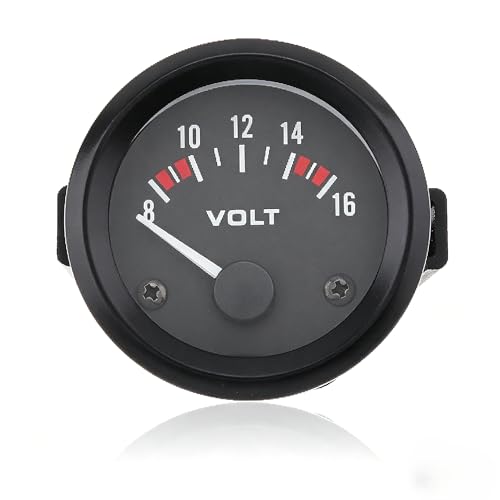
Best for: dashboards needing a compact, easy-to-read display with strong nighttime visibility. The 2″ form factor fits tighter panels while providing a clear LED-lit voltage readout. It reads 8-16V, making it compatible with most 12V and 24V systems found on boats, cars, and small marine vessels.
Why selected: simple, direct readouts reduce ambiguity in dim or bright conditions. Limitation: being smaller, it may be slightly harder to read from a distance or in larger helm stations without closer attention.
Geloo 52mm Marine Voltage Gauge

Best for: boats needing a rugged, long-lasting instrument with strong weather sealing. Geloo’s gauge uses a 316 stainless steel and ABS shell with IP67-rated, anti-fog, curved glass, designed for wide temperature ranges and harsh marine conditions. It supports a broad voltage window and is adaptable for marine, automotive, and industrial uses.
Why selected: its broad operating range and protective housing make it a safer choice for diverse marine environments. Caution: check the exact wiring harness and mounting depth to ensure it fits your panel and back of dash clearance.
DAIERTEK 12V/24V LED Voltmeter Panel

Best for: boaters seeking a panel-mounted voltage monitor with a blue LED display for easy day and night readability. It covers 12V and 24V systems and is designed for marine use, cars, trucks, and motorcycles, offering a compact, waterproof solution for on-board monitoring.
Why selected: its mounting flexibility—with a panel mount and nylon nut—allows for customized installation. Limitation: ensure you have a suitable mounting hole and panel space for optimal fit and wire routing.
Anina 2Packs Car Voltage Meter

Best for: those who want a budgeting-friendly, dual-pack solution with bright blue LED readings for 12V/24V systems. It provides real-time DC battery monitoring and reports voltage with high clarity, suitable for vehicles, boats, and power sports equipment.
Why selected: its real-time display and accuracy help prevent battery drain or failure. Caution: price-conscious buyers should confirm the included mounting hardware meets their panel needs and that the dual-pack setup aligns with their layout.
BLUERICE 52mm Digital Voltmeter

Best for: boaters who want a straightforward digital readout with a red backlight for visibility in low light. The 52mm gauge is designed for standard panel integration. It supports 8-16V operation and uses a simple wiring setup for power and backlight control.
Why selected: the red backlight option makes it easy to read under night conditions and in cab spaces with limited lighting. Limitation: ensure your boat’s electrical system stays within the specified voltage range to avoid inaccurate readings.
Sierra 57901P Voltmeter – Amega 2″

Best for: those needing a classic, simple 12V display with robust legibility. Sierra’s voltmeter offers a black dial design with red graduations and white numerals, paired with scratch-resistant curved glass for long-term visibility.
Why selected: its traditional look and dependable performance suit classic boat dashboards. Limitation: it mentions 12 VDC specifically, so confirm compatibility with non-12V systems before purchase.
Buying Guide
What voltage range do you need? Most boating systems use 12V or 24V; choose gauges rated for 8-16V or 9-32V tolerance to accommodate load fluctuations and system upgrades.
How important is backlighting and readability? If you operate at night or in glare-heavy conditions, opt for models with multiple backlight colors or bright LED illumination for quick readings.
What mounting style suits your helm? Panel-mount gauges (52mm) fit standard dashboards, while some options offer surface or bracket mounting. Consider panel depth and back clearance.
What environmental protections are important? IP67 waterproofing and anti-fog glass help boats subject to spray and humidity. Stainless steel or reinforced housings add durability for rough seas.
How precise should the readout be? Some models report voltage with 0.1 V precision; others provide broader indicators. For critical battery management, precise, real-time monitoring matters more than decorative features.
Wiring and installation concerns: check the color-coding of power and backlight wires to avoid miswiring. Ensure the gauge can share a common ground with other electronics to prevent interference.
FAQ
- What voltage range should a boat voltmeter cover?
A: Most boats use 12V or 24V systems; a voltage range of 8-16V is common, with some models supporting wider ranges up to 32V for accessories and alternators. - Is IP67 waterproofing necessary for marine gauges?
A: It is highly recommended to protect against water exposure, salt spray, and humidity in marine environments. - Should I prefer analog needle gauges or digital LED displays?
A: Digital displays offer easier daytime readability and precise voltage values, while analog needles can be quicker to glance at in motion. - Can I install a 52mm voltmeter myself?
A: Yes, many models are designed for standard 52mm panels; verify mounting depth, wiring, and backing space before drilling. - Do backlight colors matter for safety?
A: Color can improve quick recognition in low light or busy cockpits; seven-color backlights are common to aid visibility under different conditions. - What maintenance is required for these gauges?
A: Regular inspections for moisture inside the housing, clearness of the glass, and secure wiring connections help maintain accuracy and longevity.