
Best 10 000 Lux Lamp for Bright Light Therapy and Mood Support
Find the right 10,000 lux lamp for safe, UV-free light therapy that can help improve mood, sleep, energy, and focus. This guide highlights five top choices, explains who each is best for, and clarifies what to watch for in a light therapy lamp. Whether you work a night shift, need winter blues relief, or want a desk companion for better alertness, these lamps offer clear benefits without complex setup.
| Product | Key Benefit | Ideal For |
|---|---|---|
| Verilux HappyLight Lucent | Ultra-simple, portable, UV-free 10,000 lux | |
| Circadian Optics Lumos | Adjustable panel, desk-friendly footprint, full 10,000 lux | |
| SUXIO Light Therapy Lamp | Three modes, memory, USB-powered portability | |
| Comfytemp Light Lamp | Up to 16,000 lux, multiple brightness and color temps | |
| Verilux HappyLight Lumi Plus | Adjustable brightness with timer |
Verilux HappyLight Lucent Light Therapy Lamp

The HappyLight Lucent provides up to 10,000 lux of UV-free LED light with a minimal, ultra-thin form factor. Its one-button operation makes it ideal for first-time users and those who want a quick morning boost. This model emphasizes safety and comfort, delivering a glare-free experience that supports mood, sleep, and focus throughout the day.
Who it’s best for: busy professionals, seniors, and travelers who want a simple, portable option without a detachable stand. Why chosen: its simple interface and full-spectrum output meet common light therapy needs with reliable performance.
Caution: Avoid prolonged direct exposure right at the eyes; start with shorter sessions if new to light therapy. Note the stand is detachable for portability but may be less stable on uneven surfaces.
Circadian Optics Lumos 10,000 Lux Lamp

The Lumos lamp delivers 10,000 lux of UV-free light with a 270-degree rotating panel and a tall, compact design. It’s built to align with circadian rhythms and offers flexible positioning for maximum eye exposure. The base is weighted to stay steady during use, and the unit folds for travel.
Who it’s best for: desk workers who prefer precise light angling and a tall, stand-alone lamp that occupies little desk space. Why chosen: its adjustable panel and compact dimensions make it easy to tailor brightness and angle for reliable exposure.
Caution: The height may require careful placement on very small desks; ensure the light hits your eyes rather than your hands when typing.
SUXIO Light Therapy Lamp

This lamp provides three therapy modes with brightness levels up to 10,000 lux. It includes a memory function and multiple timer options (30/60/90 minutes) to tailor sessions. USB-powered with a stand makes it portable for home, office, or travel use.
Who it’s best for: students and remote workers who want customizable session lengths and a portable setup. Why chosen: its memory and three-mode options offer flexible daily routines.
Caution: USB power availability is required; check your workspace power setup to avoid interruptions.
Comfytemp Light Lamp
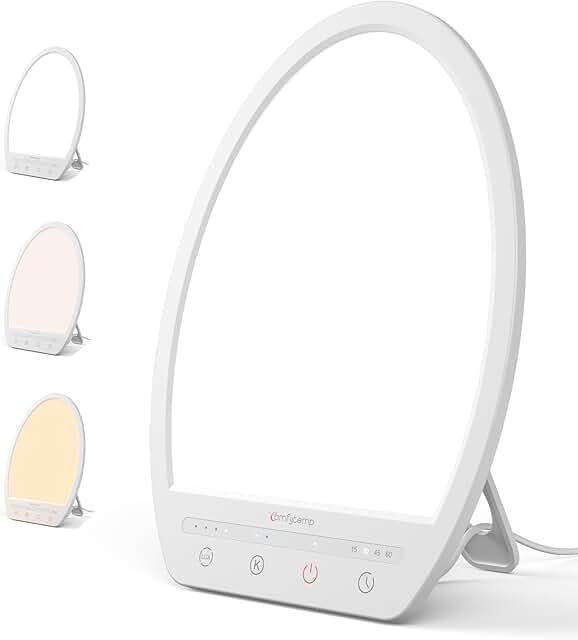
The Comfytemp lamp reaches up to 16,000 lux, with 4 brightness levels and 3 color temperatures. It includes a memory function to save last settings and supports desk or wall mounting. It’s designed for users who need a very bright, daylight-like experience at arm’s length.
Who it’s best for: workstations in windowless rooms or users who routinely work in dim spaces. Why chosen: high brightness at close range helps replicate a strong daylight effect.
Caution: maximum brightness can be intense; avoid looking directly at the light at maximum settings to prevent eye strain.
Verilux HappyLight Lumi Plus

The Lumi Plus offers up to 10,000 lux with UV-free LED light. It includes adjustable brightness and a countdown timer programmable up to one hour. The design emphasizes a balance of bright therapy and user-friendly controls.
Who it’s best for: users who want a customizable session length alongside bright, safe light. Why chosen: its timer and brightness options provide predictable, repeatable sessions.
Caution: ensure the light is angled toward the eyes rather than the workspace, and start with shorter sessions if new to light therapy.
Buying Guide: Practical Considerations For 10,000 Lux Lamps
What to look for when choosing a 10,000 lux lamp:
- Light quality and UV safety: Ensure the lamp uses UV-free LED or full-spectrum light to avoid UV exposure risks.
- Brightness and brightness consistency: Look for models rated at 10,000 lux at an appropriate distance and consider brightness control for comfort.
- Adjustability: Consider panel angles, height, and distance from the eyes to maximize exposure without glare.
- Power and portability: USB-powered options offer portability; wall adapters provide stable at-home use. Detachable stands help with placement.
- timers and memory: A programmable timer and memory function help establish consistent daily routines.
- Form factor: Desk-mounted, tall panels, or ultra-thin tablets affect where you can place the lamp.
- Durability and warranty: While not stated here, verify build quality and any service options if you rely on daily therapy.
Frequently Asked Questions
- What is 10,000 lux and why is it used for light therapy?
- Do these lamps emit UV light?
- How long should a session last?
- Is a stand necessary?
- Can these lamps replace natural sunlight?
- How should I position the lamp for best results?
10,000 lux is the intensity of light that replicates bright noon daylight and is commonly used to reset circadian rhythms, improve mood, and support wakefulness.
No. The lamps listed are UV-free or UV-safe to minimize eye and skin risks during daily use.
Typical guidance is 20 to 30 minutes per session, but this varies by product and individual needs. Start with shorter sessions if new to therapy.
Stands help position the lamp correctly for optimal eye exposure; detachable stands improve portability and storage.
They supplement light exposure, especially indoors or in low-light environments, but they do not replace outdoor sunlight for overall health.
Place the light to the side or slightly above eye level, about 12–24 inches away (distance varies by model), and aim toward your eyes without looking directly into the light.