
Best Electrical and Data Supplies for DIYers and Pros Alike
Looking for reliable tools to tackle electrical testing, circuit tracing, and data cabling tasks? This guide highlights five top Amazon picks that cover digital multimeters, circuit tracers, beginner-friendly lab kits, clamp meters, and wire tracer accessories. Each entry explains who it’s best for, why it’s a solid choice, and any limitations to consider. A compact buying table helps you compare at a glance.
Buyer summary table
| Product | Best For | Why It Stands Out | Limitations |
|---|---|---|---|
| Fluke 106 | Professional and hobbyists needing reliable DMM handy for quick checks | Palm-sized, CAT III 600V safety, trusted brand | Limited functions compared to full-size meters |
| Goldeep CBF05 Circuit Breaker Finder | Electricians tracing circuits in walls | GFCI tester, NCV, LCD display, portable | Basic tracer features may miss complex layouts |
| SunFounder Inventor Lab Starter Kit | Beginners and educators exploring electronics | Arduino Uno R3, projects and courses for learning by building | Not a professional diagnostic tool for on-site work |
| AstroAI Digital Clamp Meter | General electrical measurements including current | Auto-ranging, multiple testing modes, NCV | Budget-friendly; performance vs. premium brands varies |
| Klein Tools VDV500-820 Wire Tracer | Data and telecom cabling installations | Professional-grade tone generator and probe, long-range tracing | Requires correct connector use; non-energized tracing |
Fluke 106 Palm-Sized Digital Multimeter
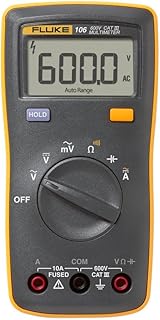
Best for quick voltage, continuity, and basic electrical measurements in tight spaces. The Fluke 106 is a palm-sized digital multimeter with CAT III 600V safety rating, ideal for electricians doing field checks or enthusiasts with limited bench space. It’s best for compact, on-the-go diagnostics rather than advanced measurements or heavy-duty testing.
Caution: this model focuses on essential measurements; users needing high-end features may prefer a larger, full-feature meter.
Goldeep CBF05 Circuit Breaker Finder

Best for electricians tracing circuits behind walls and identifying live circuits with numeric readouts. The Goldeep CBF05 includes a GFCI tester, NCV functionality, and an LCD display, making it a practical choice for field tracing and verifying circuit status. It’s better for quick, portable work than for deep diagnostics or complex panel layouts.
Limitation: as a compact tracer, it may not resolve intricate wiring inside dense walls or long cable runs without additional probes.
SunFounder Inventor Lab Starter Kit
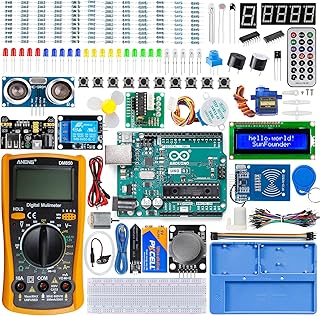
Best for beginners and educators learning electronics basics. The SunFounder Inventor Lab Starter Kit bundles original Arduino Uno R3 with a Multimeter and extensive project content, making it a strong educational choice. It’s well-suited for classrooms or self-study, but not a stand-alone professional diagnostic tool for field service.
Caution: this kit emphasizes learning projects; it may require additional equipment for advanced circuit testing or industrial work.
AstroAI Digital Clamp Meter

Best for general electrical measurement needs, including voltage, current, and resistance, with auto-ranging features. The AstroAI Digital Clamp Meter provides AC/DC voltage, AC current, resistance, and continuity testing, plus a non-contact voltage option. It’s a strong pick for DIYers who want a versatile tool without a big footprint. It’s better for educational or light professional use than for high-precision industrial work.
Caution: as a budget option, accuracy and durability may not match premium meters in harsh environments.
Klein Tools VDV500-820 Wire Tracer

Best for professional data cabling work and telecom installations. The Klein Tools VDV500-820 includes a tone generator and tracing probe for identifying wires and cables in low-voltage settings, plus secure clips for stable connections. It’s ideal for technicians needing reliable tracing over long distances and across multiple cables. Choose this if you work with Ethernet, telephone, or coax cabling and need precise tracing in non-energized conditions.
Limitation: it is designed for tracing non-energized wires; do not rely on it for live power path identification without proper safety procedures.
Buying Guide: How To Choose The Right Electrical And Data Supplies
What should you consider when selecting testing and tracing tools? Start with the work you perform most often. For field diagnostics and quick checks, a palm-sized multimeter like the Fluke 106 can save space while delivering essential measurements. For circuit tracing behind walls, a dedicated tracer such as the Goldeep CBF05 or Klein VDV500-820 helps locate cables efficiently. Beginners will benefit from a lab-focused kit like the SunFounder Inventor Starter Kit, which builds foundational skills before moving to on-site work. A versatile clamp meter like the AstroAI model is helpful if you need current measurements without breaking circuits, while the Klein tracer specializes in data and telecom cable work with robust tone generation.
Key purchase considerations include safety ratings (CAT III 600V or higher is typical for most fieldwork), ease of use, portability, and the scope of measurements or tracing features. If space is limited, prioritize palm-sized meters. If you work with multiple cable types, look for a tester or tracer with multiple test modes and compatible accessories. For education or onboarding, prefer kits that include guided projects and clear documentation. Always follow safety protocols when measuring energized circuits; prefer tools designed for non-energized tracing where required.
Practical decision flow:
- Need quick, basic measurements? Choose a compact multimeter like the Fluke 106.
- Tracing in walls or locating breakers? Pick a dedicated circuit finder like Goldeep CBF05 or Klein VDV500-820.
- Learning electronics and building projects? Start with the SunFounder Inventor Kit.
- Measuring current and needing non-contact voltage checks? Consider the AstroAI clamp meter.
Quick FAQ
- What does CAT III 600V mean? It indicates the meter is rated for measurements on distribution level circuits and local branch circuits, with safety ratings designed for field use.
- Is a circuit tracer safe to use on live circuits? Use non-contact or non-energized tracing when possible and follow manufacturer safety guidelines.
- Can I use a beginner kit for professional work? It’s best for learning and prototypes; for critical field tasks, upgrade to professional-grade tools.
- What should I look for in a wire tracer? Long-range tracing capability, multiple tone cadences, and secure wire clips for stable connections.
- Are these tools compatible with commercial data cables? Yes, many tracers and testers support Ethernet, RJ45, and other common data cabling standards.
- Do entry-level meters offer the same accuracy? They provide solid accuracy for everyday tasks, but premium meters offer higher precision and more features.