
Best DPDT Switches for Generators: Top Picks for Safe Power Transfer
Looking for a reliable double pole double throw (DPDT) switch to manage generator power? This guide highlights five solid options that suit different needs, from compact panel-mounted toggles to larger 2-pole transfer solutions. Each pick is evaluated for ease of use, suitable voltage/current ranges, and practical limits. Ideal buyers include DIY homeowners seeking simple manual transfer, workshop technicians needing robust duty, and emergency power planners prioritizing clear on/off indication and safety features.
| Product | Best For | Key Benefit |
|---|---|---|
| IndusTec Double Pole Double Throw 2 Position Latching Maintained 6 Pin Toggle Switch | Budget installations, small generator setups | Maintained latching with bat-style handle for quick position retention |
| Leviton 30-Amp 120-Volt Toggle Double-Pole AC Quiet Switch | Residential generators, quiet operation | Center OFF and quiet operation with center OFF |
| TWTADE Disconnect Knife Switch 32A 220V | Rugged, fast-cutoff safety disconnects | Safety-focused disconnect with DPDT capability |
| BQLZR 2 Pole Disconnect Switch 32 Amps | DIY panels with straightforward two-source switching | Two-pole double-throw with practical mounting |
| Leviton 20-Amp 120/277-Volt Toggle Double-Pole | Standard residential loads, simple transfer | Maintained action with center OFF option |
Below you’ll find concise overviews of each option, followed by a practical buying guide and a quick FAQ to resolve common questions about DPDT switches for generators.
IndusTec Double Pole Double Throw Toggle Switch

This maintained, latching DPDT switch is designed for two independent circuits, supporting 125 VAC or 250 VAC and up to 20A. It uses a bat-style joystick handle and a compact 6-pin configuration. The two poles and multiple throws define how circuits switch and stay in their positions. Best for small generator setups or control panels where a tactile, durable toggle is preferred. A limitation is the need to ensure wiring and fuse protection match the amperage to avoid overheating in high-load scenarios.
Who it’s best for: DIY enthusiasts and installers needing a compact, kept-in-position control for two circuits. Why selected: strong maintenance-free action and easy mounting with a 12 mm/1/2 inch hole.
Caution: Verify compatibility with your supply voltage and wire gauge before installation to prevent heat buildup or mis-wiring.
Leviton 30-Amp 120-Volt Toggle Double-Pole AC Quiet Switch

This double-pole, double-throw switch includes a center OFF option and quiet operation. It’s rated for 30 amps at 120 VAC and features back and side wiring for diversified installation possibilities. Best for residential generator setups that require a low-noise, easy-to-wire transfer switch with a clear ON/OFF stance. Limitations include size and installation constraints in tighter panels where larger terminals may be a challenge.
Who it’s best for: Homeowners seeking a dependable, quiet DPDT switch with a straightforward wiring path. Why selected: strong industry brand, conventional mounting, and reliable center OFF stance.
Caution: Ensure wiring space is adequate for back-side and side wiring terminals to avoid crowding or overheating in compact enclosures.
TWTADE Disconnect Knife Switch 32A 220V DPDT
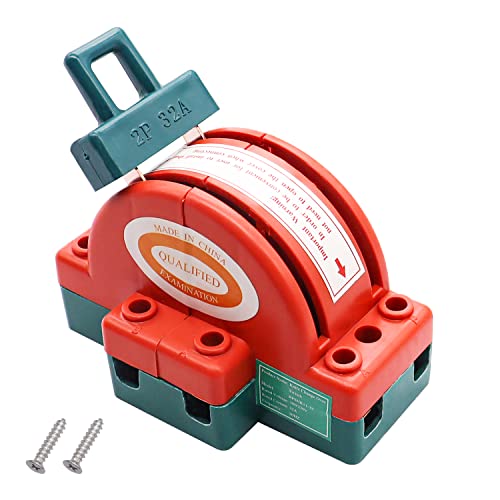
This DPDT safety disconnect knife switch emphasizes rugged construction and a straightforward two-pole design. Rated for up to 32A at 220V, it’s well-suited for more demanding generator switching tasks where a fast disconnect is beneficial. Best for industrial or workshop environments where quick emergency shutoff is needed. Caution: Knife switches require careful handling and proper enclosure to prevent contact with live circuits.
Who it’s best for: Professionals needing a robust, fast-disconnect option. Why selected: reliable DPDT performance with clear open/close states and a compact footprint.
BQLZR 2 Pole Disconnect Switch 32 Amps

This 2-pole, 2-throw switch supports up to 32A and is designed for easy panel mounting or surface mounting with simple wiring routes. It’s suitable for switching between two power sources or circuits in small generator applications. Best for budget-conscious builders who need a straightforward DPDT solution that’s easy to install. Limitation: Some users report that mounting and wiring must be carefully planned to ensure secure connection and prevent arcing when switching under load.
Who it’s best for: Do-it-yourselfers building basic two-source transfer panels. Why selected: simple, sturdy DPDT design with practical mounting options and clear on/off states.
Caution: Turn off power and double-check breaker and terminal ratings before switching between loads to avoid damage.
Leviton 20-Amp 120/277-Volt Toggle Double-Pole

This Leviton model provides a maintained double-pole, double-throw configuration with a center OFF option and a robust build for typical 120/277-volt circuits. It’s designed for standard residential loads and is a practical choice when a lower amperage DPDT is sufficient. Best for light to moderate generator transfer tasks in home setups. Limitation: Lower current rating means not ideal for heavier generator loads or high-wuel applications.
Who it’s best for: Homeowners needing a dependable, easy-to-wire DPDT switch for light generator use. Why selected: recognized brand, clear maintained action, and suitability for common residential voltages.
Caution: Do not exceed the 20A rating; use appropriate wiring and fusing to protect circuits when transferring power.
Buying Guide: DPDT Switches For Generators
What to consider when selecting a DPDT switch for generator use:
- Voltage and current rating: Match the switch to your generator’s output and load. Higher amperage requires sturdier contacts and wiring.
- Maintained vs momentary action: Maintained switches stay in place after actuation, which is convenient for transfer panels. Momentary types reset automatically but aren’t typical for transfer tasks.
- Pole and throw configuration: DPDT means two poles and two throws, enabling switching between two circuits. Ensure the arrangement supports your transfer logic.
- Mounting and enclosure space: Check hole size, panel cutout, and terminal clearance to fit your panel or enclosure.
- Wiring method: Look for back wiring, side wiring, or quick-connect terminals that suit your panel layout and safety requirements.
- Safety features: Center OFF options, clear on/off labeling, and arc suppression structures help reduce accidental switching and arcing under load.
- Durability and environment: For outdoor or workshop use, consider corrosion resistance and IP-rated housings if exposed to moisture or dust.
FAQ
- What does DPDT stand for in generator switches?
– It stands for Double Pole Double Throw, meaning two separate circuits can be controlled and routed to two outputs. - Is a center OFF position important for generator transfer?
– Yes, it provides a safe, clearly defined state to prevent accidental power transfer during maintenance. - Can I use a 32A DPDT switch for 125 VAC generator power?
– Yes, if the switch is rated for at least 32A at the operating voltage. Always match ratings to your system. - What safety precautions should I take when wiring a DPDT switch?
– Shut off power, verify voltage with a tester, use proper gauge wiring, and secure all connections to prevent arcing. - Do these switches require fusing or relays for protection?
– In higher-load or critical systems, add appropriate fusing and, if needed, a relay to handle peak current safely. - Can I mount these switches in an outdoor panel?
– Some models are more suited for indoor panels; check enclosure ratings and environmental protection before outdoor use.