
Best Low Noise Power Generator Options for Quiet, Reliable Power
Feeling overwhelmed by noisy generators? This guide highlights top low-noise power generators ideal for home backup, camping, and RV use. Each model prioritizes quiet operation, stable power, and practical features for different buyers. The selections below help quiet campers, apartment dwellers, and weekend homeowners find reliable, low-noise options without sacrificing performance.
Summary of chosen products:
| Product | Best For | Key Advantage | Approximate Runtime Note |
|---|---|---|---|
| Oxseryn 4400W Inverter Generator | RV Owners, Home Backup | High starting watts with ECO mode | Up to 14 hours at 25% load |
| ZeHuoGe 900W Portable Gas Generator | Compact Backup, Outdoor Use | EPA compliant, quiet operation | Up to 5 hours at 50% load |
| All Power America 2000W Inverter | Budget Portable Power | Clean power for sensitive electronics | Up to 6.5 hours at 50% load |
| PowerSmart 3800W Inverter | RV Camping and Home Backup | Whisper quiet technology | Runs at low dBA, 23 ft distance |
| DuroStar DS13000MX | Whole-Home Backup | Dual fuel, large power reserve | Long runtime with dual fuel |
Oxseryn Power Equipment 4400 Watts Inverter Generator

Best for RVs and home back-up, this generator delivers 4400 peak watts and 3400 running watts with ECO mode to reduce fuel use and noise. It includes two 120V outlets, one 12V DC port, and an RV outlet, helping support essential appliances and devices during outages.
Best for: RV enthusiasts and homeowners needing reliable power with quiet operation. Selection rationale: Combines high startup power with long-run efficiency and accessible fuel insights via a gauge. Caution: Running at higher loads may reduce the listed runtime; monitor fuel level to plan outages.
ZeHuoGe 900W Portable Gas Powered Generator
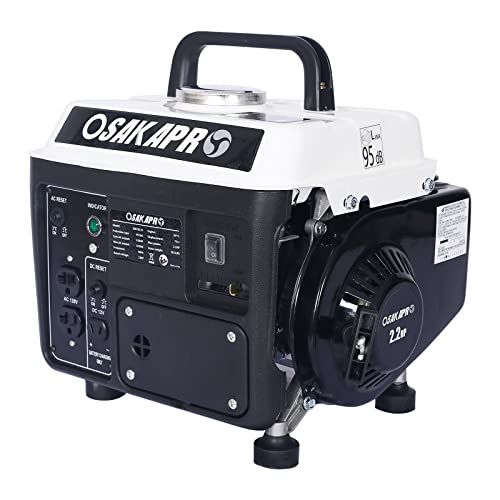
Best for light portable power on campsites or small outdoor events, this EPA-compliant unit provides 900W peak and 800W running power with a 1.1-gallon tank. It sits compactly for easy transport and includes circuit protection for safer use with household appliances and tools.
Best for: Quiet, short-duration backups and light camping. Why chosen: Combines compact size with compliant emissions and built-in protections. Caution: Lower running watts mean it is best for modest loads; not ideal for heavy appliances.
All Power America 2000W Portable Inverter

Best for sensitive electronics on camping trips or home backups, this 2000W inverter provides clean power with less than 3% THD. It weighs about 39.6 pounds, making it relatively easy to carry, and it offers up to 6.5 hours of runtime at 50% load with a 0.88-gallon tank.
Best for: Budget-conscious buyers needing safe power for electronics. Caution: Heavier units can be less convenient for frequent transport; consider handle design for longer hikes or trips.
PowerSmart 3800W Portable Inverter Generator

Best for RV camping and home backup, this unit delivers 3800 starting watts and 3200 running watts with less than 3% THD. It operates quietly at about 59 dBA at 23 feet and is parallel-ready for increased power when needed.
Best for: Quiet campers needing dependable, clean power at a reasonable size. Caution: Might require parallel setup to reach very high loads; verify compatibility with other units before pairing.
DuroStar DS13000MX 13,000-Watt Dual Fuel

Best for whole-home power backup and large RV setups, this dual-fuel generator offers 13,000 watts of power from gas or propane. It supports transfer switch readiness and includes features aimed at safety and durability in emergency scenarios.
Best for: Families needing substantial backup capacity for entire home or large equipment. Caution: Large size and higher fuel consumption make it suited for stationary use or long outages; portability is limited.
Buying Guide: Choosing a Low Noise Power Generator
What matters most when selecting a low-noise generator is balancing power needs with noise tolerance, runtime, and fuel type. Consider these questions:
- What load do you plan to power? For electronics, look for less than 3% THD in inverter models.
- Do you need portability or stationary backup? Inverter units tend to be lighter and quieter, while open-frame models offer higher wattage.
- Is fuel type important? Dual-fuel generators offer flexibility for longer outages, while gas-only units are simpler but require frequent refueling at high use.
- What about runtime? Check tank size and fuel efficiency in ECO mode to estimate run time under typical loads.
- Will you parallel multiple units? If yes, ensure the model supports parallel operation and has compatible connectors.
Practical tips for selecting a low-noise unit
- Choose a model with a tested noise level at the operating distance you expect (commonly 50-65 dBA at 23 feet).
- Prioritize models with fuel gauges, low-oil shutdown, and circuit protection for safer operation.
- For sensitive electronics, favor inverters with pure sine wave output to avoid voltage fluctuations.
- Assess noise regulations in your area, such as HOA or campground limits, and select accordingly.
Maintenance and safety reminders
- Follow manufacturer start and shutdown procedures to protect the engine and inverter.
- Store fuel safely in approved containers and away from heat sources.
- Keep generators on a stable, ventilated surface; never operate indoors or in enclosed spaces.
FAQ
- What is a low-noise generator? A generator designed to produce power with reduced sound levels, often using inverter technology to maintain clean power output.
- Do inverter generators handle sensitive electronics well? Yes, many offer pure sine wave output with low THD, safe for laptops and TVs.
- Is dual-fuel better than gas only? Dual-fuel provides flexibility and longer run times in emergencies when used with propane, which stores longer than gas.
- How loud is a typical low-noise generator? Quiet models commonly range from about 50 to 65 dBA at 23 feet, depending on load and design.
- Can I run a generator indoors? No. Generators emit carbon monoxide; operate outdoors in a well-ventilated area.
- What is ECO mode? An efficiency feature that adjusts engine speed to match load, saving fuel and reducing noise.