
Best 12V DC to 6V DC Converters for Reliable Vehicle, Marine, and DIY Projects
Answering the need for a compact, efficient 12V to 6V converter, this guide highlights practical options for powering automotive dashboards, LED displays, radios, and other 6V devices from a 12V source. The top picks favor reliability, waterproofing, and solid protection features. Ideal buyers include DIY hobbyists, automotive enthusiasts, and installer technicians seeking a compact, safe buck converter with clear protection mechanisms and good efficiency.
| Product | Best For | Main Benefit |
|---|---|---|
| DROK 12V to 6V Reducer | General automotive use | High efficiency, waterproof, simple buck design |
| DIGITEN DC 6V Boost to 12V | Boost needs | Waterproof boost module with wide input |
| YAXIGE 12V/24V to 6V 60W | Rugged install | High efficiency with robust protection |
| Weewooday 2 Pack 12V to 6V | Compact dual installs | Integrated protections and compact size |
| YRDZXG 12V/24V to 6V 5A | Harsh environments | Waterproof and durable with safety protections |
Below are five carefully chosen models that balance efficiency, protection, and practicality for 12V to 6V needs. Each entry explains who benefits most, why it was selected, and a quick limitation to consider.
DROK 12V To 6V Reducer

This synchronous rectification non-isolated buck module is designed for 12V input to 6V output with a recommended input at least 3V higher than output. It offers high efficiency up to 90% and low power consumption, making it well suited for automotive dashboards and compact electronics that need steady 6V power from a 12V system. Best for DIY projects that require a compact, easy-to-install regulator with good thermal performance.
Who it’s best for: hobbyists and installers needing a straightforward, waterproof buck option for 12V systems that demand reliable 6V output. Caution: ensure input stays at least 3V above output to maintain stable regulation.
DIGITEN DC 6V Boost To 12V
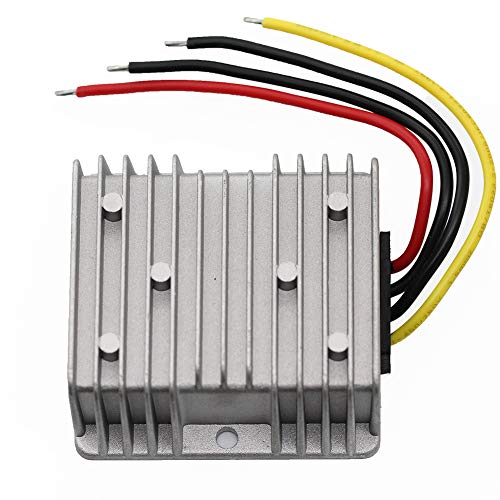
Compared against simple buck solutions, this module is a boost converter designed for applications where 12V devices must be powered from a lower base voltage in the same family. It is described as waterproof and epoxy-sealed, with input range 5V-11V and 12V/10A output, suitable for car devices like displays or GPS units. Best for scenarios where the base supply may dip below 12V and a stable 12V output is needed.
Best for: systems requiring a 12V supply from 5–11V inputs in vehicles or equipment. Limitation: this is a boost module rather than a pure down-converter, so use only when you specifically need up-conversion plus 12V output.
YAXIGE DC-DC 6V 60W Converter

With input range 12V-24V and output 6V at up to 10A (60W), this converter uses synchronous rectification to boost efficiency to a claimed 95% or higher. It includes comprehensive protections for overcurrent, overload, short circuit, and overheating, all housed in a compact aluminum shell with waterproof and dustproof sealing. Best for demanding loads that require solid thermal management and robust safety protections.
Choose this if you need higher peak current and a durable enclosure. Limitation: 60W ceiling means you should not exceed 10A at 6V continuously.
DC 12V/24V To 6V 10A 60W Module

This 6V, 10A regulator claims 60W capacity with a 12V/24V input and a compact build. It highlights rugged protection features and a durable housing designed for vehicle installations. Best for moderate-power loads in automotive or boat projects where a dependable 6V rail is needed. Limitation: ensure heat dissipation in enclosed spaces to prevent overheating.
YRDZXG 12V/24V To 6V 5A

Offering 6V at up to 5A (30W), this model emphasizes waterproof, dustproof, and explosion-proof design plus intelligent protections for short-circuit, over-voltage, overload, and overheating. Best for rugged environments where moisture and debris are concerns. Limitation: lower current capability compared to some 60W options may limit larger 6V devices.
Buying Guide
What to consider when choosing a 12V to 6V converter
Output current: Match or exceed the device’s 6V current draw. If a device needs 3A, pick a converter rated at 3A or higher to avoid heat and voltage sag.
Input range and regulation: Confirm the input voltage you’ll have (12V, 9–22V, or higher). Choose a module with stable regulation under load and possible input fluctuations.
Protection features: Look for overcurrent, short-circuit, over-temperature, and surge protections. Waterproof or dustproof housings help in car, boat, or outdoor installations.
Single-buck vs. dual-function (boost) considerations
For most 12V to 6V needs, a buck (down-converter) suffices. If your system sometimes drops below 12V and you must maintain 6V, a boost-capable design or a combined module may be required.
Installation and form factor
Compact size helps when space is limited under dashboards or in consoles. Aluminum housings improve heat dissipation, and integrated cable lengths simplify mounting. Verify mounting clearance and connector compatibility with your existing wiring.
Durability and environment
Waterproof, dustproof, and shockproof ratings matter for vehicles, marine engines, or outdoor equipment. The added robustness reduces failure risk in harsh conditions.
Practical setup tips
Place converters away from direct heat sources. Use appropriate fuses or in-line protection where recommended by the manufacturer. Verify polarity and connect to a clean, stable 12V supply to minimize noise and ripple.
FAQ
Can a 12V to 6V converter power a car radio directly?
Yes, if the radio’s 6V requirement matches the converter’s output and the unit is within current limits with proper vehicle grounding and protection.
What if my 6V device draws more current than the converter can supply?
The converter may overheat or shut down. Choose a unit with a higher current rating to prevent voltage drop and ensure reliability.
Do these converters require external cooling?
Many models dissipate heat through their housing and may stay cool under light loads. High-current or poorly ventilated installations benefit from cooling considerations.
Are waterproof buck converters truly waterproof?
Waterproof ratings indicate protection against water exposure but do not guarantee submersion. Follow manufacturer guidelines for immersion limits and maintenance.
Can I use these in continuous 24V systems?
Only if the model explicitly supports 24V input with safe operation at your required 6V output. Check the input range before use.