
Best Commercial EV Charging Stations for Businesses and Fleets
Businesses seeking reliable, scalable EV charging solutions should evaluate options by access control, power output, network reliability, and total cost of ownership. The following selections cover public, fleet, apartment, and hospitality use cases, highlighting OCSP-compliant options, smart app control, and rugged outdoor readiness.
| Product | Brand | Key Feature |
|---|---|---|
| Commercial EV Charging Station – OCPP-Compliant | Range | Revenue-ready with RFID/app access |
| Autel MaxiCharger Level 2 | Autel Store | AI-powered smart charging, 80A output |
| ChargePoint HomeFlex Level 2 | ChargePoint Store | Extensive North American network, smart app |
| EVIQO Level 2 EV Charger 48A | EVIQO Store | Weatherproof, hardwired, high amperage |
| Autel Home Smart EV Charger | Autel Store | 50A fast charging with Wi-Fi/Bluetooth |
This article reviews five commercial-grade or semi-commercial EV charging options, focusing on networked capabilities, ruggedness, and ease of deployment in multifamily, hotel, and business environments. Each product includes a direct link to its Amazon listing for quick access to specifications and user reviews.
Commercial EV Charging Station – OCPP-Compliant

Brand: Range
Features:
- Earn Revenue with Every Charge: Set custom pricing and idle fees. Monthly payouts and usage reports included.
- Fleet and Public Use Ready: Control access with RFID, or app. Ideal for apartments, hotels, or commercial fleets.
- OCPP-compliant platform supports scalable management for multi-stall deployments.
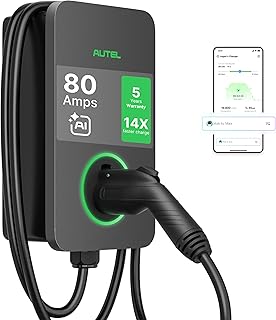
Autel MaxiCharger Level 2 EV Charger
Brand: Autel Store
Features:
- AI-Powered Smart Charging & App Control: Schedule charging around time-of-use rates, start/stop sessions remotely, view real-time energy data.
- ULTRAFAST 80A Performance: Up to 19.2 kW, adding ~70 miles per hour; suitable for busy homes or small fleets.
- 24/7 Reliability & Theft Protection: Dual-network connectivity, tamper-resistant screws, remote locking for commercial applications.
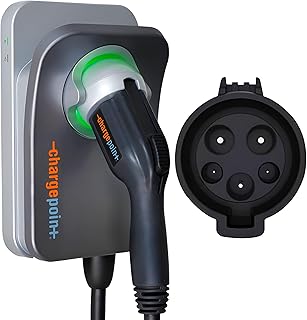
ChargePoint HomeFlex Level 2 EV Charger
Brand: ChargePoint Store
Features:
- Charge Point Reliability: Flexible charging for home, business, and fleets with extensive 24/7 support.
- Smart Charging: Mobile app controls, reminders, and home integration; requires WiFi for full functionality.
- Massive Network Footprint: Access to 274k+ stations in North America/Europe and roaming partners.
EVIQO Level 2 EV Charger 48 Amp

Brand: EVIQO Store
Features:
- 46 Miles Of Range Per Hour: 48A output (11.5 kW) with hardwired installation; requires dedicated 60A circuit.
- Heavy-Duty Connector: Rugged SAE J1772 connector with secure metal latch; compatible with most North American EVs and with adapters for Tesla.
- Certified & Weatherproof: UL/ETL/FCC/Energy Star; IP66/NEMA 4 enclosure for outdoor use; mainboard shielding for longevity.
Autel Home Smart EV Charger

Brand: Autel Store
Features:
- Up To 50A, 240V Indoor/Outdoor Charging: Level 2 charging with Wi-Fi and Bluetooth connectivity.
- Smart App & Compatibility: Easy control from mobile devices; supports remote monitoring and notifications.
- Rugged Design: Weather-resistant build suitable for multiple installation environments.
Buying Guide: Key Considerations For Commercial EV Chargers
When selecting a charging solution for a business, multifamily property, hotel, or fleet, consider total cost of ownership, network reliability, and user access control. Different deployment scenarios favor different features, as outlined below.
- Power and throughput: Match charger amperage to vehicle mix and available electrical capacity. Higher amperage (e.g., 80A) enables faster top-ups but may require site upgrades.
- Access control and pricing: For revenue-ready or public-use sites, RFID or app-based access helps manage who can charge. Look for software that supports custom pricing, idle fees, and detailed usage reporting.
- Network and uptime: Cloud connectivity with redundant networks (Wi‑Fi, cellular, or radio) minimizes downtime. Ensure remote monitoring and alert capabilities.
- Durability and sensing: Outdoor-rated enclosures (IP66 or higher, NEMA 4) and robust safety features reduce maintenance. Temperature monitoring helps prevent thermal faults in hot climates.
- Installation and compatibility: Confirm compliance with local electrical codes and compatibility with major networks (e.g., OCPP). For fleet use, ensure interoperability with fleet management systems.
- Warranty and support: Longer warranties and 24/7 support reduce lifecycle risk, especially for commercial deployments with high uptime demands.
- Integration with existing networks: If your site already uses a charging network, prioritize products with open standards and easy integrations to minimize vendor lock-in.
These perspectives reflect a balance between enterprise-grade management features and practical deployment considerations for properties ranging from apartment complexes to corporate campuses. The listed products illustrate a spectrum from fully managed revenue-ready stations to high-capacity home and semi-commercial units.